Sunday, July 25, 2010

Engaged Spirituality

Many years ago I began thinking that the classic forms of Christian spirituality that I had been taught in church and seminary just didn’t work for me. I came to faith in the evangelical tradition where a good Christian was supposed to have their daily “quiet time” of Bible study, prayer and reflection. I read all the books of Richard Foster and Dallas Willard on spiritual disciplines, and still consider Foster’s Celebration of Discipline as a critical book in my formation. I explored Roman Catholic wrters like Morton Kelsey, Brother Lawrence, Thomas Merton and Henri Nouwen. I read the classic Testament of Devotion by Quaker Thomas Kelly. I explored the charismatic movement and even dabbled in speaking in tongues for a few years. Yet, in the end something was missing.

The first seed was planted when I moved to Jersey City, NJ, a crowded poverty stricken city, where I realized that there was no place to find true and complete quiet in such a noisy, busy community. Moreover, I found that I was most spiritually alive when I was in the midst of people actively working on changing things that were causing suffering. It struck me that one did not have to retreat from the people and activity of one’s daily life to connect with God; God was there in the midst of it all. John 1 proclaims that “the Word became flesh and dwelt among us.” God was not far off only to be experienced in some mystical transcendence, God was among us to be touched and experienced in the busyness of life. I had developed what theologians call an “incarnational theology.”

However, I did not actively think about these things much for many years. I tried to fit my spiritual discomfort into the classic disciplines of prayer, meditation, Bible reading and worship. Then a few years ago, I read through most of the writings of the Brazilian educator Paulo Freire. Freire is best known for his book The Pedagogy of the Oppressed, in which he outlines his philosophy education as a way of raising the consciousness of oppressed people in order to motivate them to change the social and economic order that keeps them poor. His critique of the “banking model of education” and the concepts conscientization and teaching as dialogue are now standard subjects in introductory education courses and presented as an alternative to traditional methods of teaching. No one author has shaped my own approach to teaching as much as Freire has.

However, as I read through his writings, I saw and sensed and underlying spirituality that sought to engage the world even as it sought to change it. A lifelong Roman Catholic, Freire was critical of the Roman Catholic Church in Brazil for its support of the ruling oligarchy. Moreover, he criticized the clergy’s promotion of what he called “magical thinking” among the poor; encouraging them not to question the status quo (that was literally killing them) but rather to look for God to provide for them in miraculous ways and to reward them for their faithfulness in the hereafter. Instead he called for the church to be prophetic and to work in solidarity with those being crushed by the ruling elite. Terms like love, salvation, hope, conversion, and the Word, fill his writings. I find it odd that while many authors mention his affinity with liberation theology, few of his biographers and interpreters have explored the underlying spirituality that drove and sustained him.

What I found in Freire was a Christian whose spirituality did not remove him from the pain and suffering of the world, but rather engaged him more fully in that pain and suffering. As he wrote one time, he “met Christ in the people.” This was a perspective with which I deeply resonated. For years I had noted that I felt God’s presence more fully in a political rally or demonstration, than I did in a worship service. Prayer seemed to make more sense as a way of expressing concern for other people and connecting with their struggle, than it did as a way of communicating with God. Jesus was less of a Savior on a pedestal, and more like a brother walking along side of me in the midst of the search for justice. Freire gave me a way of thinking about these aspects of the spiritual life that was not removed from the world, but rather fully engaged with it.

Just recently, I came across the book, Spirituality of Resistance by Roger Gottlieb. Gottlieb is an agnostic Jewish philosopher who teaches at Worcester (MA) Polytechnic Institute, and is actively involved in promoting awareness about the critical nature of global climate change and the environmental crisis. Like me, Gottlieb is seeking to find a way to connect with some sort of spiritual presence as a form of resistance to the poverty, disparity and environmental degradation being committed by governments, corporations and individuals. He writes “To find a peaceful heart…we need to live on this earth: fully conscious of what is happening on it, actively resisting that which we know to be evil or destructively ignorant.” (p. 13). In other words, we can’t go into our prayer closets or out in the woods to seek God or spiritual peace, and hope that God or technology will somehow save us from our own self-destructive ways. We must meet God while we we are engaged in the issues of life and seek and express our spirituality through lives of active resistance to the status quo and in solidarity with those seeking to create a more equitable and just world. While Gottlieb rejects traditional forms of religion (and at points is understandably critical of their contribution to the current social, economic and environmental crisis), he does not reject those who can find a way to engage this crisis through those means.

Gottlieb and Freire have renewed my interest in exploring what an engaged spirituality would look like in our time. I do not know at this point where that search might lead, but I am excited about the possibility of finding a way to be a spiritual person and yet fully immersed in the struggles of our time in a way that “seeks justice, loves mercy and walks humbly with our God.”

Friday, July 23, 2010

A Teachable Moment on the True Nature of Racism


The recent accusation of racism that led to the firing, apology and offer of a new job to Shirley Sherrod is instructive of many things on several levels. For those who may have missed it, conservative blogger Andrew Breitbart took a statement of Shirley Sherrod out of context to make it look like she discriminated against a white farmer in her role as an official in the Agriculture Department. FOX News ran the story as an example of Obama administration racism against whites, Ms. Sherrod was fired, and the NAACP (to whom her speech as addressed) denounced her words; then the truth came out. Ms. Sherrod’s story was exactly the opposite and the white farmer in question said she was an invaluable help to him. The Obama administration apologized and offered Ms. Sherrod another job, which at this moment she has neither accepted nor rejected. To read more on this incident go to this link.

Putting aside the out and out character defamation of Mr. Breitbart, the opportunistic race-baiting of FOX and the knee-jerk ineptness of Obama’s Agriculture Department, let me add a thought on why even if Ms. Sherrod had done what she was accused of, it could not be considered racism.

It seems that many folks are so uptight about race in this country, that we are afraid to honestly look at the underlying issue of institutionalized, systemic racism in our nation. The election of a black President did not eradicate racism in this country, it only made it more confusing for many to discuss, and raised the level of fear among many whites. The election of a black president, like the changing demographics of the United States as a whole, has a lot of whites in this country scared. By the year 2042 most demographers predict that white people will comprise less than 50% of the population. Whites will still comprise the largest racial/ethnic group, but Hispanics will be over 30%, while African-Americans will comprise about 12-13% and Asian/Pacific Islanders 6-8%. English will be one of many languages spoken. “American” history will by necessity have a different slant, as the various peoples who make up our populace will include less people from European backgrounds and more from Africa, Asia and Latin America. For a group of people who have always had their culture, their history, and their way of thinking and speaking as the norm, this signals change, and change generates fear for many white folks.

Having said that, the systems that are in place (education, law enforcement, health care, etc) still overwhelmingly serve white citizens much more effectively than they serve citizens of color. Why do schools with predominantly Latino and Black students generally receive significantly less funding than white school districts? Why do areas where people of color live experience more crime and less security than white neighborhoods? Why does the health care system not serve people of color with the same effectiveness as it does white patients? Why do African-American drug offenders consistently receive harsher sentences than their white counterparts committing the same crimes? The answers to these and related questions are both simple and complex. The simple answer is that racial preference and bias is built into the very systems that inequitably serve different groups of people. The complex answer is trying to figure out a way to make those systems serve all people equitably.

When people look at the laws and policies on these issues, one sees that while they may seem “fair” on the surface, the results they generate create tremendous inequities. For instance, funding public school systems with property taxes seems “fair” and yet when one looks at the disparate results, one sees that that system creates schools with widely different levels of resources. State and Federal governments are now trying to compensate by funneling additional funding to underfunded districts, encouraging charter schools and offering vouchers, but these actions are band-aids on an oozing sore. What is needed is a totally revamped system of how education is funded and delivered in this country. The people working in this system may be sincere, dedicated, and personally non-biased when it comes to race, but the system they work in is irretrievably discriminatory against people of color, especially when they are also poor.

Now that doesn’t mean that there aren’t some white schools or communities that lose out, or that there aren’t white citizens who sometimes are discriminated against, but the overarching pattern favors one group over another. The laws, the policies, the structures and the institutions that have served whites very well over the long haul, do not serve their fellow citizens of color at the same level. That’s racism; and one sees the effects of that racism by looking at the results these systems produce. Like doctors we need to use the symptoms to diagnose the underlying problem. Simply treating symptoms does nothing to address the underlying disease.

Had Shirley Sherrod chosen not to help a white farmer because he was white, that would have been an act of prejudice. If she had consistently chosen not to serve white farmers at the same level she served black farmers, that might be a pattern of racism on her part. However, the Agriculture Department where she worked historically takes quite good care of white farmers, and therefore would not be institutionally racist.

People like Andrew Breitbart and the folks at FOX News use distortions to distract folks (especially scared white folks) away from the deep systemic issues that need to be addressed in this country. I suspect that there are smart people at FOX, so I can imagine (though I don’t know) that their distortions and character assassinations are a deliberate attempt to keep the systems that privilege whites over others intact. They use half-truths (which are really lies) and out of context statements (like Breitbart’s video) to paint a picture that makes whites feel like they need to fight to “take the country back,” when in fact the systems in this country continue to serve them just fine. Parading a black spokesman like Republican National Chairman Michael Steele in their reports confuses the unsuspecting and gives flimsy justification for those who seek to keep the systems as they are. When it seems opportune, they then throw in the non-sensical charge of “reverse racism,” which is what happened in Sherrod's case.

As a white person, I am not interested in developing a system that punishes whites; that is not in my interest. However, as a white person of faith who is concerned for justice, I am committed to creating a system that serves all people equally. Honesty compels me to recognize that as a white person I can take for granted many things that my friends of color cannot: from the schools their kids attend, to the way they are treated by the police and courts, to how often their trash gets picked up to the kind of health care they receive to how they are treated by the media to who knows what.

One lesson we need to take from this unfortunate incident is to take a look at what is actually going on in this country. The disparities mentioned above are widely cited. Can we wake up and see what is going on? Shirley Sherrod told her story to illustrate her personal growth in race relations, but at the very worst she might have been prejudiced against one white man (which she was not). On the other hand, all of us live within a network of systems that is inherently racist and must be significantly overhauled, if this “land of the free” is going to offer that freedom equally to all.

Saturday, July 17, 2010

Good to the Last Drop


This past week I attended the funeral of co-worker and good friend, Sheri Robinson. For the past three years Sheri had been battling cancer first of the breast and then the liver. Like any good “homegoing service” (a common term for funerals in the African-American Church), Sheri’s service was much more a tribute to her life than a mourning of her death.

While she was only 48, Sheri had lived a full and vibrant life. I met her about 11 or 12 years ago, when we hired her to join the faculty of Eastern University’s Degree Completion Program (a program designed to enable working adults to earn their college degrees). At the time of her hiring we were concerned about her stamina because she had already had one bout with cancer and many other medical issues, not to mention lupus, a disease that attacks your immune system. Over the years I knew her Sheri had battled various other health problems, even before this last battle with cancer. Given all the health challenges she had to face, it was a miracle she lived as long as she did. No, I take that back, it was a testament to the vibrancy of her living.

Sheri was a woman full of life and power. She was an intelligent woman with three degrees in HR, Marketing and Law. She loved students, and fought valiantly on their behalf. She always had a smile and a laugh, but behind that smile was a passion for justice, a concern for excellence and a deep love of people. Moreover, as was so beautifully brought out at her service, she gained strength and hope through her deep faith in and love for God. In addition to all her school and community involvements, Sheri was a leader in her church, both in her actions and in the quality of her faith.

That is why the preacher of the day chose to entitle his eulogy “Good to the Last Drop.” He based his remarks on Philippians 2.17, where Paul characterized his life this way: “I am being poured like a drink offering on the sacrifice.” This refers to the Old Testament passages that describe the drink offering of lambs’ blood poured out over a fire in the Temple, which then created a savory aroma up to God. He said that Sheri had poured out her life on behalf of others and of God, and that she had left nothing behind. She was “good to the last drop.” I agree – she was a woman who gave her all right to the end.

Funeral services often cause us to reflect on the nature of our lives. We ask ourselves: What will they say at my final service? Who will show up? More importantly what kind of legacy will I leave behind? Psychologist James Hollis says that the reality of death actually gives us the urgency to find meaning in the days and years we have. I think that is true. What is really important? What relationships do I need to nurture? What work do I have to do? What values and passions will fuel my living? Like most people I want my life to count for something. Like Sheri I want to be “good to the last drop.”

I said goodbye this week to a good friend, a great woman, a person of deep faith, and quality person. I was also reminded that this life we have is a gift from God, which in turn must be offered as a gift to others and the One who created us.

Friday, July 16, 2010

What Happened at West Philadelphia High School?

I have shared some of my feelings about the terrible string of decisions and actions regarding West Philadelphia High School. However, I came across a blog (A Good Day of Teaching) that puts it well: Did Saliyah Criz Steal Arlene's Thunder?" (For those unaware of the situation Saliyah Criz was the outstanding principal of West Philly High School who was replaced by Philadelphia Schools Superintendent Arlene Ackerman for "low test scores" despite having made tremendous progress in the school.

I can't say it any better, so I refer you her blog here.

Wednesday, July 07, 2010

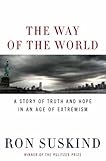
The Way of the World The Way of the World by Ron Suskind


My rating: 4 of 5 stars
Ron Suskind has a way of writing about current events and feeling like you live thru them. He follows the lives of several people in the years 2006-2008: an Afghan high school exchange student, a Pakistani college grad in the US, several CIA operatives, lawyers defending prisoners detained at Gitmo, Benazir Bhutto, George Bush and Dick Cheney. The message Suskind brings is clear: America's political leaders have lost their moral authority by pursuing an "annthing it takes to win" approach, even when that involves outright lieing to the American public about WMDs and terrorists cells in Iraq as a pretext for invading Iraq. Suskind can not be well liked by the former members of the Bush White House as he portrays them as people who lived by the maxim "don't confuse me with the facts, I know what I believe." Yet Suskind ends with a positive view of the ordinary American citizen who stills believes and lives by the values of honesty, integrity and compassion. I came away with a different feeling: that our place as a nation in the world has been severely undermined by the hypocrisy of our stated values (democracy, freedom, integrity, compassion) not being backed by our actions as country. I see the crumbling of the Empire, and its not pretty.

View all my reviews >>

Sunday, June 27, 2010

Reflections from the U.S. Social Forum


This past week (June 22-26) I was in Detroit, Michigan for the Second Unites States Social Forum (USSF). The first US Social Forum was held three years ago in Atlanta, as an outgrowth of the World Social Forum that began in Brazil in 2001. While estimates varied widely, there were somewhere between 15,000 and 20,000 people who converged on the Cobo Center in downtown Detroit for workshops, strategy meetings, dialogues and occasional protests.

According to the program booklet (p. 2) a social forum is “an open meeting place for reflective thinking, democratic debate of ideas, formulation of proposals, free exchange of experiences and interlinking for effective action, by groups and movements of civil society that are opposed to neoliberalism and the domination of the world by capital and any form of imperialism, and are committed to building a planetary society directed toward fruitful relationships among Humankind and between it and the Earth.

That’s a mouthful, but basically it is a gathering of politically and socially progressive grass roots groups and organizers who have not generally benefited by the current social and economic order, and therefore are seeking to create a society that is more equitable, more humane, and more environmentally responsible. As such there were people and organizations representing causes such a public education, racial justice, mountaintop removal, gay & lesbian rights, trade unions, economic justice, climate change, and a whole lot more. As I kiddingly said to friends when they asked about USSF, we came together to plot the overthrow of the Empire.

This was my first time attending a social forum and as such I was taking it all in. What follows are a few impressions and reflections I took away from this amazing gathering of community organizers and social activists.

First, the USSF demonstrates that there is a massive movement of people who want a more equitable society and who operate from a variety of political and economic visions – Socialism, Communism, Anarchism, Solidary economics, modified capitalism, Buddhist economics and so on. While there was a significant minority of religiously oriented folks, by and large this vision is not informed by any sort of spiritual or faith perspective. Moreover, while the Tea Party folks, who represent the extreme conservative right, get a lot of media attention, this group represents the poor, the excluded, the forgotten and generally invisible in our society. While not widely publicized, this is a massive group of people to be reckoned with.

Second, I would estimate that 2/3 to ¾ of those gathered were under the age of 35 at least 50% were people of color: African Americans, Native Americans, Asians, various Hispanic groups and so on. There were also a predominance of poor and working class people and a great number of students. By and large the “leaders” ( I put this in quotes because by and large they were largely an anti-authoritarian group) were in their mid 30’s to early 40’s and brought with them a clarity of vision, a depth of experience and a deep respect for activists 50 and up who had gone before them. As opposed to my generation when they were in their 20’s (remember the phrase ”don’t trust anyone over 30”), these folks openly spoke of their debt to the activists of the 1950’s, 60’s and 70’s who went before them. The USSF is an intergenerational movement that sees that the struggle has been and will be over the long haul.

Third, while there was great deal of criticism of the current, social, political and economic order in the developed world, this is not just an “anti” movement (anti-war, anti-racism, anti-imperialism, anti-capitalism). The purpose of the USSF is to seek and provide solutions, to build alliances and coalitions, and to work together in a more coordinated way. I expect that there will be several efforts that come out of this gathering addressing a wide range of issues.

Fourth, at the USSF I heard a perspective on the current state of affairs that is rarely reflected in the mainstream media. In light of the economic recession, the current instability in the Middle East, the debate over immigration in the U.S., the current wars in Iraq and Afghanistan, and even the current disaster in the Gulf, it appears that global capitalism and the dominance of Western nations has peaked in terms of its dominance and is beginning to fall apart.

One striking example of the change taken was illustrated by a newly released Oliver Stone documentary, “South of the Border, ”which shows how over the last 10-15 years there has been a dramatic shift toward socialist leaning governments in Latin America (Venezuela, Argentina, Bolivia, and Brazil just to name four). These countries have rejected the past dominance of their political process and economies by Western governments and large corporations, and instead have sought to make reforms that are designed bring uplift to the poorest of the poor in those societies. This trend has caused U.S. officials to vilify leaders such as Hugo Chavez of Venezuela, when in fact he has been democratically elected and is widely popular in his own country because of the people oriented reforms he has made.

From the USSF perspective, one gets the sense that that tectonic plates of history are shifting and that we live in a window of opportunity for significant social and political change. It is more than a little symbolic, maybe even prophetic, that just days before the G-8 and G-20 nations were meeting in Toronto this weekend, there was a mild earthquake (5.0 on the Richter scale) in that city. Is God or the Creation trying to show us something?

Finally, while there was a small presence of religiously oriented groups a the USSF, I was struck by the overall absence of the Christian radical movement. Groups such as Sojourners, the new monasticism, and the emerging church were not evident ( the one group I did see represented was the progressive Jewish group Tikkun), despite the fact that many of the concerns discussed by such groups were very similar to things discussed at the USSF. As a Christian, I often felt like I was on the outside looking in. The language we socially oriented Christians use and the language dominant at the USSF don’t mesh easily. For example I attended a session on spirituality and economics, and it was clear that even though we freely talked about things we thought were wrong in the world, folks got very uncomfortable when the word “sin” was attached to such wrongs. So much what I saw being imagined and discussed would fit with my understanding of the Reign of God on earth, yet to use that language was difficult; apparently there is a lot of hurt and animosity from past religious baggage. I would hope there would be a stronger Christian presence in the future so as to connect our vision of God’s Shalom with the USSF vision of a more just world.

Overall, the USSF was an amazing experience; my cup was filled to overflowing, and I have been given a summer’s worth of ideas to ponder and digest. At times I felt overwhelmed by the magnitude of the event and often wondered why I was there, but it wasn’t because people excluded me in any way. I was just so humbled and awed by the amazing work that so many dedicated people are doing under oppressive and difficult conditions, and yet still remain hopeful for a future of peace, equity and justice.

Sunday, June 20, 2010

What Else I Wish Obama Had Said


In Tuesday night’s speech President Obama sought to assure the nation that he was on top of the situation with the BP oil spill and that the company would be held accountable. As a result BP has been forced to set up an multibillion dollar emergency fund for victims of the spill. He also used the speech as an opportunity to emphasize the need for the U.S. to push more aggressively toward developing clean energy sources. As far as it went, I was satisfied and impressed with the President’s resolve. So what follows is not meant to be taken as a criticism of President Obama, but I must admit that I wish he said more.

I wish Pres. Obama had taken the occasion not only to push for clean energy, but also for calling us to simplify our lifestyles. While I am not aware of the current percentages, I do know that as 5-6% of the world’s population, the United States consumes well over half of the world’s natural resources. This need for natural resources, such as petroleum, causes us to go to war in the Middle East, to seek resources in previously protected and restricted wilderness areas, and to push further out into the ocean floor for oil. Had the accident that occurred in the Gulf occurred on land, there would have been no deaths, the well could have been capped immediately, and the unfolding environmental disaster in the Gulf would not have happened. The environment and the world at large can not afford us, nor can it afford countries like China and Brazil trying to emulate and catch up to us in terms of lifestyle.

By stopping at calling for clean energy and not also a change in life style, President Obama implied that we can keep on living our exorbitant and wasteful lifestyles, as long as we have “clean” energy. His options in addition to wind and solar energy, are nuclear power, which we still have not figured out how to “safely” store nuclear wastes for thousands of year, and so called “clean” coal, which many experts say is an oxymoron. What the world and the environment need is for those of us in the developed world to reduce our carbon footprint, by driving our cars less, eating locally grown food (rather than having things shipped from all over the world), and building communities that are eco-friendly rather than wasteful.

A few years ago I attended a conference at the University of Pennsylvania with the title “Building Cities After the Age of Oil.” This collection of scientists, architects and urban planners shared ideas and models for building communities that were walkable, and energy efficient, and that utilized clean energy sources such as solar, wind and geothermal. They talked about having gardens on the tops of houses, capturing rainwater for cleaning, building more public transportation, relying less on cars, and finding ways to store and save energy in neighborhoods. While much of the technical discussion was over my head, the message at that conference was clear: we know how to build green cities and green communities, what we lack is the political will.

I have no idea if President Obama sees the need for simplifying our lifestyles, but if he did, calling for a reduction of our consumptive lifestyles would be politically risky. I still remember then President Jimmy Carter during the gas crisis of the late 1970’s. He called on Americans to turn their thermostats down to 68 degrees and put on sweaters as a way of reducing our energy consumption. He is still ridiculed for that statement 30 years later, but he was right then and he would be right now.

The world can not afford our lifestyle, nor our pursuits to support that lifestyle. We would have no reason to be militarily involved in Iraq and Afghanistan, were it not for oil and our addiction to it. We would have no need to be drilling further and further out in the ocean, were it not for our need for multiple, often gas-guzzling automobiles. As President Obama contemplates allowing for more offshore drilling, the current crisis should give us pause to ask if that is truly necessary. Now the critics will bring up the economy and the fact that it could be economically disastrous for some. The disaster is upon us, the question is: will we get the message its trying to give us?

There are numerous resources that can help us learn how to simplify. The place to start is with ourselves, to (in Gandhi’s words) “be the change we want to see.” Two resources that I have found helpful are Simple Living.Net and the Sabbath Economics Collaborative , both of which provide practical guides for living more simply, justly and eco-friendly. However, simply Google-ing “simple living” would reveal any number of other resources.

As the experts at the conference stressed, the issue is not that we don’t know what to do, or how to do it; we just lack the will. Every day the oil oozes out into the gulf and pollutes the shore line, we should be reminded that the birds, fish, vegetation, and the world at large can not afford us. It is not just BP that must mend its way. We too must look closely at how we are living.

Sunday, June 13, 2010

Where Were All The Christians (& Other People of Faith)?


Last week (June 3-7) I attended the annual conference of Pedagogy and Theater of the Oppressed (PTO) at the University of Texas in Austin. This gathering brings together students, educators and practitioners working for healing and social justice in communities and schools across the world. The organization takes its name from the two seminal thinkers and activists who developed the Pedagogy of the Oppressed (Paulo Freire) and the Theater of the Oppressed (Augusto Boal). Both men have passed away, but this conference brings together folks who continue to work in solidarity with those most ignored and injured by the policies, structures and practices of our society. About two-thirds of the participants were practitioners of Theater of the Oppressed (TO) and one third were educators such as myself seeking to practice the pedagogy of the oppressed (PO) within and beyond the formal classroom.

While I have only recently begun to learn about the life and thinking of Boal, I have studied and sought to put into practice the teaching philosophy of Freire for several years. In that study, I have come to recognize that Freire was a revolutionary thinker and educator who sought to use teaching and learning as a tool for helping the oppressed change the dehumanizing systems that hold them down; I have also learned that he was a deeply spiritual man who referred to himself as a “friend of Christ.” In Freire’s native Brazil the overwhelming majority of people are affiliated with the Roman Catholic Church. Freire himself had great tensions with the Church because of its complicity with the military junta and wealthy elites that exiled him from his country. Nonetheless one can not read his writings without coming across references to Christ, Easter, conversion, and love. While he did not write extensively about his beliefs, it is clear that his spirituality and faith in God shaped and undergirded his work and writings. Furthermore, his thought was shaped and helped shape the writings of the Latin American liberation theologians who taught that Jesus preached a “preferential option for the poor” and stood on the side of the poor and oppressed

As a result it has always baffled me that only a handful of scholars have written about Freire’s spiritual beliefs, and usually only in the context of liberation theology or religious education, and rarely in relationship to his philosophies of teaching and social change. Many authors make mention of his relationship to liberation theology and his use of Marxism, but few make mention of his connection to Christ. Moreover, it surprises that so many folks who claim to be shaped by his perspective on teaching & learning, and the process of social change don’t make the connection to the spirituality that undergirds his work. This is a project I have taken up and am attempting to present and publish in when I have the opportunity.

It also surprises me at gatherings such as the PTO conference that spirituality is rarely if ever discussed. In one workshop I attended we were discussing what a society free of oppression would look like. After several substantive suggestions were made, I offered that this new society also ought to have a spiritual dimension in that (a) Freire himself was a deeply spiritual man and that (b) almost all the world’s major religions have a vision of a preferred future that can inform our thinking on peace, equity and social justice. Well that comment dropped like a stone and the conversation quickly moved to something else. Afterwards a woman who worked at a church came up to me and shared a similar experience from another workshop where she also had felt alienated when she dared to bring up a spiritual topic.

So it left me thinking: where were all the Christians and other people of faith who see their faith tied to issues of social justice? Where are people whose work for justice and peace is fueled by a deep spirituality? Where are people like Freire, like Martin Luther King, like Gandhi, like Mother Teresa, who are willing to bring their religious faith and spiritual beliefs into the public sphere? What confounds me is how often in circles where we discuss issues of social justice the names of people like Dr. King and Gandhi are invoked, and yet how seldom the focus goes to the spiritual vision that energized them to do and speak as they did.

Have we as justice seeking Christians become so intimidated by the religious right that we are unable or unwilling to associate with so called political radicals? I know that’s not entirely true because I have many friends actively involved in politically progressive efforts who do so as an outgrowth of their faith; yet are there not other thinking people of faith who see that connection? Likewise, I have to believe that there are many political activists who in the quiet of their own offices or homes are nurtured by spiritual practices such as prayer, meditation, worship or devotional reading be it Christian, Jewish, Islamic, Zen or otherwise. Where are these spiritually oriented folks when it comes to these conversations among political progressives? For the past three years I have been attending conferences such as these, both politically oriented, as well professional academic settings, and I have experienced the same void when it comes to discussing spirituality. Next week when I attend the US Social Forum in Detroit, I expect to find the same hesitation. While this hesitation confuses me, it also troubles me because it suggests that issues of faith and spirituality have been pushed out of serious public conversation to the private and personal sphere, the implication being that spirituality has nothing substantive to offer.

During the years I was a Baptist pastor I often got in trouble with my congregations when in their words I “mixed religion and politics.” Most of those folks would have been considered political conservatives. The ironic thing is that people on the left of the political spectrum seemed to have the same hesitation.

Ironically, at the conference the most extensive conversation I had about spirituality and Freire’s work was with a Brazilian born linguistics professor who was a professed atheist. He said to me “Even though I am an atheist, I recognize that Freire was a dedicated Christian.” He too was surprised that spirituality was not more of an item of conversation at the conference. So here I sit in what my colleague Nathan Corbitt calls the “muddled middle” wishing to find more people of faith willing to make the connections between our spiritual practice and our work for social justice.

Thursday, June 10, 2010

When it comes to Educational Politics, Where are the Adults?


When it comes to educational politics, one wonders where the mature
adults went to?

The Neshaminy (PA) teachers have been in a long and protracted struggle with the local school board over their contracts. The teachers have worked without a contract for two years, and over the last month the teachers have been “working to contract,” which means they are in the classroom but not available after school or any extra curricular functions. Just this week, the local FOX news station reported that now the teachers will not attend the graduation that will be held this week. All I can say is: Teachers that’s a bad move; shame on you.

Let me be clear: I am about as pro-teacher as they come. For starters, I myself am a teacher (though not at the K-12 level), as is my daughter. For years I was involved with our local public school district, and always spoke up on behalf of teachers’ salaries. I would take on anyone who would say they “only work 9 months out of the year,” because I know how many nights and weekends they put in, not to mention those so-called “summers off” preparing to do the best job they can. I think teachers are grossly undervalued and therefore underpaid in our society. If some salesman can make six figures pushing widgets, a teacher should be remunerated at least the same level. The public scrutiny and degradation that public school teachers have to endure makes me wonder why anyone would go into that profession. Yet, they do and we entrust our children’s learning to their care. To be sure some teachers are incompetent, but they are the vast minority; the bad ones weed themselves out quickly. Most teachers are more than competent, and some are outstanding. Yet all, regardless of competence level, are generally undervalued, under-appreciated and under-paid.

But the teachers in Neshaminy made a big mistake when they decided to boycott graduation. Teaching is not about politics, subjects or even school budgets. Teaching is about students and their learning. Teaching is about relationships. Teaching is about love of student and love of learning. The really good teachers have a way of lighting something inside a kid that gives them a hunger for learning. A fifth grade teacher took one of my children who had been designated as “behind,” and got her excited about books; that daughter is now a teacher. Another child at one time had trouble reading, but a high school English teacher ignited her love of ancient literature; now that child says “Dad, you have to read Beowulf!” Still another child found a love of life embedded in a course on Shakespeare. My wife and I had a part in our children’s education, but so did their teachers.

As a teacher I look forward to graduation because it was a way of seeing the fruit of my labors and to know that in some small way, I had a part in the growth of that student. Teaching isn’t just about imparting information; in fact that is a very small part of teaching, as most information we impart will soon be forgotten or replaced. Teaching is ultimately about is shaping lives and inspiring dreams. Teaching is about helping kids discovering a future, and gaining the confidence to go after that future. So for a teacher, graduation is the capstone, the coup de grace, the finish line of a job well done – for the students, yes; but also the teachers.

Reportedly students were upset that their teachers were not coming to graduation because they wanted to be honored by their presence, but also to thank them. You see, the kids know what the last 12 years of school were about. Regardless of budgets and contracts, it’s about love, and gratitude.

I can only hope that some of the teachers break their own boycott, and show up out of uniform, but show up nonetheless. The kids have earned it, and so have the teachers. After the mortar boards have been thrown up in the air and the diplomas dispensed, then the teachers, parents, and school board can get back to figuring out how to make it possible for kids and teachers to again join forces in this adventure we call learning.


On another note: Philadelphia Schools Superintendent Arlene Ackerman (in the picture above) has really screwed up West Philadelphia High School. After ignoring pleas by students, teachers and community members not to make WPHS one of her Renaissance schools; and then ignoring the school community council’s request to become a Talent High School in conjunction with John Hopkins University; after creating conditions of uncertainty that forced many teachers to seek employment in other schools; now Dr. Ackerman says its too late for West to have John Hopkins as a partner. Four years ago WPHS was one of the most violent and dangerous schools in the city; today students talk about their love the school, the teachers and the principal , Saliyah Cruz. As a member of the Community Partners of WPHS, I can testify to the vast improvement that has occurred in the school. There is no doubt there is much more that needs to be done before WPHS is a fully functioning school, but there has been momentum, hope and a workable plan. Despite her impressive resume, and her contention that she is all about community involvement, Dr. Ackerman has discouraged the students, teachers and community members by her irresponsible leadership. There is no excuse.

Maybe we ought to let the students take over not only the school, but the system. I'm not sure they could screw it up anymore than it is.

Saturday, May 29, 2010

Jesus Camp


Recently, at the urging of my daughter I watched the movie Jesus Camp, a 2006 documentary film which follows the lives of several children in fundamentalist, Pentecostal families, and a charismatic children’s pastor named Becky Fisher. The film takes its name from a summer camp for children and their parents that pastor Fisher runs, at which she evangelizes and challenges children from ages about 6-12 to be the generation that brings the United States back to God. The film follows these folks from the summer of 2005 to the January 2006 against the backdrop of President George W. Bush’s appointment of Samuel Alito to the Supreme Court seat vacated by Sandra Day O’Connor. While the directors claim that they are not evangelical Christians, they seem to portray the main characters of the film (mostly children and Pastor Fisher) in a fair and favorable light. If the film had an agenda other than to inform, that agenda was not obvious.

As I viewed the film I found many aspects of it very familiar from my involvement and contact with evangelical and fundamentalist Christianity. For instance, the program and dynamics of the summer camp was similar to most Bible camps I have seen, and even the Young Life camps that I helped run in my 20’s. The peer pressure, the intense love for the kids, lots of fun activities, and a clear and simple gospel message portrayed in the film is a powerful formula used by many successful children and youth ministries. While on one hand the leaders of the camp claimed not to have a political agenda (meaning partisan political agenda), there was a clear and open purpose to instill Judeo-Christian values back into government particularly on issues such as homosexuality, abortion and the adoption of creation science curriculums in schools. At one point in the film, the children even prayed over a life size cutout of Pres. Bush, who was seen as the political savior and champion bringing America back to God. I must admit I can’t imagine the camp prayed over an Obama cut out last summer.

In part what was troubling about the film was the co-opting of the word “evangelical” by both the participants and the film makers. The word “evangelical” means “bringer of good news” but in the film the emphasis on bringing government back to God and human sin in all aspects of life seemed heavy and guilt-ridden. In many people’s minds today, the words “fundamentalist” and “evangelical” are synonymous, and yet the modern evangelical movement actually split off from fundamentalism in the 1940’s because of fundamentalism’s unwillingness to meaningfully engage the culture. Early evangelical leaders such as Carl H. Henry and Harold Ockenga sought to bring a balance between clear Christian principles with a meaningful interaction with current social and political issues. However in the 1980’s the rise of the so-called “Christian Right” made “evangelical” a political term often linked with extremely conservative Republican political views especially on homosexuality, abortion, the military, and a reduced welfare state. Today too many so-called evangelicals seem to want to create their own world complete with their own schools, own businesses and now their own form of government. Even the National Association of Evangelicals seems to have embraced this agenda, so that fundamentalist and evangelical for many are inter-changeable. For that reason many years I gave up calling myself evangelical.

The views expressed regarding the Christianizing of government reminded me of the writings of Rousas John Rushdoony, a Calvinist philosopher who is considered the author of the Christian Reconstruction movement. While Rushdoony died in 2001, his message has been most forcefully carried on by TV evangelist Pat Robertson and radio host James Dobson. Rushdoony believed in theonomy, which basically states that Christians should take over the government and institute a governmental system based on the principles of Old Testament and New Testament law. Christian Reconstructionists do not believe in the separation of church and state, but rather work to establish God’s Kingdom on earth in anticipation of Christ’s Second Coming. In their world, homosexuality and abortion would be criminalized, and the welfare system would be dismantled.

The Tea Party movement seems to have largely tapped into this movement, although it would be unclear if all so called Tea Party-ers would fit with their views. A libertarian like Kentucky Senate candidate Rand Paul would not seem to fit with an idea of a Christian “takeover” of government, but Sarah Palin might. Though Christian Reconstructionists believe in “less government” they would overhaul government as much as they accuse Obama of doing, only in a way that fits their view of the world.

The Christian Right movement portrayed in this film is powerful because it touches on some of the basic values of family and community, but it does so in a polarizing, exclusive and uncompromising way. Its simple “us vs. them” view of the world is both the source of its power and its destructiveness. At the same time while claiming to “counter-cultural” there is an unquestioned allegiance to American style individualism, militarism and capitalism. Like their Puritan forbears these folks seem American as “God’s nation, and they are bound and determined to “bring it back” to that perspective.

The film was produced in 2006 and one wonders what has happened to those kids in the last four years, who today would be in their early to mid teens, and what will happen in the next few years. Will they go the way of Robert Wright, author of the Evolution of God, who grew up in such a home and now considers himself an agnostic? Will they go the way of Shane Claiborne, who also grew up in that environment, but now is a radical Christian anarchist? Will they become like an Andy Stanley, a son of Southern Baptist preacher, who himself is now a Southern Baptist preacher? Or will they be like my former Duke professor who totally renounced his faith after hearing hellfire sermons in his youth but who could not bear the thought of being in heaven while watching his non-believing friends burn in hell? Will they adopt the faith of their elders as Pastor Fisher hopes, or will they be like so many fundamentalist children turned adults who spend years seeking to undo the rigidity, shame and guilt of their fundamentalist background?

One thing the movie makes clear is that the Christian Right has a clear and well crafted message that has been adopted and is being promoted by millions of people in this country. While I don’t subscribe to their brand of Christian faith, I have encountered it enough to realize that the “simple gospel message” has a powerful appeal to many because it helps people make sense of a complex and frightening world. My Christian faith is far more focused on social justice, dialogue, meaningful engagement with the world and inclusiveness, and combating the evils of racism, militarism and economic elitism in our culture. Like the Christian Right, I see our culture in dramatic need of renewal. However, the changes we respectively seek are dramatically and diametrically different. The fact that we both claim to follow the same Jesus makes me wonder if just like the word “evangelical” the word “Christian” has begun to take on an implication I can no longer abide.

Sunday, May 23, 2010

Educational Justice


Educational justice has been at the heart of my work over the last 13 years.

In 1997 I left pastoral ministry and turned my interests and talents to education. While I was working in higher education, I did not teach the typical 18-22 year old college student; instead my students were adults who had decided later in life to return to college to get their bachelor’s degree. In many cases they had started out on the traditional track years before, only to be derailed by a lack of finances, family crises, or personal issues; they dropped out, and entered the working world.

The more I got to know these adult students the more I realized three things. First, very often the earlier problems these students faced were related to issues of poor K-12 education, family history, and poverty. Second, I realized that getting a college degree was one of the few legitimate roads available to adults seeking to rise out of poverty. Third, I came to see that adult academic success had generational implications, as often their academic pursuits set an example for their children and grandchildren, who in turn pursued their college degree. I realized we were not just educating individuals, we were changing families and perhaps communities.

Convinced of these insights, I returned to school and earned a doctorate in adult education with a view toward helping craft programs that could serve whole communities beset by poverty and create quality education programs that could transform those communities. I joined the Community Partners of West Philadelphia high school, one of the schools with the lowest test scores in the city. I helped in the formation of the Eastern University Academic Charter School, and I served as a tutor for adults learning to read. Just this month I joined the board of the Philadelphia Mennonite High School.

The most exciting opportunity along these lines was my work with a program called Eastern in the City (EIC). This innovative program was developed by my university to provide a pathway for under-prepared urban high school graduates into college success; unfortunately after only three years the program was discontinued. Nonetheless, two weeks ago, I had the joy of seeing 10 of my former EIC students earn their bachelor’s degree. They ranged in age from early 20’s to mid 60’s (Two of them, Shelita Jackson and Rayna Norris are pictured above), and all of them credit EIC with getting them started on their road to a college degree. A few are even continuing on toward graduate work.

All the demographic data on high school students today, indicate that the college students of tomorrow will look and think a lot differently than the college students of the past. Not only will they be more racially and ethnically diverse, but they will be economically poorer, and academically less prepared. Many of them will not speak English as their first language, and they will have cultural perspectives far different than the Western mindset of our current educational system. Thus, colleges like mine can not continue to do business as usual if they are to effectively educate the next generation.

One response that colleges are making is to work harder to recruit the diminishing numbers those upper middle class kids from private and elite public schools. The other response is to work for educational justice. Everyone from President Obama to the teacher in the classroom to the kid on the street knows that our educational system is broken. Education is one of the strongest antidotes against violence, drug abuse and crime, yet we pour money in to prisons and let the schools fester. Vast inequities exist in per pupil funding between poor rural and urban districts on the one hand, and wealthy suburbs on the other. Exciting experiments like Geoffrey Canada’s Harlem Children Zone (one of Obama’s favorites) and Big Picture schools provide hope, but the fact is addressing this problem must occur on all levels. Schools must be safe place, parents must support and encourage their students, teachers must be adequately trained, and students need to apply themselves. Colleges need to provide bridges that help under-prepared students succeed at the college level, and must offer their expertise to their communities. Government must abandon the archaic property tax system for funding public education, and make education as much a state and national priority as fighting wars overseas and terrorism at home.

John Dewey, the seminal American educational thinker, contended that education should be the vehicle for shaping the character of students so that they could become responsible and productive citizens. If that is so, then we as a nation, and particular we who as educators, have failed to live up to our calling. Pointing fingers at others for not doing their part is a waste of time; there is enough work and sufficient blame to go around for everyone. The challenge is that we as educators, institutions, community leaders and citizens must step up and create opportunities for all students, young and old, rich and poor, white, black, brown, red and yellow, to gain the skills and the knowledge necessary to live fruitful and productive lives. Until we have done so, there will be no educational justice and our work is not done.

Thursday, May 20, 2010

An Open Letter to Joe Sestak and Pat Toomey


Note: The following letter was set to both candidates and the Philadelphia Inquirer.

For those outside Pennsylvania, Joe Sestak (Democrat)and Pat Toomey (Republican) won their respective primaries and will face off in the November's election for the U.S. Senate now held by Arlen Specter.

Congratulations gentleman, on your respective primary victories. Though I did not vote for either of you, I am now left with the two of you as the principal candidates in this fall’s Senate election. So I have a request: please keep the campaign focused on the issues.

Mr. Sestak, you ran a campaign that basically had the message “I am a Democrat and Arlen Specter isn’t.” You rarely discussed your own positions because despite Specter’s recent change in political party, you were not substantially different than him. So you played misleading ads that highlighted Specter’s Republican connections and implicitly (by virtue of the images you showed) reminded people of Specter’s age and recent battles with cancer. It was a disgusting and disappointing campaign. In your acceptance speech you exclaimed that “Democracy works!” However, your campaign represented the worst of what democracy has become in this country, and it needs to stop.

Mr. Toomey, because you did not have a serious challenger, you did not have use such tactics in your primary campaign. Furthermore, your political strength in the Pennsylvania Republican Party was significant enough to drive Arlen Specter from the party he had served for 30 years. Your pushing him out was the first nail in his political coffin, Sestak’s victory was the second.

Even so, you now represent a party that’s recent claim to fame has been “We are not Democrats.’ Republicans have become the part of “no” – no health care reform, no banking reform, no taxes, no government. Moreover, your party has exploited race and class divisions in a manner Eduardo Bonilla-Silva calls “colorblind racism:” (Racism Without Racists, 2009) not speaking of race, but using code words race and class to turn white folks against President Obama and his agenda.

Both of you, prominently display your young children on your websites and your political ads. So here’s a proposal: Conduct yourself in this fall’s campaign in the same way you would expect your children to behave on the playground. No name calling. No dirty tricks. No misleading or dishonest statements.

Instead why not focus on the issues, since there are significant differences between you on a variety of concerns from health care reform to environmental issues to education to the role of government to gay and lesbian concern to women’s issues to immigration, and so on. Talk about those things. Let your ads focus on what you believe and how it is similar or different from your opponent. If your opponent chooses to make misleading, personal attacks, don’t take the bait. Call him out for his bad behavior. We voters are sick of the misleading attack ads; all they do is make us disrespect you more.

At the end of each day until November, before you go to bed, ask yourself this question: In my words, decisions, and behavior today was I living an example I would want my child to follow?

Believe me, if at the end of each day you can answer that question in the affirmative, we will all sleep better.

Thursday, April 29, 2010

Arizona and Goldman Sachs – What They Say About our Nation’s Soul


Two recent events have gotten me thinking about the soul of our country. While I have never been accused of being a patriot, I do value the ideals of “liberty and justice for all” at the heart of the pledge of allegiance. Every time I go to the National Constitution Center in Philadelphia (a place I always recommend to visitors, and take my students) and hear the how US Constitution came to be and continues to evolve, I am reminded of how much my view of the world has been shaped by the inspiring vision embedded in our nation’s founding document.

So that is why this week I have been deeply troubled by the news coming out of Arizona and Wall Street. Last week Gov. Jan Brewer of Arizona signed a new immigration law (or should I say anti-immigration law) that will make it more difficult for people seeking livelihood in this country and penalize those who seek to help them. There is no doubt that immigration reform is long overdue, but profiling people, rounding them up and shipping them out of the country without due proces is not the way to go.

In justification of her action Gov. Brewer said she “wanted to take our country back.” I could not help but wonder “back to what?” back to Jim Crow? back to segregation? back to Japanese internment camps? back to the Know-nothing party of the 1850’s that opposed all Catholics, blacks and Jews? back to when being a full-fledged American citizen meant you were a white male with property? You go “back” far enough, and even Gov. Brewer would not be allowed in. And who are you taking it “back” from? By 2040 white folks will comprise less than 50% of all citizens and Hispanics will be the largest minority group. These are all legal citizens. So who are you taking it back from and where are you taking it back to? Such language is ignorant of history, racially exclusive, and against the best that our country can offer in terms of opportunity, hope and community.

Then there have been the hearings in Washington about Goldman Sachs and the other Wall Street financial institutions, who it now appears were betting against the very advice they were giving their customers and shareholders just before the 2008 stock market crash and the mortgage crisis. From what I have heard and read, these arrogant bankers did nothing “illegal” because the financial regulations are written so they can go off with their profits no matter how fraudulent their advice. Goldman Sachs CEO Lloyd Blankfein has categorically denied any wrongdoing even as he has admitted to going against the very advice his firm was given his clients. As New York Times columnist William Cohan wrote “Goldman Sachs’s long-held devotion to its clients has been replaced by lust for short-term profits.”

This last sentence got me thinking about soul. Thomas Moore in Care of the Soul writes that “Money is simply the coinage of our relationship to the community and environment in which we live.’ (p. 189) He goes onto say “When money no longer serves community exchange, it becomes an obstacle to the communal flow” (p. 192). Both Gov. Brewer and CEO Blankfein’s words and actions show an utter and complete disregard for community and creating a healthy and hospitable environment in which to live. Their words reflect a racially-based, ethnocentric selfishness that rips at our sense of community and contributes to an environment characterized by hate, suspicion, exclusionism and fear. Their words rip at the soul of who we say we are as a nation.

Earlier in the same book, Moore describes soul this way: “Soul is not a thing, but a quality or dimension of experiencing life and ourselves. It has to do with depth, value, relatedness and personal substance” (p. 5). Now while he was primarily speaking of individuals in that passage, his words also speak of neighborhoods, communities and whole nations. When political leaders (like governors and Congressional representatives) and “successful” people (like Wall Street CEOs) can talk and act so callously, arrogantly and exclusively, what does that say about our substance as a nation, about the values we choose to live by, and the way we choose to relate to the people and the world around us?

One of the good things that may come from these actions is that Democrats might finally step up and put forth the immigration reform bill they have been talking about for years. Likewise, Congress might finally get serious about financial reform. If we do not openly and vigorously work against the actions of people like Brewer and Blankfein, by our silence we are allowing them to speak for us. If we give in to their statements and say there is nothing we can do, we give credence to the callousness and arrogance of the words and actions.

I speak out against people like Brewer and Blankfein, and the “take our country back” rhetoric of the Tea Party-ers because what they represent rips at the soul of what I hope at its best our country can be, and will become. The soul of this nation is a place of welcome, a place of respect for diversity, a place of equality of rights and opportunities, and a place where there is "liberty and justice for all. I ache for the soul of our nation, and keep working that we might actually become who we say we are and want to be.

Friday, April 02, 2010

Good Friday, Guns and the Cross of Christ


Today, (April 2) is Good Friday. For me Good Friday has always been the most significant point in the Lenten-Holy Week-Easter drama. I remember as a college freshman sitting alone in the Duke University chapel on Good Friday, and feeling like the world was going on as normal even though for me time seemed to stand still. While I was frozen in time remembering Jesus dying on the cross, the people around me went on like it was just another day. Ever since I have approached Good Friday as a uniquely significant day, even though for many folks it is simply "business as usual."

As important as the day is for me, I must admit I have struggled with its meaning; why did Jesus die on that cross? For years I simply accepted the commonly professed theory usually referred to as “substitutionary atonement”: that Jesus died on the cross as a sacrifice for my sins so that I might have salvation. This theory assumes that all human beings are hopeless sinners, that God is completely holy and righteous, and that God can only have his righteousness satisfied by a perfect, unblemished sacrifice: Jesus. This view sees God thru the lens of the Old Testament sacrificial system, and professes Jesus to be the last and final sacrifice.

In recent years I have come to view this explanation as portraying God as arbitrary and petty – that God requires a human sacrifice before he can offers us grace, love and forgiveness. Such a view seems totally out of sync with the image and message about God which Jesus embodied and proclaimed. Moreover, as Anabaptist theologian J. Denny Weaver points out, the substitutionary atonement theory depends on the idea that God requires violence in order to satisfy God’s justice, and that justice depends on punishment in order to be secured. Like Weaver, I find this violent view of God to be inconsistent and small.

Several years ago I came across a little book by Alan Walker called the Many-Sided Cross of Jesus. Walker points out that the substitution theory is only one of many explanations of the cross that have been put forth over the centuries. One of the alternative theories, known as “Christus Victor,” focuses on the fact that Jesus was a victim of violence and injustice. It also assumes that the cross was not part of God’s plan for Jesus, but when the crucifixion occurred “God took hold of it…and made it the occasion of salvation.” (p. 75). Through the resurrection Jesus gains victory not only over death, but also the powers of injustice that put him to death.

Walker then explains another theory (which it appears Walker himself affirms) which he calls “the cross of identification” in which the death and suffering of Jesus is an example and a “point of identification” whereby we who follow Jesus are “invited to share in his suffering” (p. 92). This view transforms what true power is and calls all people to live in service on behalf of those who suffer from injustice, war, violence and poverty around the world.

These days I take a position that integrates Walker’s models Christus Victor and the Cross of Identification. This afternoon I will join a large group of folks in a prayerful witness outside a gun shop in the Kensington section of Philadelphia. This shop is known to be the source of many guns used in street crimes. Just yesterday ago a 76 elderly woman in this area was shot in the cross fire of a gun battle while sitting in her car. At this vigil will be a large group of kids who every day live in fear walking to the store or school. I will be there to stand with them, to in some small way identify with them and proclaim that Jesus too, himself a victim of legalized violence and injustice, also stands with them.

On this day Jesus died on a cross. The power and the mystery of that event may never be fully comprehended. However, to the degree that I do grasp its meaning, that cross stands as a call to stand with and work with those who suffer oppression, injustice, and marginalization in our society and our world.

Sunday, March 28, 2010

Shame on you Tom Corbett!


One of the serendipities of the courses I teach is that often the news is filled with real life examples of the theories and concepts we discuss in class. Such has been the case this spring in my Leadership Development course. We have been studying the process of individual, organizational and social change for the last two weeks as the Health Care Reform bill went through the final stages to completion. Last week we discussed John Kotter's Eight Stage Process of Change. Like any theory or model, Kotter's model is far neater on paper than in real life. Yet as we have seen the health care reform become reality, we have seen the wisdom of Kotter's analysis.

Step 7 in Kotter's model is "Consolidate Gains." In essence what the model suggests is that just because a change has been made, that does not mean that the forces of resistance won't continue to push and fight to turn back the change that has just been enacted. So for those who have worked for change (or for that matter, worked against change), it should be no surprise that the anti-health care folks are still fighting. Even now Republicans are vowing to make health care repeal an issue in the fall. I am with President Obama when he says "Bring it on!" I want to see the candidate who can justify being against providing health care to students, unemployed workers, and young children. Oh they will find a way to make it sound like Obama has instituted communism, but go ahead make your case.

What is more disconcerting is the 12 Attorneys General, including Pennsylvania Attorney General Tom Corbett, who are suing the Federal government for infringing on their state's rights not to provide health care. In Pennsylvania, Corbett is running for governor, so this is his platform. Outgoing Democratic governor, Ed Rendell is cooperating with the Justice department against his own attorney general. These indeed are strange times we live in! As a Pennsylvanian, I am embarrassed and outraged at Corbett's moves. However, it reminds me that the change enacted last week is not consolidated. So the work must continue, and indeed we all should contact our legislators to ensure that this landmark legislation is not undermined by some Republican lackeys for the health care industry.

Saturday, March 13, 2010

Big Government or Big Business - Hold Your Nose Because Both Stink!


Last May my daughter graduated from college. Because of the recession, she has not been able to find a full time job. In October she caught a virus (not H1N1 gratefully) and had to go to a hospital emergency room. She had no health insurance. As a single person with no job picking up the health insurance tab, she was on her own. We helped her pay the bill, but it brought home in a deeply personal way, the need for health care reform in this country.

This coming week the House of Representatives is scheduled to vote on a Health Care Reform bill. While I am in support of passing the bill, I do so holding my nose at the inadequacy of this proposed bill. In my mind it is better than nothing because people unable to afford health insurance will have an option, but the failure of the Congress, particularly the Democrats, to really tackle the problem of exorbitant costs and rapacious profits of the health insurance companies is both damning and discouraging.

For example in an appearance before Congress, Angela Braly, CEO of Wellpoint Health, the parent of Anthem Blue Cross and Blue Shield, with a straight face justified a 39% hike in premium costs in California, while she admitted to a nearly $200 million salary. In fact this year was one of Wellpoint’s most profitable.(See a clip of Ms.Braly's testimony here.) While the conservatives are shouting that the health care bill is “big government” because the bill uses taxpayer money, we need to also recognize that the bill provides subsidies to be paid to health insurance companies without any significant effort to rein in their profits and premiums. While I do not doubt the cost to the government in this bill, what is unconscionable is the unprecedented profits to the health insurance companies. Whether the bill passes or fails, the health insurance companies like Braly’s Wellpoint will still come out making billions.

I am reminded of how following Hurricanes Katrina and Rita hit in 2005, the oil companies jacked up their prices to over $4/gallon because their “refineries were down.” Amazingly, the oil companies posted record profits that year. It was so nice of oil companies to share their pain with us! Now the banks and the health insurance companies are doing the same. The population as a whole suffers and tiny elite profits in ways that are beyond imagining. When companies began becoming “incorporated” in the late 1800’s, part of the understanding with becoming incorporated was that a company would do business with the common good in mind. Tragically, with many companies, especially banks, big business and now health insurance companies, that is no longer the case.

In a recent article Trudy Rubin discussed the government provided health care in several European countries. While the French and the Germans provide health care for all their citizens at 10 and 11% of their GDP respectively, the US spends 17% of its GDP on health care and doesn’t cover everyone. Whereas US health insurance companies generally have 20% overhead (for those bloated salaries, stock options, and other executive perks), France and Germany spend only 5% in administrative costs. France and Germany don’t have to advertise their health care as it is provided to all. However in this country the health care industry invests millions of dollars in is lobbyists and advertisements that obfuscate the true state of our health care system, and redirect our attention away from the abysmal quality of life of millions of people in this country must endure.

Last summer when Pres. Obama started proposing the health care reform bill, it included price controls and the so-called “public option,” which put the for profit companies in competition with a non-profit provider. Now all of that is gone. If the bill passes, it will hopefully enable my daughter to get affordable health care; we’ll see. However, whatever company she chooses to go with, it will not be making any sacrifices to make health care available to her or anyone else.

Yes there will be a big price tag for health care, but let’s be honest and note where those dollars are going --- right into the pockets of the companies that already have been sticking it to us all along…and unfortunately will continue to do so, no matter what. So the argument about big government is only true because big business is ripping us all off.

Wednesday, March 03, 2010

Seeking Leaders of Grit and Integrity


During our recent trip to Atlanta, my wife and I took the better part of a morning to tour the Carter Center and Library, the presidential library dedicated to preserving the memory of Jimmy Carter’s presidency. What both amazed and troubled us was the current relevance of the words and actions of Carter’s presidency. While his presidency (1977-1981) was overshadowed and ultimately undermined by the Iranian hostage crisis, many of the issues that Barack Obama is seeking to address today, were very much on Jimmy Carter’s agenda in the late 1970’s. Carter was a strong advocate for universal health care reform and energy efficiency (Carter is often remembered and ridiculed for encouraging people to turn down their thermostats and wearing sweaters, and encouraging the auto industry to develop more energy efficient cars). He was a strong advocate for peace in the Middle East, having mediated a lasting peace between Israel and Egpyt. Moreover, Carter presided over an economic recession and called for wealthy people and businesses to contribute their fair share. Carter was also a strong advocate for civil rights and was a man of unimpeachable integrity.

As my wife and I read Carter’s words on these and other issues, we were struck with how little our culture has moved from it’s bellicose, gas guzzling, pro-wealthy strategies. We could not help but see the parallels between the challenges Obama faces today and Carter faced over 30 years ago. When Ronald Reagan was elected president, he removed several of the environmentally-friendly policies of Carter, he released the controls on big business, and ushered in an era of increasing and growing disparity between the rich and poor. So here we are again with Obama addressing the same issues Carter warned us about 30 years ago.

As I walked through the Carter Center I was filled with feelings of appreciation and regret. When Carter ran for re-election in 1980, I did not vote for him; I voted for the third party candidate, John Anderson. Like many people, I was disappointed with Carter’s apparent lack of leadership. What I didn’t realize was that Reagan would so completely undo the good Carter accomplished, and undermine so much of the good he accomplished.

The other day I received a call from the Democratic Party seeking a donation for the upcoming Congressional mid-term elections. I turned them down and said I would focus on my local candidates. At the time I was not sure I was actually going to do that, but after reflecting on my visit to the Carter Center, I realize that we need to find candidates with integrity and with a progressive agenda in regards to health care, economic reform and creative solutions for seeking Middle Eastern peace. So often when I look at what goes on in Congress, all I see is a bunch of hypocrites pointing fingers, while taking contributions from corporations, pharmaceutical companies and other special interest groups. I don’t see many folks who care about the poor or the needs of the marginalized in our society (including undocumented immigrants). I don’t see leaders who are willing to step up and actually make universal health care a reality. I don’t see leaders who are willing to seek creative avenues for peace. However, they are out there; there are occasional politicians of grit and integrity like Jimmy Carter, and like Barack Obama.

I must admit that in recent years I have become cynical about our democracy. It appears that our representative democracy only represents those with the fattest checkbooks. However, I realize anew that I can’t make the same mistake I made about Jimmy Carter. He has done a great deal of good since leaving office, but another 4 years in office might have led to a far different result today. Perhaps we would not still be trying to pass health care reform; perhaps we would be much further ahead in the battle against global warming; perhaps the poor would have more dignity. Touring the Carter Center reminded me that the battle for justice and peace is an uphill battle, and those politicians willing to wage that battle deserve and need our support.

Sunday, February 21, 2010

Why Do The NRA and The Gun Industry Want to Keep The Truth Hidden?


For folks who might not have time to read this whole blog here is the short version: urge your representative in Congress to repeal the Tiahrt Amendment. Let me explain why.

On February 20, Heeding God’s Call held a peaceful demonstration in front of The Shooter Shop in the Kensington section of Philadelphia. While there, they were confronted by about 20 counter-protestors from the National Rifle Association (NRA). Like Colisimo’s that was the focus of our efforts through much of 2009, The Shooter Shop has been identified by the Brady Campaign as a store that has routinely been the source of guns used in crimes; guns that were not legally owned by their users; guns secured through the process of straw purchasing. Like with Colisimo’s, the protestors were asking the owner of the Shooter Shop, Lawrence Haney, to sign the Mayors Against Illegal Guns Code of Conduct that would put him on record as working actively to seek to identify and report potential straw purchasers. Like Mr. Colisimo, Mr. Haney refused to sign the code.

Dan Del Cotto, Mr. Haney’s attorney dismissed the data that was the basis of the demonstration as outdated and unreliable. Mr. Del Cotto is correct when he says the data is dated, but here’s the catch. The reason more recent data is not more available is because The National Rifle Association with whom he is associated, forced through a law that makes more recent data unavailable to the public and to local law enforcement agencies. The bill is call the Tiahrt Amendment, named after its sponsor Kansas Republican, Todd Tiahrt. Essentially what this law does is “restrict cities, states and even the police from fully accessing and using Bureau of Alcohol, Tobacco, Firearms, and Explosives (ATF) gun trace data, which can show where illegal guns are coming from, who buys them and how they get trafficked across state lines and into our communities.” So when law enforcement officials, as well as public action groups like Heeding God’s Call, want information as to where guns used in crimes are coming from and what stores are selling these guns, they have difficulty getting access to that information. The NRA with its deep pockets lobbied hard and won passage of this bill. The most recent data on gun sales comes from 2004 before the law was passed.

So why would the NRA propose such a bill.On their own website, the NRA says they are trying to protect gun owner’s confidentiality and that such information is not necessary. Interesting, since the police seeking to investigate such crimes disagree. So one is led to believe that perhaps the NRA is not telling the whole truth, that in fact the true reasons lie in a more insidious purpose.

Now I have no inside information, but let me lay out what seems to be a very likely scenario. The gun maufacturers have long realized that the legal gun market in this country has become saturated. People who buy guns are not new owners, but existing owners replacing other weapons or adding to existing stocks. Meanwhile the Wall Street Journal recently reported that interest in gun-related recreation such as hunting has lost its appeal with younger people; they would rather play video games than hunt. At the same time, it is commonly known that the largest users of illegal guns in this country are young men in urban communities. So the gun industry has done what any business in that situation would do; they have turned their sights on this new market in the urban centers.

There is only one problem; these young men are not able to secure these guns legally. They must get them through straw purchasing. However, straw purchasing is limited by laws that limit handgun sales to one a month, or which require anyone having a gun lost or stolen to report that fact to police. So the gun industry and its front organization, the NRA, have consistently opposed all efforts to pass such laws. Likewise, they have consistently worked for passage of laws like the Tiahrt Amendment, which would make public information about those stores where illegal guns tend to be bought. Because they put a lot of money in legislators’ pockets, they are often successful. Furthermore, now they are showing up at demonstrations where local citizens are pressuring gun shop owners to not sell to people they suspect may be participating in the straw purchasing process.

In the end, as Tony Soprano often used to say when he was “forced” to kill someone who had turned against him, “It’s strictly business.” Straw purchasing is good business for the gun manufacturers, and for pro-gun organizations such as the NRA.

Ordinary citizens need to say "NO MORE!". We need to challenge our lawmakers to look beyond their campaign coffers. Laws like the Tiahrt Amendment need to be repealed. Contrary to the NRA’s rhetoric and the media’s often misunderstanding of the issue, groups like Heeding God’s Call are not against the legal ownership of guns. They are simply saying that anyone who deals in lethal items such as firearms need to be accountable to make sure those guns don’t get into the hands of people who will use them to create havoc and death in our neighborhoods.

As I have said before, if legal gun owners, groups like the NRA, and the gun manufacturers truly cared about creating safer communities, they would be marching with us, and not waving their flags in false bravado against us. With or without the NRA’s help the Tiahrt Amendment needS to be repealed, so that we can get the facts about gun sales and gun use out in the open, and so we can work together to keep the wrong people from getting access to guns that make all of us less safe.