Showing posts sorted by relevance for query Public education. Sort by date Show all posts

Tuesday, July 01, 2014

A Fully Funded Formula for Public Education: A Moral and Spiritual Issue

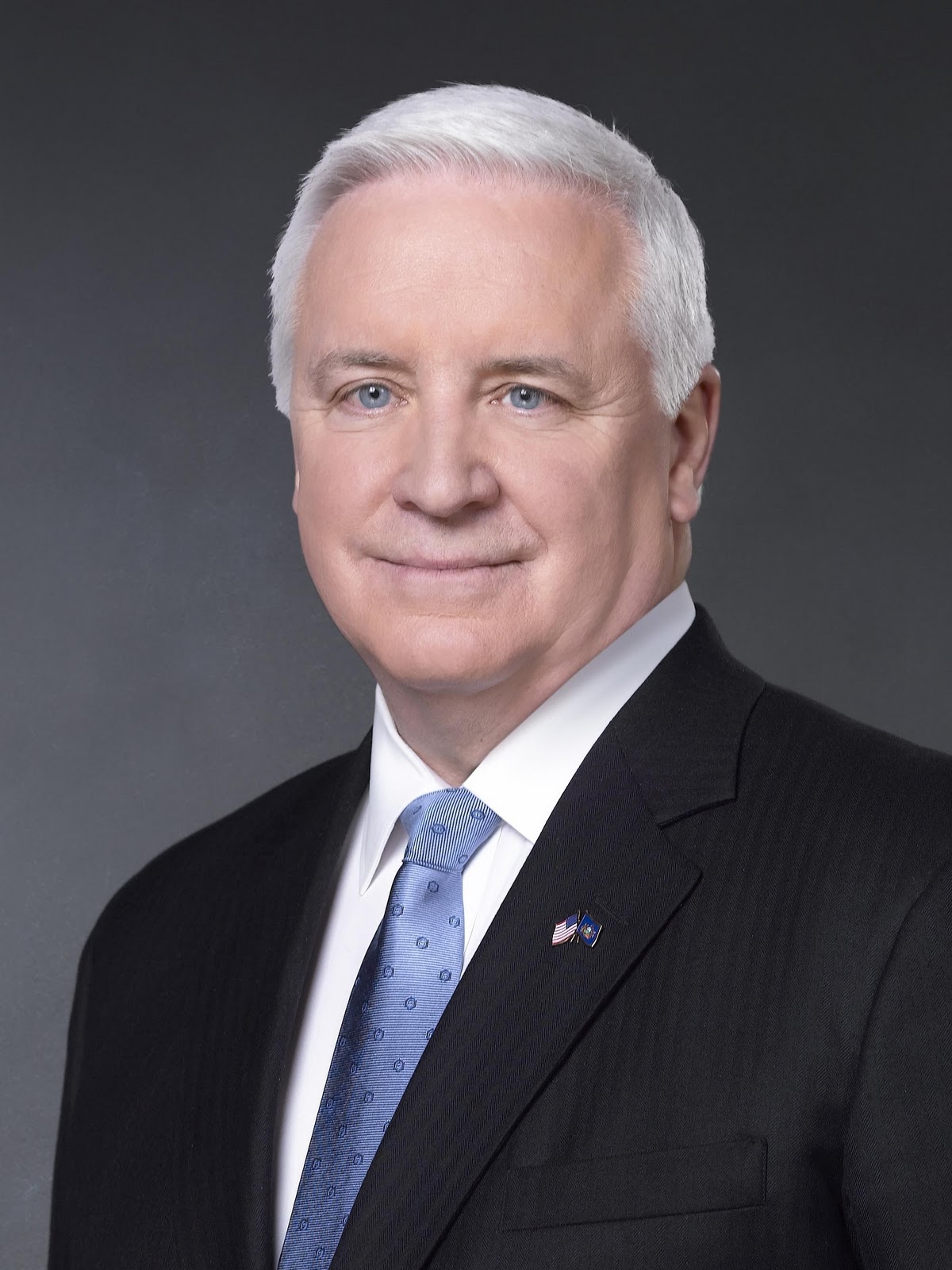
Governor Tom Corbett (on left) provided Exhibit A  for why the Commonwealth of Pennsylvania needs to pass a full and fair funding formula for public education in Pennsylvania. Earlier this week, state legislators from Philadelphia, plus the mayor, the superintendent and members of the School Reform Commission (SRC) petitioned the legislature to give the city the right to assess a cigarette tax, the revenues of which would provide needed finances for the schools. The governor responded by offering them a deal: vote for a revision in pensions for state workers (something even members of his own Republican party did not support) in exchange for the cigarette tax. by  trying to play hard ball politics the governor showed his true hand by pitting pensioners and union members against  school children, so he would not have to assess higher taxes on his corporate cronies in the shale gas industry.

Groups such POWER and PCCY have been urging the passage of full, fair funding formula. In its study of how public education funding is decided across the country, the Education Law Center
found that Pennsylvania is one of only three states in the country that do not have some sort of legally binding formula for determining how public education is funded. Furthermore, they found that Pennsylvania places a greater than average burden on local communities to raise property taxes to fund their schools. The result of this combination means that there are huge disparities between wealthy and poor communities as to the amount of money that is raised to support public schools. Moreover, when it comes for the state to “make  up the difference” decisions are made on the basis of political power and favoritism, rather than which districts have the greatest need. So not only is the amount of funding from the state for education woefully inadequate, what money is disbursed is done so without reference to need, but rather to political favoritism.

In those states that do have a formula for education funding, several factors are considered,  such as poverty rates, special needs children, the number of ESL students, the number of students in foster care, the number of children with disabilities and the like.  Because there is a legally binding formula, decisions are made on the basis of need, not cronyism. However, not only must there be a formula, there must be adequate funding. The state is woefully short in this area too. The governor and the legislature will boast that they have increased education funding, but if one is only paying half the bill, that may keep the bill collectors at bay for a while, but sooner or later the bill becomes due.

The bill for adequate and fair funding for public education is way overdue. The Philadelphia school system is about to collapse with overcrowded understaffed schools with too few auxiliary staff to keep the schools healthy and safe for students and teachers. The cigarette tax will only help Philadelphia reach last year’s level of funding, which itself was woefully inadequate. By trying to play hardball with school funding the governor shows just how closed minded and callous he is. By proposing a budget that does not begin to meet the needs of school districts across the state, the legislature shows just how blind and callous they are to the real needs of the people.  


When injustice and callousness becomes so ingrained that people have no conscience about what they are doing, they display what Hannah Arendt called the “banality of evil.” Many a preacher on stewardship Sunday has reminded parishioners that one’s budget and checkbook offer a statement as to the state of one’s soul and the quality of one’s morality. By that standard the governor and the legislature have gone just about as low on the scale as they can go. It is time for Pennsylvania to enact a fully funded formula for public education and give the children of the Commonwealth the quality of education they are guaranteed by the state constitution. The issue is not simply about politics or money; it is about how we will regard and respond to the needs of the most vulnerable in our midst, in this case school children. In that sense a full, fair funding formula is a deeply moral and spiritual issue for political leaders and the communities they are called to serve.

[This blog entry has been sent to Governor Corbett, as well as Sen. Ted Erickson and Rep. William Adolph, my representatives. Rep. Adolph is also head of the House Appropriations Committee which determines the budget. This blog has also been submitted to the Philadelphia Inquirer for consideration on the editorial page]

Friday, February 27, 2009

My Charter School Dilemma

After several years of frustrating delays, on Feb. 18, Eastern University received final approval from the Philadelphia School District to open its charter school in the Fall of 2009. At that same meeting, Arlene Ackerman, Superintendent of the Philadelphia School District, announced her proposals for school reform, which included granting many more charters and turning over some schools to the management of for-profit companies. In the same vein in his address to Congress on Feb. 24, Pres. Obama announced his plans for education reform, which included the starting of more charter schools across the country. So it seems that charter schools are all the rave, and for many political leaders, central to addressing the underperforming public school system particularly in economically depressed urban and rural areas. In fact when Geoffrey Canada, founder of the Harlem Children’s Zone, approached the Chancellor of the New York City Schools about taking over a couple of public elementary schools in Harlem, he was advised that he would do better to simply start his own charter school than try to revive the failing public schools.

According to U.S. Charter Schools, charter schools are given public money to run programs independent of the existing public school system tailored to meet the needs of a specific group of students. In exchange for the freedom to innovate, charter schools are held accountable to provide students with a level of education equal to or above national standards. While charter schools cannot “select” their students (enrollment must be open to all), they often do not have the special needs programs required of regular public schools. Thus, by virtue of the fact that they are not designed to meet these needs, charter schools by default screen out children with some of the most difficult academic and behavioral problems. Also, because families must choose to apply to a charter schools, those children from the most dysfunctional families often don’t even know of the charter schools option. Also, charter schools usually can avoid teachers unions and some of the power politics involved in public school education. Thus, it is understandable why parents, students and politicians are attracted to the charter school option, as it avoids many of the problems and barriers faced by a people involved in the public schools.

As the Philadelphia and New York examples illustrate, the CEOs of large urban public school districts seem to have given up on the very system they have been charged to lead. Therein lies my dilemma. If the leaders of our public school systems and the President of the United States no longer believe in the public education system, what hope is there for true public school reform?

This issue has taken on a very concrete manifestation for me. Over the past 18 months, I have been involved with a group called the West Philadelphia High School (WPHS) Community Partners, a group of students, teachers, community members, business folks, and concerned professionals seeking to promote innovative changes to a vastly underperforming urban high school. Essentially, we have been asking that WPHS be given the same flexibility to innovate as a charter school, but have been informed thus far that our proposals are too expensive, and unrealistic.

As positive as they are, charter schools pose a significant challenge to overall fabric of communities. Charter schools’ focus is usually not geographical, so they draw from across a wider area than a regular community based school. Sociologists point out neighborhood schools are essential to the overall health of a community. Families with small children consider the quality of schools a major factor in choosing where to live. If schools are underperforming, parents will often send their children to private or parochial schools (if they have the means to do so), or move to a community with a better public school. Charter schools are a form of the private/parochial option without the cost to the family. While this option serves the individual students and family well, it undermines the potential of a community by draining the local school of capable students and involved parents. While this phenomena is most pronounced in economically depressed areas, I see it happening in my suburban school district as well. Nearly 35% of school age children in our suburban district attend a non-public school option. Moreover, this district continually faces the opposition of tax-payer groups not wanting to support the local school. If this trend gains strength, even in this middle class suburb, public school quality will continue to decline. Charter schools, like private and parochial schools, serve the needs of individuals but often at the expense of the wider community.

So, when a community group, such as the WPHS Community Partners, asks to innovate their local high school, why are they rebuffed? Essentially, our proposal has been to convert WPHS, a school of 1200 students, into four “small schools” within one building. Each school would be comprised of 300 students, have a particular focus (Performing Arts, Business, Auto Mechanics, Urban Leadership) and be led by its own principal who would have freedom to innovate. By sharing the same building the schools could cooperate in use of facilities and large group programs such as music and athletics. This model has proven successful in urban areas such as Providence, RI and South Bronx. While there are greater costs at the leadership level, those costs are more than made up in reduced need for security, discipline, and following up on drop outs. Students in small schools don’t “fall thru the cracks” and become a caring learning community. While we are stilling hoping for a more positive response, I suspect the reasons the Philadelphia district is hesitant get down to teacher union intransigence, intra-district politics, the traditional school distrust of community groups, and a fear if the model works, it might put pressure on the district to replicate the model in other schools. However, if the model works, and strengthens a community in the process, perhaps such a change is necessary.

Please don't misunderstand; I am not opposed to charter schools. I am only concerned about the trend they represent. My concern is if public school districts simply farm out their problems to independent groups, the very purpose of public education (to equitably educate citizens for the common good) will be undermined. Avoiding the necessary reform of the very core of public education cannot be accomplished by working around that system. To do so is to relegate many potential star students, dedicated teachers, concerned parents, and community residents to a second class, inadequate education. We will serve the interests of individuals but further undermine the health of struggling communities while we are doing it.

Tuesday, July 30, 2013

School Funding Formulas

Below is the text of a letter to the editor I submitted to the Philadelphia Inquirer in response to an article about the challenges facing suburban public school districts that required them to raise property taxes and cut services. The letter seeks to point out that the challenge faced by these districts is part of a much larger issue regarding how Pennsylvania funds (or as the case may be, does not fund) its public schools.

The recent article, “School Tax Vise” (Inquirer, July 29, 2013) reveals that the funding challenges being faced by the School District of Philadelphia are also being faced many suburban districts which have had to raise school taxes and make significant cuts in order to keep their public schools operational. While currently suburban districts have been able to manage these challenges, their plight reveals a fundamental flaw in the way Pennsylvania public schools are currently being funded.

In February 2013 the Education Law Center published Funding, Formulas and Fairness, a study of how Pennsylvania funds its public schools in comparison to other states. Some troubling comparisons were revealed. On average states provide 43.5% of the total amount of money on public education; Pennsylvania spends only 35.8%. By contrast on average states expect local communities to provide approximately 44% of the funding needed through local property taxes; Pennsylvania requires local communities to raise 53% (all percentages are based on 2010 data, the most recent year available).  Furthermore, Pennsylvania is one of only 3 states that does not use a standard funding formula for allocating what state funds it does provide. Such formulas take into account community income levels, specific student needs, the number of ESL students and other factors to make sure that all public schools have the resources to provide adequate education regardless of location, income level and nature of the students. The lack of such a funding formula makes school funding a subject of political wrangling, and in particular leaves disproportionately poor districts such as Philadelphia and Chester, grossly underfunded.

Community groups such as the Education Law Center and POWER (Philadelphians Organized for Witness, Empowerment and Rebuilding) are seeking to work with political leaders, educators and like-minded citizens to establish a funding formula for all public schools, so that the constitutional mandate to provide quality public education for all Pennsylvania’s children can be fulfilled. Public education is an issue that unites both suburban and urban districts and should compel all citizens who care about our children’s futures to bring Pennsylvania in line with other states on this vital public issue.

Saturday, January 28, 2012

The Destruction of Public Education and the Conservative Agenda

For some time now, I have suspected that the Conservative agenda involved the systematic dismantling and undermining of public education. Conservatives have repeatedly belittled public school teachers, fought the increase property taxes (which are the primary source of funding for most public school budgets), sought to pass bills calling for vouchers, and promoted the proliferation of charter schools, as their agenda for “reforming public education.” I have seen this is my children’s own suburban school district, in the Philadelphia public schools and in communities around the country. Taken together these actions sound the death knell of many public schools, especially in economically depressed communities. However, I doubt it will stop there; conservatives want to destroy publicly funded education in all its forms.

Recent actions by Pennsylvania Governor Tom Corbett have done nothing to dissuade me from this perspective; in fact he all but publicly proposed that for two communities in Pennsylvania. In my last blog posting, I decried the action of the governor denying funding for the Chester-Upland school district that had run out of money mid-year. The governor refused to provide relief claiming the school had “mismanaged” its funds. Chester-Upland has been under the oversight of the state government for several years, so if there was mismanagement it was in his own government as before he was governor he was the Attorney General.
Fortunately, a federal judge ordered Gov. Corbett to provide the $3.2 million necessary for the Chester-Upland district to complete its school year; this isn’t sufficient but it gives the district some more time However, the governor has already submitted a bill to the PA legislature that will effectively dissolve the school district, disband the teacher’s contracts and turn the remaining schools over to charters. He has proposed a similar plan for the community of Duquesne City in Western PA. Moreover, he proposes lower payments to schools that Chester student would apply to, thus making a lesser incentive for schools to attract or admit Chester students. The bill is so bad that even some of the Governor’s Republican allies are rejecting the bill. Fortunately, others are proposing their own bills, but it is clear that while the Governor continues to protect his corporate friends from any more taxes, he openly and disdainfully ignores the needs of the poorest citizens and their children in place like Chester. Because of the governor’s budget slashing other districts like Philadelphia also face further cutbacks even after slashing $600 million for their budget last summer, which led to larger class sizes, fewer teachers and the elimination of many academic support programs.

In 1962 Michael Harrington published his classic book on American poverty, The Other America, in which he exposed to the world the travesty of desperate poverty in a land of such wealth and opportunity. Harrington’s book so moved President Lyndon Johnson that is was believed to be a major influence in his efforts to create The Great Society programs that addressed poverty at levels never before seen. It is these same Great Society and War on Poverty programs that conservatives have consistently criticized and systematically dismantled over the last 50+ years. That is probably why Harrington’s book continues to be published and re-issued, and why now 50 years later because of hard-hearted conservatives like Corbett, it is still very relevant. This is not to say all conservatives are hard-hearted (there have been so-called compassionate conservatives like George W. Bush who disagreed with liberal policies but did not totally turn their back on the needs of the poor and offered their own solutions), but the brand of conservatism currently being practiced by leaders like Gov. Corbett, and Wisconsin Gov. Scott Walker shows no compassion nor concern for those who still suffer in the Other America.

While many of us don’t need to worry about our kids and their schools because they haven’t gotten to the point of Chester, we should take note what is happening. We need to see the trends, and recognize that while states are required to provide all students a quality public education, conservatives blatantly disregard that mandate in communities in most need and with the least resources. At the same time schools are being de-funded prisons are being built at a record pace in states like Pennsylvania. Research shows that there is a clear correlation between youth violence and low quality education. When it comes to building a school to prison pipeline, conservatives like Tom Corbett are showing us the way it is done with impunity.

Saturday, August 30, 2014

Money Matters: Why A Full, Fair Funding Formula is Essential for Racial Justice in PA | Philadelphia Public School Notebook

 Link: A full, fair funding formula is essential for racial equality in Pa. | Philadelphia Public School Notebook

The following appeared in the  Friday (8/29) edition of the Philadelphia Public School Notebook, an open letter to the PA Legislature written on behalf of POWER by Margaret Ernst, Sheila Armstrong. The text of the letter is below.

----

Money Matters: Why A Full, Fair Funding Formula is Essential for Racial Justice in PA

by Sheila Armstrong, Drick Boyd, and Margaret Ernst
Last week, several Philadelphia clergy members of the interfaith organization POWER (Pennsylvanians Organized to Witness, Empower and Rebuild) witnessed a powerful movement for racial equality grow in Ferguson, MO following the killing of unarmed black teenager Michael Brown. 
 Travelling to Missouri to call for justice and listen to a community in grief, our clergy marched non-violently with black youth asking for fair treatment from law enforcement – and even more importantly, for a sign from their fellow Americans that their lives matter. 

But as our clergy brothers and sisters returned home last week, they returned to a place where there is no dearth of racial inequality of its own. 

In our own backyards and on our watch, we witness a different kind of violence being done not just to one teenager but to hundreds of thousands of young people across Pennsylvania.  As the only state in the union without a funding formula for public education, severe cuts within the last few years have led to a disproportionate hemorrhaging of school districts with mostly African American and Latino students like Philadelphia, the consequences of which will be felt for generations.  

Sheila Armstrong, a POWER member from North Philadelphia with two boys in Philadelphia public schools, can testify to those consequences and the broken promises that have come with them.  At events in her community in 2010, she witnessed Governor Corbett and other legislators running for state office promise that a new day had come for education in the state.  But after a $1 billion cut to education funding in 2011, one of her son's elementary schools closed down.  In 2012, she wondered whether her son with asthma would be OK on days that no nurse was on duty due to staffing cuts.  This year, she was left unsure whether schools would even open in September.  

Now, school will indeed start on time, but with less cleaning services, security and transportation assistance for children.  Aside from having to worry about whether her boys will get a good education, Sheila and thousands of Philadelphia parents like her will fear every day for their basic health and safety.   

Young people of color in Missouri and across the country have wondered whether they matter in the wake of the killing of Michael Brown.  As we reflect on the circumstances of education funding here in Pennsylvania, we too are left to ask, do Sheila and her sons matter in the eyes of lawmakers?

With Harrisburg’s newly formed Basic Education Commission beginning its work, now is the time for lawmakers to answer that question.  The Commission, which has met twice already and will make recommendations for a funding formula by the end of June, can and must prophetically re-imagine what it takes to fund education in our state.  To do this well, we must be willing to have an open and honest conversation about race as Pennsylvanians. 

As cuts were made at the state level, large, predominantly black, brown, and poor districts across the state such as Philadelphia, Allentown, and Reading have been left drowning without a lifeline.  Unable to make up differences in state spending with local revenue, the disproportionate impact on these students is rooted not merely in recent spending cuts nor in education policy alone.  It rests on, and perpetuates, a much longer history of disinvestment from communities of color that has created today’s dramatic racial wealth gap, and which will continue if left unaddressed.   

But in the case of education spending in PA, a threat to justice anywhere is a threat to justice everywhere.  While cuts have had severe impact on Philadelphia and other predominantly non-white districts, dwindling state funds have resulted in major cuts in poor, rural districts in predominantly white communities, and soaring property taxes in the suburbs. 

All of our children are worth more.  In addition to being bold enough to talk about the severe “investment gap” in students of color and poor children in our state, the Commission must set goals for increasing education funding levels as a whole.  We must not just fairly divide up a pie that we refuse to grow – we must grow the pie.
Education Secretary Carolyn Dumaresq testified in the Commission’s August meeting that  “money matters” for children to achieve in school.  We cannot think of a better argument for increased funding, and for a fair distribution of those funds that ensures we will not continue to replicate an education system that in spite of other civil rights gains, is woefully still separate and still unequal.  It is the choice of the Basic Education Commission and all us Pennsylvanians whom it represents whether we will continue trends of economic and racial inequality or begin to reverse them.
The discussion about how much our children are worth to us, wherever they were born and whatever the color of their skin, is a sacred one – and has never been a more important.  Let’s have it now, and let’s have it courageously.  


Thursday, August 22, 2013

The March on Washington, Racism and Education in Philadelphia

The following is an address I gave on Thursday, August 22 at the POWER Forum on "Philadelphia in Crisis: Race,Education and Economics. POWER is a network of 41 congregations in Philadelphia that have come together working on issue of economic justice, immigration and public education.


March on Washington
We gather tonight at the nexus of conflicting realities. Our public school system is in crisis, teetering on the edge of bankruptcy. Students, parents and teachers are caught up in a chaos of uncertainty.  Residents of our city struggle with poverty and joblessness. While the police commissioner says that homicides are down, there is still way too much violence on our streets. These are the grim realities that many of us face and all of us live with.

Yet this Saturday, my wife and I, along with what is expected to be 100,000 other people, are going to gather on the Mall in front of the Lincoln Memorial in Washington D.C. to commemorate the 50th Anniversary of the March on Washington for Jobs and Freedom that took place on April 28, 1963. The March was the brainchild of A. Philip Randolph, head of the Pullman Porters Union, and was first proposed in 1941. On that day an estimated 200,000 people gathered from communities across the country on that sweltering August day that is most often remembered for Martin Luther King’s “I Have a Dream” speech in which he proclaimed that they had come there to cash in a promissory note at the bank of justice.

I was only ten years old when that march occurred and was living in an all-white Midwestern suburb where the Civil Rights movement seemed something far removed from my family’s life. However, today I realize that what Randolph, John Lewis, Dr. King and the others who were speaking about was essential to the well-being of all Americans. And so I am going to pay tribute to that original vision, and reaffirm my commitment to work to help realize the Beloved Community that Dr. King so often spoke about. That’s what POWER is about, and why are so concerned about the struggles of people in our own city.

Goals of the Original March
For a few moments I want to look back at the original March on Washington and the goals that brought folks there. They were as follows:

-            - a comprehensive civil rights bill,
-            - legislation to protect the right to vote,
-           -  a $2-an-hour minimum wage nationwide,
-            - desegregation of all public schools,


What came of their efforts?
-        They got a Civil Rights Act  of 1964; but through legislation like the Patriot Act we have seen those rights eroded.

-        They got the Voting Rights Act of 1965; but just a few months ago the Supreme Court gutted the provisions that required the states to get federal government approval for changes that might disadvantage certain groups of their citizens; and so even here in PA we are fighting Voter ID laws specifically designed to disenfranchise poor and senor voters and voters of color.

-        When they marched, the minimum wage was $1.15/hr. and it was raised $1.25. Which doesn’t seem like much but that would translate to $9.54/hr. today. $2 would have equaled $15.27 today. Today our minimum wage is $7.25/hr.

To further put things in perspective, unemployment among African Americans is higher today than it was in 1963. In 1963 it was 10.9%, today it is 12.6%, and we know that roughly 25% our citizens in Philadelphia, working or not, live below the poverty line.

So, while much has changed for the better since 1963, it must be put in perspective.  Many of the gains that were made then have been eroded or lost. This is why organizations like POWER are so important; the struggle for justice is never done. As Frederick Douglass reminded us 175 years ago, those in positions of authority never relinquish their power without a fight and a struggle; that is what we in POWER are engaged in.

Education
However, I want to speak specifically about education.

The March  also called for the desegregation of schools because even though the 1954 Brown vs. Board of Education decision outlawed segregation it have given states the freedom to decide when and how they would desegregate; Most states did nothing. For instance, I went to Boston in 1971 and they were just beginning to desegregate schools then.

Not much has changed on that score. Just because a law is in place, does not mean it will get enforced. For instance, the PA constitution requires the state government to “provide for the maintenance and support of a thorough and efficient system of public education to serve the needs of the Commonwealth.” What we have been experiencing is anything but thorough and efficient, and if they were offering maintenance and support, would we be in this position?” Sometimes OUR JOB is simply to get the political establishment to do ITS JOB.

The rationale for fighting so hard for desegregation in the 1940’s, 50’s and 60’s was not just so black and white kids would go to school together. No, those in the NAACP and others who fought for desegregation realized the only way that black kids would get access to same resources  as white kids  was by being in the same schools with them.  Then and now desegregation was about ACCESS and RESOURCES.

When we look at what is happening to our schools here in Philadelphia we see that our system  discriminates against students of color and poor kids of all colors;  that it denies them the access and resources they are entitled to by LAW. What we are looking at the effects of a system that is racist and economically unjust.

Institutional Racism
Let me pause here and say a couple things about racism.

First of all, when people think about racism they think about overtly racist acts or statements like George Zimmerman’s profiling of Trayvon Martin or Riley Cooper’s statements that have gotten so much press. But when you are talking about something like the Philadelphia school system, we are talking about what Stokely Carmichael (now Kwame Ture) called “institutional racism.” People see a black school superintendent, a black mayor, a black City Council president, and Asian and Hispanic leaders in both the educational and political roles; so how can it be racist? Well maybe it’s because Governor Corbett is white – and he won’t authorize funds – is that why it’s racist? Not exactly.

In the courses I teach on racism I tell my students that when talking about institutional or systemic racism we need to distinguish between intent and impact. It does not matter what a person or a government or school system intends to do, it’s the impact of what it does that really matters.

So for instance, in the issue of school closings we look at impact. These decisions were made by a black superintendent – how could it be a racist decision? Look at the impact. According to one report I saw, black students make up 58% of the students in the school system, but make up 81% of the students affected by the school closings. White students make up 14% of the students in the system, but only 4% of students affected by closings are white.  We don’t need to know what Dr. Hite and the SRC intended in the decisions they made, we just look at the impact.

So first when talking about racism we need to look at impact not intent.

The second thing about racism is that we can’t talk about in isolation from other forms of discrimination.  When we look at the way public education is funded we need to take this into account. Racial segregation is important to note but it become much more critical when we see it linked to  what I call economic segregation. This dual form of segregation is evident in the way we have established communities in our wider metro area and the way schools are funded.

Example of Institutional Racism
One of the examples I often think of in this regard is a comparison of Overbrook High School and Lower Merion High School. The schools are less than 4 miles and 10 minutes apart on the map, but they exist in different worlds when it comes to education.

According to the Philadelphia Inquirer in 2012 the average funding per student in Lower Merion was $21, 399. In Philadelphia (of which Overbrook is a part) the average funding per student was $11,078. That’s a difference of $10,000 per student. In practical terms that means students in Lower Merion have smaller class sizes, more technology in the classroom, more highly trained teachers, overall newer facilities, larger and more contemporary collections in their libraries and an overall higher quality educational experience.
PA Dept. of Ed  reports that in 2012, Lower Merion HS had 98% of the students entered 9th grade graduate; By contrast, only 56% of the ninth grade students of Overbrook graduated.

Racism, mixed with economic discrimination spells segregation of another kind.

This why on the POWER Education Team we have been researching fair funding formulas for the State of PA. Pennsylvania is one of only 3 states in the US that doesn’t use some fair funding formula. As compared to other states PA depends most heavily on local property taxes to fund their schools. This is why Lower Merion ends up so much more per student – they have higher property values and even though their tax rate is lower than Philadelphia, the amount of money they take in is much higher.

And while money is not the only issue, it does translate (as we can see) to higher rates of success.

The Importance of Education and Despair
Why this is important is because we know that there is a correlation between getting a high school diploma and success and other areas of life.

There is a correlation between...
-                                   Dropping out of high school and joblessness
-                                  Dropping out and amount of income one can make in their lifetime
-                                  Dropping out and violence
-                                  Dropping out and incarceration

The reason we must address this issue of education is because so much else hinges on the kids in our school system getting a fair shot at making it in life.

Now one of things we need to remind ourselves is that correlation does not necessarily mean causation. In other words just because two things happen at the same time, that does not mean they necessarily caused the other. For instance,  dropping out of school does not necessarily cause joblessness, or poverty or violence. Often when you see correlations like this there is a third factor causing both. And I think the cause for both dropping out and the other social problems is despair.

At its root in POWER we are battling despair, people just giving up and throwing in the towel.
-        Its why it’s so important we partner with groups like PSU and YUC who motivate students to advocate for their own education

-        Why it’s important that we organize parents, so they realize they are not alone, when they stand up to principals, administrators and politicians and demand a quality education for their kids

-        Why this fight for education is going to be long and hard, and We MUST WIN.

New Vision
Once we get the funding solved, and WE WILL, our job is not finished.  The racism we are facing is multi-faceted and multi-layered and requires a long, committed struggle. Down the road we will need to to look at what’s happening with charters, the privatization of the public schools,  curriculum, teacher training and innovative ways of doing education for specialized learners. More than that we need a vision of what the Philadelphia School System can and must be.


Dr. King inspired the people 50 years with his vision of a dream. We need to help the students, parents, teachers and administrators of PSD develop a vision beyond just surviving and keeping schools open. We need a  dream of quality education that can pull us forward. Then and only then will we live out the legacy Dr. King left us 50 years ago, a dream toward which we are still reaching.

Sunday, August 01, 2010

Is the "Race to the Top" Rigged?


President Obama is to be commended for making the improvement of the nation’s public school system a national priority and for challenging states and school systems to completely re-think the way they deliver education through the program called Race to the Top. States are being invited to submit proposals for funds to engage in a process of major educational reform. State plans must address six priorities that range from early childhood education to providing resources for high risk and special needs students to recruiting and training high quality teachers.
However the recent announcement that Washington, DC superintendent Michelle Rhee fired 241 “low-performing” teachers after instituting her program called IMPACT. Rhee’s action raises the question if the emphasis on teacher performance indicates that the Race to the Top is rigged against the teachers. Whenever educational issues come up, the first target of critics is usually the teachers. So as the Washington Post reported, Rhee’s action is meant to “send a message” that teachers need to raise the quality of their performance. No doubt some teachers need to find another career, but others may be forced outto that career not because of lack of skill or commitment, but a lack of structure, resources and support.
Critics often complain that teachers are overpaid for “only 9 months of work” and aren’t held accountable. Over the past several years no one group of people so valuable to our society have been so maligned and misunderstood as teachers. Now put those teachers in an old building that looks like a prison, has poor ventilation, with 35 kids per class, 5-6 periods a day, not enough textbooks, and no aides. Then include in that class 5-6 kids who come from dysfunctional families, another 5-6 who have childcare responsibilities or are expected to contribute to the family income, don’t give those kids breakfast and then blame those teachers that test scores are not “meeting standards”. You will begin to understand what Michelle Rhee’s “low-performing” teachers are up against.
I offer three points of reference. First, my own children went through a suburban school system that was at best adequate. Every year the local paper published the salaries of all the teachers in the district, and complained about “rising property taxes,” which happened to be lowest in the county. Through their 13 years of schooling, my kids had some outstanding teachers, a few poor ones, and a majority of mediocre teachers. But these teachers had adequate technology, a decent library, and manageable class sizes. Most of the kids came from families that provided enough food and other necessities, so that the kids were not expected to contribute the family income. Most of those families had at least one college graduate, so that these kids grew up expecting to attend college. My kids and the vast majority of kids graduated on time and went to various post high school pursuits including college. Mediocre and even poor teachers get by in that system, because they were operating in a context that surrounded them with adequate resources, necessary support, and a college going culture.

Second I am a college teacher who has taught graduate students, first and second year undergrads, and adults returning to earn a college degree. One year I simultaneously taught students across that spectrum. With the graduate students who were intelligent, motivated and resourceful, I was “outstanding” – my students grew and learned tremendously - by their own evaluation. However at the same time I taught a group of students most of whom were first generation college students, and who often had major economic and family responsibilities outside of class. I also taught some adult students who had difficulty reading and others who could not write coherent paragraphs. I worked doubly hard and pulled out every creative idea out of teaching bag of tricks. I ended up failing half the students in the undergrad class, even though it was one of the most creative, draining and challenging teaching experiences of my career. Even more amazing is that some of the students I failed actually thanked me for the way I had respected them in that class. So which teacher should be evaluated – the teacher of grad students, the teacher of the adult students or the teacher who failed half his undergrad class?
Third, I am part of a community group that provides support to a large urban public high school, I sit on the board of an urban Mennonite high school and I have consulted with a new charter school. All three schools serve the same demographic of students: lower income, urban, mostly students of color. The urban high school sees only about 50% of its 9th graders persist to graduation. The Mennonite high school has a 100% college acceptance rate of students, and the charter school is only one year into operation, so it is too soon to tell. However, what is common to all three schools is that they all have innovative and creative principals and a group of teachers who love kids. However the charter school and Mennonite high school have class sizes around 20, while the public high school averages 30-35. The charter school and Mennonite high school have local autonomy, while the public high school answers to the superintendent. Despite its low test scores, the public high school has seen phenomenal improvement in scores and morale, was on track to substantially improve the graduation rate. Justlooking at the scores the superintendent decided the principal needed to be re-assigned and her efforts halted. My prediction is that any momentum and hope she built with students and teachers will be undercut and the school’s performance will decline.
In these scenarios (my children’s school, my own classes, the three schools I compare) which teachers failed and who succeeded? Blaming teachers for a failed system is an easy explanation, but wholly inadequate. If I was teacher looking for a job, would I want to go into a system where the odds are stacked against me like the Philadelphia or DC school systems? Would I choose to operate in a system, where I am underpaid, and under-resourced, and yet expected to achieve progress on my kids test scores? Are the test scores even the proper measure of success? Or would I choose to go to an adequately resourced suburban district where even if I was mediocre, my kids would do okay? Or would I gravitate to a charter school or a private school, not subject to the whims of a politically vulnerable superintendent?
If we as a nation are truly concerned about public education, we need to stop laying all the blame on the teachers. The system as a whole is broken and creating a culture of fear and distrust distracts everyone’s attention, especially the teachers, from being willing to re-shape and re-form that broken system. What we need is a systemic approach to urban education like Geoffrey Canada’s Harlem Children Zone. Canada recognizes that there many factors outside the school building that affect learning inside the school building. While I don’t fully agree with Canada’s almost totally behavioristic methods, I do think he has recognized that the problem with urban public education is systemic and is seeking to address it that way. This is why cities across the nation are seeking to adopt and adapt his model to their situations.
I recently read the reflections of a 5th year teacher in the Philadelphia public school system. Half of all teachers quit by their fifth year, and this teacher had survived that threshold. Yet, just when she should be hitting her stride, she writes that one of the realities she lives with is that most days she drives home “feeling like a crappy teacher.” Moreover, as she looks out over the career ahead of her she wonders if she can sustain her career over a lifetime. I want that teacher to feel valued, supported, and excited about the work she will do, because those feelings will be conveyed to her students, and will influence her students’ performance. Creating a culture of fear and intimidation (as Michelle Rhee has done in DC) will not help this teacher feel any better about herself, her work or her students. She needs to be surrounded by a system that helps her get better at her craft, not that threatens her to get better or else.
The Race to the Top seems rigged against the teachers, and the ones who will suffer in the end will again be the students.

Sunday, May 23, 2010

Educational Justice


Educational justice has been at the heart of my work over the last 13 years.

In 1997 I left pastoral ministry and turned my interests and talents to education. While I was working in higher education, I did not teach the typical 18-22 year old college student; instead my students were adults who had decided later in life to return to college to get their bachelor’s degree. In many cases they had started out on the traditional track years before, only to be derailed by a lack of finances, family crises, or personal issues; they dropped out, and entered the working world.

The more I got to know these adult students the more I realized three things. First, very often the earlier problems these students faced were related to issues of poor K-12 education, family history, and poverty. Second, I realized that getting a college degree was one of the few legitimate roads available to adults seeking to rise out of poverty. Third, I came to see that adult academic success had generational implications, as often their academic pursuits set an example for their children and grandchildren, who in turn pursued their college degree. I realized we were not just educating individuals, we were changing families and perhaps communities.

Convinced of these insights, I returned to school and earned a doctorate in adult education with a view toward helping craft programs that could serve whole communities beset by poverty and create quality education programs that could transform those communities. I joined the Community Partners of West Philadelphia high school, one of the schools with the lowest test scores in the city. I helped in the formation of the Eastern University Academic Charter School, and I served as a tutor for adults learning to read. Just this month I joined the board of the Philadelphia Mennonite High School.

The most exciting opportunity along these lines was my work with a program called Eastern in the City (EIC). This innovative program was developed by my university to provide a pathway for under-prepared urban high school graduates into college success; unfortunately after only three years the program was discontinued. Nonetheless, two weeks ago, I had the joy of seeing 10 of my former EIC students earn their bachelor’s degree. They ranged in age from early 20’s to mid 60’s (Two of them, Shelita Jackson and Rayna Norris are pictured above), and all of them credit EIC with getting them started on their road to a college degree. A few are even continuing on toward graduate work.

All the demographic data on high school students today, indicate that the college students of tomorrow will look and think a lot differently than the college students of the past. Not only will they be more racially and ethnically diverse, but they will be economically poorer, and academically less prepared. Many of them will not speak English as their first language, and they will have cultural perspectives far different than the Western mindset of our current educational system. Thus, colleges like mine can not continue to do business as usual if they are to effectively educate the next generation.

One response that colleges are making is to work harder to recruit the diminishing numbers those upper middle class kids from private and elite public schools. The other response is to work for educational justice. Everyone from President Obama to the teacher in the classroom to the kid on the street knows that our educational system is broken. Education is one of the strongest antidotes against violence, drug abuse and crime, yet we pour money in to prisons and let the schools fester. Vast inequities exist in per pupil funding between poor rural and urban districts on the one hand, and wealthy suburbs on the other. Exciting experiments like Geoffrey Canada’s Harlem Children Zone (one of Obama’s favorites) and Big Picture schools provide hope, but the fact is addressing this problem must occur on all levels. Schools must be safe place, parents must support and encourage their students, teachers must be adequately trained, and students need to apply themselves. Colleges need to provide bridges that help under-prepared students succeed at the college level, and must offer their expertise to their communities. Government must abandon the archaic property tax system for funding public education, and make education as much a state and national priority as fighting wars overseas and terrorism at home.

John Dewey, the seminal American educational thinker, contended that education should be the vehicle for shaping the character of students so that they could become responsible and productive citizens. If that is so, then we as a nation, and particular we who as educators, have failed to live up to our calling. Pointing fingers at others for not doing their part is a waste of time; there is enough work and sufficient blame to go around for everyone. The challenge is that we as educators, institutions, community leaders and citizens must step up and create opportunities for all students, young and old, rich and poor, white, black, brown, red and yellow, to gain the skills and the knowledge necessary to live fruitful and productive lives. Until we have done so, there will be no educational justice and our work is not done.

Monday, June 03, 2013

The "New" Civil Rights Era


In 1954 the Supreme Court issued their decision on the case of Brown vs. the Board of Education of Topeka, KS, which outlawed school desegregation, effectively nullifying the 1896 Plessy vs. Ferguson decision that allowed for “separate but equal” treatment of whites and African-Americans in all aspects of life. In the years that followed the Civil Rights Movement in its many expressions from Martin Luther King, Jr.’s Southern Christian Leadership Conference to the Student Nonviolent Coordinating Committee (SNCC) to the Nation of Islam and Malcolm X in different ways sought to make that decision operative in the American South and North.  However, not until the 1964 Civil Rights Act were there any teeth in that decision.  Even then it took many years for school districts to begin to take seriously the need to provide equal education for all its students.

Despite all the sacrifices of those who gave their lives for the cause of racial justice, it appears we in Philadelphia find ourselves in a situation not unlike those pioneers of the 1950’s. Over the last three years the Philadelphia School District has lost $500 million in revenue from the Pennsylvania State Government. While $90 million has been restored this year, it is only a fraction of what is needed to provide basic service.*  On May 31 the Philadelphia School Reform Commission (SRC) passed a $2.4 billion dollar budget, which seems like a lot of money; but was $320 million short of what was needed. However, in passing the budget the superintendent acknowledged that the budget was inadequate to meet the districts needs and appealed to the city and state to contribute needed revenues while asking teachers to also take a cut in pay. Without extra help, all but principals and classroom teachers could lose their jobs in most public schools; that means schools will not have nurses, counselors, teachers aides, art & music teachers and administrative support services.(See link for details of Philadelphia School district decision.) 

While these numbers seem staggering, another way to look at the issue is to look at what districts spend per student. In 2007 (the most recent figures I could find) Lower Merion, a wealthy suburb just outside the city limits, spent $21, 399 per student. Marple-Newtown, a middle class area spent $14,889 per student. Philadelphia spent $11,078 per student. (numbers from Inquirer School Report Card) This was before the massive cuts mentioned above. Now the reasons for the disparities are many, but the main reason is that public schools are largely funded by property taxes. Districts serving a higher percentage of low income residents, like Philadelphia, are dependent on the state government to fill in the gap. Add to that the proliferation of charter schools in Philadelphia which get money from district thereby draining off even more necessary resources. This is why the governor and state legislators’ callous disregard for the needs of low income students is so heinous.

The bottom line there is a “separate and not equal” policy regarding Pennsylvania public schools in which students are who disproportionately low income and persons of color receive basically half the resources expended on their education as their wealthy counterparts. Philadelphia is not alone, students with a high percentage of low income students both rural and urban face the same challenge across the state. Furthermore, Pennsylvania is not alone; school spending disparities exist in most major metropolitan areas.  Is this any different than the inequities which the Supreme Court outlawed nearly 60 years ago?

I think not.

Those of us who reside in the suburban areas ironically may have the opportunity to make a difference. I believe and hope that there are many people living outside the city (yet who routinely use the city services and enjoy the city’s benefits) who would be horrified to learn that we have returned to the days of the Jim Crow South; only the injustice is no longer relegated to the South but exists in the Philadelphia metro area. We can urge our representatives that we don’t want to live in a state or a country that treats its most economically impoverished citizens as cast-offs. Public education is a social contract that should guarantee that every student regardless of race, class, gender or geographic location is entitled to a safe, well run, academically credible school. Many students in low income communities like Philadelphia have not been able to depend on that contract. The current disparity is systemic racism and class-ism at its worst, and is no better than the Jim Crow South at its worst.


The other day a Philadelphia middle school teacher stood up in the church I attend and expressed his anger at the injustice befalling the students in his school. When I spoke with him afterwards, he said: Half the time I feel like I am in an insane asylum and the other half I feel like I am in a prison. That is what we are preparing these kids for, if we don’t provide a decent education.  People often wonder what it was like to live during the Civil Rights era. We are living in a new Civil Rights era. The challenge we face is whether we will respond with the same kind of determination that was exhibited by those who have gone before us.


* figures regarding school funding were provided by Senator Vincent Hughes of the Pennsylvania State Senate and can be found at http://senatorhughes.com/legislative-services/issues/education
* Pictures from Associated Press

Sunday, May 27, 2012

Tenative Support for the School District Re-Structuring Plan


I have long been an advocate for high quality urban public schools and an opponent of PA Republican Tom Corbett’s wholesale slashing of financial support for poor urban school districts like the Chester-Upland and Philadelphia School Districts. The former is facing dissolution and the prospect that its students will have to attend neighboring school districts, while the latter has put forth a bold plan for reducing central school administration roles and decentralizing the school district. I see both moves as responses to calculated efforts by wealthy elites to destroy urban public education and to ignore the needs of thousands of families and children who deserve as good an educational system as any wealthy suburban community.

With all that said, I find myself in the tentative position of supporting the Philadelphia School Reform Commission’s (SRC) plan to restructure the school district; but I do so with some strong caveats. As I understand it, the plan contains the following components.

-        First, the SRC proposes that the district be broken up into “achievement networks” that would include approximately 25 schools. Principals within those schools would be given greater autonomy to decide what programs to include and which teachers to work in their schools. The better performing a school, the more autonomy they would receive.  

-        Second, as many as 40 low performing schools would be closed with the idea of moving those students into “high performing” schools, which could be either public or charter schools. This aspect of the proposal is projected to increase the percentage of students attending charter school to grow from its current 25% to 40% in the next 5 years. The proposal calls for new charter schools, but to only allow nonprofit partners to operate rather than for-profit companies such as Edison schools. 

-         Third, the district is charged with providing “high quality…individually tailored training for principals and teachers” (Lerum, 2012).  

-        Finally the district seeks to outsource many supportive functions such as maintenance, transportation and cleaning.

Now these bold proposals being put forth by the SRC are not primarily driven by a progressive educational agenda; rather they are a response to the massive budget cuts required because of the loss of state funding for the Philadelphia School District. In this blog I have contended that the conservative agenda being put forth by Governor Corbett and others of his ilk is nothing less than the destruction of public education for poor people in favor of vouchers and private schools. Moreover, I have made clear my concern that charter schools drain money from the public school system and undercut the possibility for community input and control of those schools. Charter schools also are allowed to hire non-certified teachers and to expel students who do not fit in their system, thus sending them back to overcrowded, underfunded public schools.

So how is it that I can support this plan?

First, I support it because it is the best response to a bad funding situation. The SRC is to be commended for trying to do something innovative with the money they have to work with. Second, I support it because it gives principals and teachers more autonomy to respond to the needs of their students and families in ways that are appropriate. Under former superintendent Ackerman I saw many innovative local initiatives undercut by directives from the central administration that did not take into account the unique challenges faced by teachers and administrators in local schools.

However, I offer my support with the following conditions and caveats. First of all, with the development of the achievement networks there needs to be the offer of sufficient resources for training and accountability. I asked one middle school teacher in a “low performing school” what he thought of the plan, and he said candidly, if the right person is in the principal’s office the plan would be a great improvement, but if unqualified or incompetent principals are allowed to stay in their jobs such a plan is  a recipe for further chaos. Thus, the SRC, the Philadelphia City Council and the state and Congressional legislators must continue to seek adequate funding to provide this support. Giving people freedom to be creative without the resources to do so is setting people up for failure. Giving people freedom without proper accountability, is to sweep the problem under the rug.

Second, if the plan does in fact significantly increase the role of charter schools, restrictions must be placed on those schools regarding the expulsion of low performing and problem students. If charter schools want to become a significant player, they cannot simply push their problems back onto the local public schools. Charter schools need to employ special education teachers who can address some of the unique emotional and behavioral challenges that face our students, and not simply send them out as “failures” in their system. Charter schools must not be allowed to be selective in their pursuit of excellence, they must demonstrate their excellence by serving all students.

Finally, school district officials (the SRC and administrators) need to stop looking for “quick fixes” and commit themselves to a long term strategy for change. People who have been observing the school district far longer than me, have seen too many innovations come and go. Measures of success cannot simply be limited to test scores, but must include school attendance, school climate and the relationships develop among teachers, principals, students and families. While these other things are much harder to measure, they are vital to the overall success of a school. Furthermore, such changes require not just a quick fix but a wholesale culture change which can take several years. One of the most tragic decisions I have witnessed was the firing of WestPhiladelphia HS principal Saliyah Cruz whose efforts to create a safe and enjoyable school were widely recognized to be successful; however in her three years as principal there had not been a significant change in test scores. Any reasonable person could have recognized that before test scores could improve the school climate needed to be addressed, yet a desire for a quick rise in test scores led her to be transferred out of that position. The kind of short-sightedness indicated by the Cruz decision is deadly to any effort at sustainable, lasting change.

While many teachers and other school workers oppose the plan, the fact is that the current system has not served most students well; the primary focus needs to be on what will serve all of the district's students well. Given the hard choices forced on them by declining resources, the SRC is to be commended for its bold plan. Change will be painful, and there will be many stops and starts. My hope and plea is to give the plan time to work, and realize that given the anti-public school climate in Harrisburg and elsewhere, this plan for reform faces tough sledding, but it’s worth giving it a try.


Sources:
Graham, K (2012). Phila School District plan includes restructuring and school closings. Philadelphia Inquirer, April 24, 2012).
Kerkstra, P. (2012). A window to school reform. Philadelphia Inquirer, May 4, 2012.
Lerum, E. (2012). A bold plan to fix city’s schools. Philadelphia Inquirer (May 17, 2012)
Whitehorne, R (2012). Commentary: Is there a ‘silent majority for the District’s transformation plan. The Notebook, May 24, 2012.

Wednesday, June 10, 2009

The Problem with the "Teaching Effectiveness" Argument

This brief article was prompted a recent Newseek column by Jonathan Alter (June 15) in which he urges President Obama to push his agenda for teacher effectiveness by funding those programs with “good track records at turning around poorly performing schools and training teachers better.” At the same time he urges Obama not to give into teachers unions and “educrats” who like to spread money around evenly across a wide range of programs, even if some of them show no distinguishing marks of being “successful.”

As far as Alter’s argument goes, I agree that there needs to be greater teacher accountability and greater emphasis on looking for effective models of education outside the current norms of public education. However, Alter, like many of his ilk, is short sighted when it comes to the complexity of the teaching-learning process. While he criticizes “the widget effect,” which suggests that all teachers are equally competent, he seems to assume a corresponding “widget effect” when it comes to students. Moreover, he makes the assumption that everyone knows what “good teaching” is and how to measure it: with the results of a standardized test. These are two assumptions I do not share and must challenge.

My oldest daughter teaches in an alternative school for students with behavioral and emotional problems. These are students who have been removed from their regular public schools because of disruptive and incorrigible behavior. Some days she can spend a better part of her teaching time simply trying to get her students to focus on their lessons. Fortunately, in her school there are a whole host of support services that can help her when a student gets out of hand. She is there to help students not only with math, English and so on, but with managing their lives. Her goal is that after a year they will be able to return to a regular classroom. Apparently, her school has a good track record on doing that. Even so my daughter has often said that if her effectiveness was judged on her students’ test scores, she would be out of a job.

However, one of the political reasons these students are sent to her school is that their test scores bring down the sending school’s average, thus depressing their overall “success” as a school. Her students, once they are in her school as “special ed” kids, aren’t factored into the overall average.

Another young teacher I know is not so lucky, because he teaches math in a Philadelphia public middle school. On a recent visit to the school he confided that nearly half of his students don’t live with their parents, but instead are in foster homes or with relatives because mom and dad are strung out on drugs, in jail, or participating in any number of self-destructive behaviors. As I watched him perform a simple lesson, I could see he was not only teaching them algebra, but also basic concepts like courtesy and respect. However, unlike my daughter, his school did not have all the support services, and thus he was on his own. At the end of the year the standardized tests will reveal him to be an “ineffective teacher” because most of his kids will score well below acceptable levels. While he would agree he has much to learn, in my book he is a hero for teaching on the front lines of difficult school, a place where many “successful” teachers dare never tread.

Having been a teacher myself for nearly 12 years, and having helped many others as a faculty developer, I have had my share of great teaching moments where students really got the subject material I taught them. Yet, I have also bombed. While, I always ask myself how I could have done better, I also recognize that often my “success” is determined by not only by my teaching methods and the academic preparation and motivation of my students, but also a whole host of factors outside the classroom such as family, health, finances, job, and so on. Not only that, each student learns in different ways, bringing in different experiences, and processing information in their own special way. Moreover, there are socio-political factors such as class, race, and social power that enter into the subject matter that is taught. My point is simply students are not uniform “widgets,” and success is far more elusive than most policymakers and columnists would care to admit.

If the Obama administration wants to raise the effectiveness of education, the focus cannot just be on teachers, nor on schools. The problems in education today, are much wider and broader than that. Columnists like Alter and many politicians want simple, sure fire solutions to problems like education. They want simple measures like standardized tests to determine “success" and ‘effectiveness.” However, the task is far more complex and therefore does not lend itself to “silver bullet” answers.

Instead of berating teachers and their unions, the policymakers need to draw on the expertise and passion of the many dedicated educators in our schools. By and large teachers go into their profession because of their love of their subject and of students. Yes, there are bad apples that need to be weeded out. However, by and large teachers offer a valuable service for which they are grossly underpaid, and vastly under-appreciated, no thanks to people like Jonathan Alter.

Friday, September 09, 2011

A Beginning and New Era for a Troubled School


On Tuesday, September 6 I attended the opening ceremonies for the new West Philadelphia High School (WPHS), best known to most folks as the alma materof actor-singer Will Smith. However, the school has had long and, more recently, a troubled history characterized by violence, revolving door leadership, and persistently low test scores. At the same time it has been nationally recognized for its innovative Auto Mechanics academy, and the Urban Leadership academy, which involves students in addressing local community issues such as vacant lots and abandoned buildings. Despite these positives the public image of WPHS has been persistently negative. However, as one who has met students and teachers, I have come to know it as place where committed teachers and students have struggled to provide a quality education amidst of environment of political rancor and declining resources.
For the past four years I have been part of the West Philadelphia Community Partners (WPCP), a collection of parents, community members and other interested persons advocating and working to assure that the students of WPHS get the quality education they need and deserve. While the opening ceremonies featured political luminaries such as Mayor Michael Nutter, Councilwoman Jamie Blackwell  State Senator Vincent Hughes, and acting superintendent Leo Nunnery, the real heroes were the students, alumni, parents and community members of WPCP who had labored for years to get the new state of the art school built.

The Community Partners came together nearly ten years ago when then-superintendent Paul Vallas announced plans to construct of new school buildings throughout the city, including WPHS. Through the organizing efforts of the Philadelphia Student Union and support from the Philadelphia Education Fund, WPCP met monthly to propose plans for a small school model for the new school that would have 3-4 smaller learning communities in the large building. We proposed a particular architectural design to fit this proposal in consultation with Concordia LLC, an architectural firms specializing in innovative school design. Along with several others I attended a meeting with then-Superintendent Arlene Ackerman to advocate for our design and the small schools approach. When Dr. Ackerman announced that WPHS would be part of her Promise Academy program, the WPCP advocated for a partnership with John Hopkins University. While in the end all of the specific suggestions and proposals put forth by the WPCP were rejected, we continued to be a voice of the community advocating on behalf of students and parents for quality urban education.
I joined WPCP about four years ago after reading about several highly publicized incidents of violence between students and teachers. While I do not live in the community, I am a member of West Philadelphia Mennonite Fellowship, which meets just a few blocks from the school. As a representative of our church, I helped organize a breakfast of local faith community leaders in support of the WPCP’s efforts. I offered my expertise and input when necessary, but mostly I simply “showed up” in what some have called a “ministry of presence.” Currently, I am a member of the School Advisory Council, a group of community people who work closely with the new principal, Mary Dean, to keep the lines of communication between the school and the community open.

At the opening ceremonies I sat next to a woman whose 11th grade son was transferring from a private school to West Philadelphia High School She sounded so proud as she told me that he had joined the football team and was excited to be in a new state-of-the-art school building. As the students filed into the gym with their new uniforms and took their places in the bleachers, she beamed with joy. In that gym there was a feeling of hope and sense that a new chapter in the 100 year old school’s history was about to begin. I felt privileged and excited to be part of the process that helped put a glow on that mother’s face. I continue to serve in this way seeking to come alongside those folks so long denied privileges I can too easily take for granted (like a quality public education) by joining with them in seeking the justice they deserve.