Showing posts with label Black Lives Matter. Show all posts

Monday, January 18, 2016

A Reflection for Would-be White Allies on the King Holiday


This Martin Luther King Jr Day remembrance, at the urging of anti-racist activist  Ewuare Osayande I have re-read portions of Dr. King’s 1967 book, Where Do We Go From Here: Chaos or Community. Written two years after Selma and the signing of the 1965 Voting Rights Act, King bemoans how little has changed since the law was passed because its provisions have not been implemented and its restrictions on discrimination have not been enforced. King also notes that many of the white allies who marched with him in Selma have retreated to their lives, treating that historic event as an experience rather than an historical watershed and a turning point in history. Overtly racist whites have struck back, segregationists have been elected to office, and violence against people of color continues. The words of 49 years ago sound hauntingly contemporary.

For King in 1967, as it is for many people of color in 2016, true equality remains a distant illusion. In the first chapter of Where Do We Go From Here, King writes:

Why is equality do assiduously avoided? Why does white America delude itself, and how does it rationalize the evil it retains?

The majority of white Americans consider themselves committed to justice for the Negro. They believe American society is essentially hospitable to fair play and to steady growth toward a middle class utopia embodying racial harmony. But unfortunately this is a fantasy of self-deception and comfortable vanity. Overwhelmingly America is still struggling with irresolution and contradictions. It has been sincere and even ardent in welcoming change. But too quickly apathy and disinterest rise to the surface when the next logical steps are to be taken.  (p. 567)*

I wrote my book White Allies in the Struggle for Racial Justice to provide role models for white folks
who say they are serious about seeking racial justice. The book provides stories of 18 white folks through U.S. history who lived their lives with racial justice as a central focus. What became so clear as I researched and wrote the book is that for white folks working for racial justice means moving out of our comfort zones and living against the grain of white culture. Noel Ignatiev calls such action being a “race traitor” and Tim Wise calls it “racial treason.” Whites may be uncomfortable with phrases like “Black Lives Matter” wanting to respond “Wait, don’t all lives matter.” However, when whites make such statements they ignore the fact that in terms of employment poverty, education, health care, criminal justice and so many other aspects of our society black lives matter far less than that of whites. The promises and accomplishments of the Civil Rights movement that had not been fulfilled in 1967, remain largely unrealized in 2016. Whites must affirm the slogan not because it suggests white lives don’t matter, but that in U.S. society today black lives are literally and figuratively left to die on streets all over the country.

King writes: “Like life, racial understanding is not something we find but something we must create.” (p. 572). On this MLK Day, whites must realize that if we desire a world where all lives actuall do matter, we will have to let go of our comfortable distance, perhaps face the anger and frustration of our colleagues of color, and commit ourselves to the long haul of racial justice. 

When I talk about our call to work for racial justice, some white folks say: “I don’t want to do or say the wrong thing. How do I avoid a mis-step?” I respond by saying: "Get over it. Accept that you will mess up.” Working for racial justice is a messy, complicated, emotional, confusing process, but if you are in that process, mistakes can be overcome and forgiven. However, if we never step out of our comfort zone, we will make the greatest mistake of all: passively affirming the status quo.

[References to Where Do We Go From Here are from A Testament of Hope: The Essential Writings of Martin Luther King, Jr. Edited by James M.Washington]


Wednesday, December 30, 2015

Tamir Rice and Institutional Racism


Yesterday, it was reported that the grand jury examining the shooting of 12 year old Tamir Rice chose not to indict the officer who shot the boy. There is a clear pattern: Michael Brown, Eric Garner, Tamir Rice, Freddie Gray, Brandon Tate-Brown, Sandra Bland and many more. Unarmed African Americans killed by police officers whose killers are not indicted. What is wrong with this picture?

I teach a course on Race and Ethnic Relations and the definition we use for institutional racism is as follows: A system in which public policies, institutional practices, cultural representations, and other norms work in various, often reinforcing ways to perpetuate racial group inequity. I stress with my students that the way to identify institutional racism is not in the intent of the actors involved but rather in the outcomes or results of their actions. Do they indicate a pattern of outcomes that reveal racism or discrimination against a particular group of people? Had the victims been white would the system be so quick to exonerate the police officers involved from their murderous actions?

I was asked recently if I thought that overall life for people of color had improved since the Civil Rights era. My answer was simply “look at the evidence.” We are as segregated a society as we were in the 1960’s. Schools that have a majority of students of color are across the board under-resourced and low performing. Jails are disproportionately populated by people of color. As Michelle Alexander in The New Jim Crow and Bryan Stevenson in Just Mercy  have clearly shown people of color are given harsher sentences for the same crimes committed by whites. Look at what has happened to the law enforcement officers who killed Tamir Rice and the others. Look at how Muslims are being blamed for the actions of a few when white males have committed most of the large active shooter incidents like Newtown and Charleston. Is it safer and healthier to be a person of color in 2015 than 1965? The evidence suggests otherwise.

When a system routinely allows police officers to killed unarmed civilians, the problem is not just a “few bad cops.” Over the years I have known several police officers, and by and large they have entered their profession because they want to give back to their communities. They generally have been highly ethical and dedicated individuals. A system that turns such people into killers is not just about the people in the system, but the system itself. I can only hope that there are critically thinking people within law enforcement and the criminal justice system who are saying “What is wrong with this picture?” If not, there are lots of us not part of that system who are saying: the system must change.


Yesterday, members of REALJustice, a local Philadelphia affiliate of the Black Lives Matter movement held a demonstration at Broad and Erie Streets to call attention to the Tamir Rice decision. At least one person was arrested. Neither the arrest nor the demonstration was reported by the major news outlets. However this movement is the Civil Rights Movement re-emerged. This movement of mostly young people, like its forbear the Student Nonviolent Coordinating Committee (SNCC) of the 1960’s is calling our attention to the ongoing institutional racism in our midst, and I for one support, applaud and join them in their efforts. This movement will not be stopped until real justice and real change is brought about. Institutional racism may be the norm, but it can no longer be unchallenged or allowed to continue to kill innocent people.

Thursday, August 06, 2015

One Year Later

What happens to a dream deferred?
Does it dry up
like a raisin in the sun?
Or fester like a sore –
And then run?
Does it stink like rotten meat?
Or crust and sugar over –
like a syrupy sweet?

Maybe it just sags
like a heavy load.

Or does it explode?
(Langston Hughes)

On August 9 the nation will remember the one year anniversary of the shooting death of Michael Brown by Officer Darrin Wilson in Ferguson, Missouri. When the event occurred I was vacationing with my wife in Maine, and the shooting did not make the evening news. Yet within a day, the nation and the world began to learn of a stirring taking place in Ferguson in a way that shook Black people to their painful soulful core, and led to an eruption that has continued to smolder. There were peaceful marches, overshadowed (in the media) by angry looting, and police dressed in combat gear reinforced by the National Guard. From the politicians and police there was a call for order and but from the communities of color around the country there was a call for justice. Officer Wilson was not charged, but that cry was not silenced and the call for justice continued to grow. 


Pretty soon, we were hearing other names like Tamir Rice (Cleveland), Eric Garner (NYC), Brandon Tate Brown (Philadelphia) and Freddie Gray (Baltimore). And there was Charleston and the Black churches burned in its aftermath. Just this past month Sandra Bland (Texas) and Samuel Debose (Cincinnati) were added to that list. There were a few retaliatory reactions such as the murder of NYC police officers Wenjian Liu and Rafael Ramos, and tensions between members of the Black communities and police departments in communities across the nation grew tense to the brink of breaking. And the movement that has come to be called “Black Lives Matter” emerged and continues to grow.


For many White folks this eruption of anger and frustration came as a surprise. We  Whites hadn’t been paying attention. We had seen glimpses like the riots after Rodney King’s beating and the marches after the death of Trayvon Martin, but then things slipped out of our view and we got lulled back to sleep. We thought that Michael Brown’s shooting was somehow unique, out of the ordinary, and a deviation from a racially peaceful norm, even though it was all too normal for Black and Latino men in this country. We didn’t understand the reactions of anger, frustration, despair and even hate, but that was  normal too in communities of color. Back in the ’90’s Cornel West had written of nihilism in many poor communities of color. In the 1980’s Peggy McIntosh had written about the “invisible knapsack” of White male privilege. If given a chance to tell their story, almost every person of color I have known personally has shared a story of being stopped, frisked, and harassed just for “driving while Black.” No this wasn’t new. What was new was that the anger got coordinated and organized, and reached what Malcolm Gladwell calls the “tipping point.”

I wrote recently of my sense that we are in a Kairos moment, a coming together of folks and forces that portend a shift in the tectonic plates of history. When these kinds of seismic shifts take place, it is unpredictable, frightening and chaotic. As I look back over the year since Michael Brown’s tragic death, I don’t recall a year of such social dynamism, since I was young person watching the Civil Rights and anti-war movement unfold in the 1960’s. People look back to the '60's with a nostalgic longing for the passion and the fervor, but we have forgotten how divisive, strident and unsettling life was then too. Just like now, folks in the '60’s didn’t know where would end up but they knew things needed to change; so too now.

One year from the events in Ferguson, we are no closer to really engaging the issue of institutional racism in our criminal justice system and our society in general. A lot of important leaders from the President on down have said some significant things, but the patterns of violence, degradation and exclusion have not changed. Far too many Whites deny they have any role or responsibility for addressing the deep cancer of racism built into our culture and societal structures. Others think it either useless or hopeless.  However, the Pew Research Center recently reported that there has been a significant spike in the last five years of Americans (43% to 59%) who think there is a significant problem with racism in this country. While among Whites that percentage is only 44%, it is much higher (17%) than only five years ago. Perhaps we Whites are slowly starting to wake up that America’s original sin cannot be ignored. Whether we get on board or not, the movement for change has begun.


I close by inviting you to listen to another Langston Hughes poem, “The Kids Who Die,” recited by Danny Glover and set with images from past and present. Written in 1938 in the height of Jim Crow, this poem has a haunting relevance. May we hear and not turn away. May we walk in Mike Brown’s memory, people of all races, ethnicities and creeds with our “hands up” toward that dream that has been deferred far, far too long.


Wednesday, May 27, 2015

Are We in a Kairos Moment?


In his book Liberation Theology: An Introductory Guide theologian Robert McAfee Brown asks the question: “Is it a Kairos moment for us?” The book was published in 1993. Nearly two years earlier, a Los Angeles taxi driver named Rodney King was chased and then beaten by four LA police officers; a video camera captured the beatings and the whole world watched. A year later in August 1992 when the four officers were acquitted of charges of assault and battery, riots erupted in the South Central section of LA, and over 2000 persons were injured while 53 were killed. As South Central burned, Rodney King was quoted asking “Can't we all just get along?”

These events, and the national controversy that followed, highlighted a number of chronic ills in American society including institutional racism, economic disparity, police brutality, unequal educational opportunities, political polarity, and inequity in the criminal justice system. Brown wrote: "If ever there was a ‘Kairos time’ this is it.” (p. 109).

Kairos is a Greek word for time used in the New  (or Christian) Testament of the Bible to signify a moment for decision or a time for opportunity. Kairos contrasts with another Greek word for time, Chronos, which also appears in the New Testament, but refers to measured time or clock time. Chronos is used when we say “the time is 3 o’clock,” whereas Kairos is used when we say “our time has come!” Kairos means there is coming together of several factors that cause this moment to seem significantly pregnant with possibilities for new life, new action, and new opportunities.

So when Brown asks “Is it a Kairos moment?” what he is really asking is:  “Are we up to the challenge of the present opportunities? And “Are we ready to seize and act on those opportunities?” That question was posed over 20 years ago, and it would seem that the problems, challenges, and disparities that existed in 1993 have been greatly exacerbated in 2015. There is a chilling similarity in the deaths of Michael Brown, Eric Garner, Freddie Gray, and Tamir Rice to the beating of Rodney King. While not as devastating as the 1992 riots of South Central, there is an echo we hear in the 2015 riots in Baltimore. Racism, economic disparity, educational inequity, and police brutality are even more pronounced today than they were in 1993, and the political divide we see in legislatures from Washington D.C. to every state house and city hall makes 1993 seem like a harmonious time. If Brown could ask about Kairos in 1993, we have even more reason to do so in 2015.

The big difference I see today as opposed to 23 years ago, is that a sustained and organized movement linking racial, economic, social, and criminal justice together has taken shape in the country. Black Lives Matter has joined forces with the movements for a $15/hr. minimum wage, job creation, improved public education, and accountability for law enforcement officers. While there was looting in Ferguson and violence in Baltimore, what has emerged far stronger is a multi-racial, multi-ethnic, multi-class, cross-generational movement saying that things have got to change. Centuries ago St. Augustine of Hippo said that Hope has two daughters –anger at the way things are and courage to change them. In our time we see organized anger and courage confronting employers to raise their wages, pressuring legislators to fully fund public schools, and calling local police departments to public accountability.


To those who like and benefit from the way things are, this coordinated movement is not good news; in fact it is quite threatening. Those who live comfortable geographical and emotional distances from the suffering of the vast millions in our country don’t want to see their taxes raised, their profits diminished or their livelihood challenged. To many in positions of comfort and power, these events seem to suggest that the very fabric of the nation is coming unraveled. Their fears are well-founded because if this movement continues, the fabric of a society that benefits the few at the expense of the many will begin to unravel. If this movement continues, those who have been able to ignore and benefit indirectly from the status quo will find their comforts challenged.

I do not say these things lightly or without some fear of my own. The explosion of anger that occurred recently in Baltimore reveals a seething rage that exists in many communities. While no one is calling for or looking for violence, when rage is released, it can be destructive and devastating. This is why leadership is so critical, particularly among the young. The elders from the days of Civil Rights and other movements can advise, but the young carry the energy to move things forward. So the young leaders of the unions, racial justice, and social justice groups are so critical to capitalizing on this moment.

The fact is things must change in our society. The fact things are not as they should be in the U.S. When we have a public school system that systematically under-funds schools in poor areas and in communities of color, things must change. When ten percent of the population controls 70% of the wealth, things must change. When someone works a full time job for $7.25/hour and cannot afford to feed, house and clothe themselves much less their family, things must change. When Black and Brown men are twice as likely to be convicted and incarcerated for the same crimes committed by White folks, things must change.


These things must change, and if they do change, they will be disruptive to the society as we know it. The question remains: will these young leaders and the movements they represent seize the moment? Will things actually change? Perhaps it is too early to tell, but there seems to be an alignment of awareness, leadership, organization, and the will to challenge the dominant powers, and so it just might be we are in a Kairos moment.


[Images from Google Images]

Tuesday, April 28, 2015

A Reason for Grief, A Reason for Hope


It was the best of times, it was the worst of times,
it was the age of wisdom, it was the age of foolishness,
it was the epoch of belief, it was the epoch of incredulity,
it was the season of Light, it was the season of Darkness,
it was the spring of hope, it was the winter of despair,

These opening words to Charles Dickens’ Tale of Two Cities capture my feelings as I read and watch the news from Baltimore.

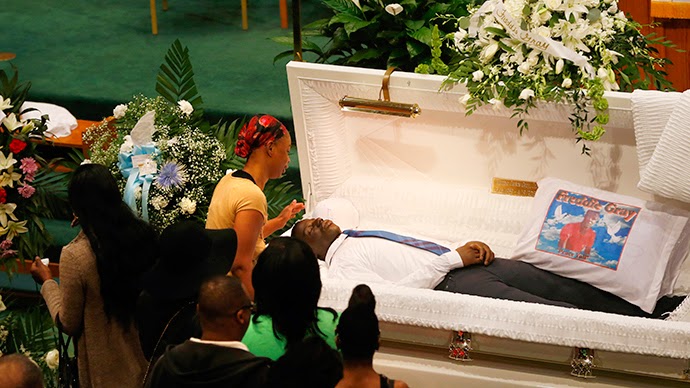
I woke up this morning to the front page news of riots last night in the aftermath of the Freddie Gray shooting and funeral. The news became more personal because my daughter works at Johns Hopkins University on the northern edge of Baltimore, and the school was closed in response to the violence. I have talked with friends and it seems like the events in Baltimore are more of the same: Trayvon Martin, Michael Brown, Eric Garner, Brandon Tate Brown, Tamir Rice and now Freddie Gray. Young Black men killed in confrontations with police.

A couple weeks ago in a course on social justice that I teach to first and second year college students, we read about the beating of Rodney King by Los Angeles police in 1992 and the riots that followed. None of those 18-20 year old students were alive at that time, and yet the issues were the same that arose  in Ferguson and are at issue in Baltimore: poverty, racial injustice, police brutality, frustration, anger and rioting. Then I thought of 24 years earlier in 1968 following the assassination of Dr. Martin Luther King and riots that erupted in cities across the country, and again the issues were the same.


As a nation we think we are making progress and for a time we do. Funding for schools is increased, job training is provided, and neighborhoods improve but then as a nation we lose our edge, our vigilance and our concern, and again the forces of inequity and injustice take over. Many scholars have indicated that the inequities we experience today have their roots in the economic and criminal justice policies adopted in the early 1980’s reducing taxes on the rich and corporations, decreasing the services and programs for the poor and targeting drug and criminal enforcement policies in low income communities of color. And so is it any wonder that every 20 years or so, people explode.

I am reminded of the questions raised by Langston Hughes in his classic poem , “A Dream Deferred:”

What happens to a dream deferred?
Does it dry up
like a raisin in the sun?
Or fester like a sore--
And then run?
Does it stink like rotten meat?
Or crust and sugar over--
like a syrupy sweet?

Maybe it just sags
like a heavy load.

Or does it explode?

At the same time I see this injustice, I am encouraged by the Black Lives Matter movement and other such groups of young people and young adults who have come together to call attention to a whole range of injustices in wages, school funding, police behavior, the right to unionize and so much more. I am encouraged that these groups have allied themselves with more seasoned groups to work 
together for common goals. I have tried to impress upon my students that they are living in historic times, that a social movement is emerging such as not been seen since the Civil Rights Movement of the 1950’s and `1960’s, a movement comprise of young and old, of rich and poor, of all races and ethnicities, of gay and straight, of documented and undocumented – all committed to a democracy that works for all and not the privileged few. It’s a movement fueled by anger and frustration, informed by complex social analysis, and facilitated by social media. Moreover, in my view it’s a movement that will not fade or go away but is growing, expanding, and in some places like Philadelphia is becoming a force that politicians and corporate leaders need to listen to. I suspect that is happening elsewhere as well.

So while I grieve the fact that another Black man has died an unnecessary death at the hands of police authorities, and it baffles me how law enforcement personnel don’t seem to be getting the message that these sorts of incidents will no longer go unnoticed, and I am saddened by the looting and violence that has occurred, I see a reason for hope. In a poem to former priest, Nicaraguan leader, and poet Ernesto Cardenal, Robert McAfee Brown wrote:

You have shown us
that beauty also dwells
in misery’s environs
and by its presence here
can work huge transformations

You have shown us
that there is nothing more beautiful
than a human face
on fire with the love of justice*


I pray that like Ernesto Cardenal, the tragic death of Freddie Gray and so many others can give us faces on fire with a thirst and love for justice that will not be quenched until transformation comes.


* poem by Robert McAfee Brown "To Ernesto: Poet/Revolutionary in Liberation Theology: an Introductory Guide

Pictures from Google Images


Saturday, March 07, 2015

Selma: Then and Now


Today (March 7) thousands of people, including several members of Congress and President Obama, have gathered in Selma, Alabama to commemorate the 50th anniversary of the 1965 March from Selma to Montgomery, in which thousands of courageous individuals marched 50 miles demanding Voting Rights for Black people in Alabama. On this day 50 years ago a much younger John Lewis and Bernard Lafayette led a group of about 600 folks lined up two by two over the Edmund Pettis Bridge leading out of Selma. Before they could even cross the bridge, they were met by a phalanx of
local and state police officers in military gear and on horse backs, who sprayed tear gas and beat them with clubs, literally driving them back over the bridge. The march had been organized after a young man, Jimmie Lee Jackson, was beaten to death by a police officer during a protest for voting rights in a nearby town. That day, which came to called “Bloody Sunday,” brought national attention to Selma. Dr. Martin Luther King, Jr. went on television and called on people from outside the South, particularly clergy, to come to Selma to support their cause, and three weeks later, 8000 people marched over the bridge, and the same police who had beaten folks three weeks earlier, were now ordered by the state and federal governments to protect the marchers on their walk.


While anyone who has seen the recent movie “Selma” knows the outline I just shared, there is so much more to the story, then and now. Eighteen months ago , while on a Civil Rights bus tour led by Dr. Todd Allen, I was in Selma and met Rev. Fredrick Reese, a pastor, school teacher and local organizer, who had been leading marches demanding the right to vote to the Selma City Hall for years before it came to national attention. Our tour through Selma was led Mrs. Joanne Bland, who when she was 14 years old joined hundreds of other young people who march to the court house demanding their parents’ right to vote.
We saw Brown Chapel where people gathered as they prepared to march on Bloody Sunday. We walked over the Edmund Pettis Bridge, drove the 50 miles between Selma and Montgomery, and stood in front of the state capital in Montgomery where Dr. King proclaimed:

I know you are asking today “How long will it take? I come to say to you this afternoon, however difficult the moment, however frustrating the hour, it will not be long because truth pressed to earth will rise again.

How long? Not long, because no lie can live forever.
How long? Not long, because you will reap what you sow.
How long? Not long, because the arc of the moral universe is long, but it bends toward justice.

Five months later the U.S. Congress passed the Voting Rights Act, assuring all people, regardless of race, the right to vote.


Over the past three years, I have been writing a book (due to be published this fall – title yet to be
determined) telling the stories of White people in U.S. history who worked alongside People of Color
for racial justice. Two of the stories I have written involve Rabbi Abraham Joshua Heschel and Mrs. Viola Liuzzo, two of the hundreds of White people who joined their Black brothers and sisters in Selma. During the evening following King’s stirring Montgomery speech, Viola Liuzzo was killed by members of the KKK as she was driving between Selma and Montgomery after having driven some marchers back to Selma so they could begin their trek home. On our trip to Selma, we also paused at a memorial to Viola Liuzzo, which was erected at the spot where her car was driven off the road and she died. Having spent weeks learning and writing her story, for me pausing at the monument was a moving and solemn moment.


In my research I also reviewed the story of Rev. James Reeb, a Unitarian minister who was beaten by who was beaten by some angry White thugs before the march began. In a recent  New York Times article,  Rev Clark Olsen, who was with James Reeb the night of his death, and who also was beaten but survived, shared his reflections of that night and of the march itself. Rev Olsen struggled for years with “survivor’s guilt, ” but also recognized that racism was even at work in the way the country, and especially President Johnson, responded to Reeb’s death. While the march was precipitated by the death of a Black man, Jimmie Lee Jackson, it took the death of a White man, James Reeb, to get the nation as a whole to act. Following Jackson’s death, there was no national media coverage, but Reeb’s death was front page news, and precipitated marches all over the country and over fifty phone calls to the White House demanding the president act in some way. Shortly after Reeb’s death, President Johnson went before Congress to propose the passing of the Voting Rights Act. In his speech he mentioned Rev. Reeb, but not Mr. Jackson.


Many Black activists today are rightly critical of White activists who use their White privilege to call attention to their efforts to fight racism. Despite the legitimacy of this charge, as a White person at times I have found that privilege is thrust upon me without my consent or knowledge. So too James Reeb; he did not ask for this attention, nor did Viola Liuzzo, but unfortunately it took their deaths to wake White people across the nation to the horrors of racism. Unfortunately, not much has changed in fifty years. The “Black Lives Matter” movement that has emerged following the deaths of Michael Brown and Eric Garner has come about because just as Jimmie Lee Jackson’s death was not valued as much as James Reeb’s, so too the deaths of young Black men today too often don’t spawn the outrage that the death of White folks do.


The march from Selma to Montgomery addressed issues that are still as relevant in 2015 as they were in 1965. Like in Selma, today there are thousands of ordinary people working and marching for racial justice. Like in Selma, today there are public officials who need to be confronted with policies and laws that dehumanize People of Color. Like in Selma, today the media places higher value on White lives than Black lives. Like in Selma, today the struggle continues, as we trust in Dr. King’s vision that “the arc of the moral universe is long, and it bends toward justice.”


[Photos by the author and from Google images]