Showing posts with label Public Education. Show all posts

Wednesday, May 27, 2015

Are We in a Kairos Moment?


In his book Liberation Theology: An Introductory Guide theologian Robert McAfee Brown asks the question: “Is it a Kairos moment for us?” The book was published in 1993. Nearly two years earlier, a Los Angeles taxi driver named Rodney King was chased and then beaten by four LA police officers; a video camera captured the beatings and the whole world watched. A year later in August 1992 when the four officers were acquitted of charges of assault and battery, riots erupted in the South Central section of LA, and over 2000 persons were injured while 53 were killed. As South Central burned, Rodney King was quoted asking “Can't we all just get along?”

These events, and the national controversy that followed, highlighted a number of chronic ills in American society including institutional racism, economic disparity, police brutality, unequal educational opportunities, political polarity, and inequity in the criminal justice system. Brown wrote: "If ever there was a ‘Kairos time’ this is it.” (p. 109).

Kairos is a Greek word for time used in the New  (or Christian) Testament of the Bible to signify a moment for decision or a time for opportunity. Kairos contrasts with another Greek word for time, Chronos, which also appears in the New Testament, but refers to measured time or clock time. Chronos is used when we say “the time is 3 o’clock,” whereas Kairos is used when we say “our time has come!” Kairos means there is coming together of several factors that cause this moment to seem significantly pregnant with possibilities for new life, new action, and new opportunities.

So when Brown asks “Is it a Kairos moment?” what he is really asking is:  “Are we up to the challenge of the present opportunities? And “Are we ready to seize and act on those opportunities?” That question was posed over 20 years ago, and it would seem that the problems, challenges, and disparities that existed in 1993 have been greatly exacerbated in 2015. There is a chilling similarity in the deaths of Michael Brown, Eric Garner, Freddie Gray, and Tamir Rice to the beating of Rodney King. While not as devastating as the 1992 riots of South Central, there is an echo we hear in the 2015 riots in Baltimore. Racism, economic disparity, educational inequity, and police brutality are even more pronounced today than they were in 1993, and the political divide we see in legislatures from Washington D.C. to every state house and city hall makes 1993 seem like a harmonious time. If Brown could ask about Kairos in 1993, we have even more reason to do so in 2015.

The big difference I see today as opposed to 23 years ago, is that a sustained and organized movement linking racial, economic, social, and criminal justice together has taken shape in the country. Black Lives Matter has joined forces with the movements for a $15/hr. minimum wage, job creation, improved public education, and accountability for law enforcement officers. While there was looting in Ferguson and violence in Baltimore, what has emerged far stronger is a multi-racial, multi-ethnic, multi-class, cross-generational movement saying that things have got to change. Centuries ago St. Augustine of Hippo said that Hope has two daughters –anger at the way things are and courage to change them. In our time we see organized anger and courage confronting employers to raise their wages, pressuring legislators to fully fund public schools, and calling local police departments to public accountability.


To those who like and benefit from the way things are, this coordinated movement is not good news; in fact it is quite threatening. Those who live comfortable geographical and emotional distances from the suffering of the vast millions in our country don’t want to see their taxes raised, their profits diminished or their livelihood challenged. To many in positions of comfort and power, these events seem to suggest that the very fabric of the nation is coming unraveled. Their fears are well-founded because if this movement continues, the fabric of a society that benefits the few at the expense of the many will begin to unravel. If this movement continues, those who have been able to ignore and benefit indirectly from the status quo will find their comforts challenged.

I do not say these things lightly or without some fear of my own. The explosion of anger that occurred recently in Baltimore reveals a seething rage that exists in many communities. While no one is calling for or looking for violence, when rage is released, it can be destructive and devastating. This is why leadership is so critical, particularly among the young. The elders from the days of Civil Rights and other movements can advise, but the young carry the energy to move things forward. So the young leaders of the unions, racial justice, and social justice groups are so critical to capitalizing on this moment.

The fact is things must change in our society. The fact things are not as they should be in the U.S. When we have a public school system that systematically under-funds schools in poor areas and in communities of color, things must change. When ten percent of the population controls 70% of the wealth, things must change. When someone works a full time job for $7.25/hour and cannot afford to feed, house and clothe themselves much less their family, things must change. When Black and Brown men are twice as likely to be convicted and incarcerated for the same crimes committed by White folks, things must change.


These things must change, and if they do change, they will be disruptive to the society as we know it. The question remains: will these young leaders and the movements they represent seize the moment? Will things actually change? Perhaps it is too early to tell, but there seems to be an alignment of awareness, leadership, organization, and the will to challenge the dominant powers, and so it just might be we are in a Kairos moment.


[Images from Google Images]

Friday, November 14, 2014

A Tribute to Teachers


The other day as I was getting dressed in the locker room at my local Planet Fitness, a young man standing in front of the locker next to mine, asked “Sir, excuse me, what do you for a living?” When I told him I was a college professor, he said “I thought so. You remind me of a teacher I had in grade school.” He went on to tell me about this ex-NFL player-turned Kindergarten-teacher he had at the Cook-Wissahickon Elementary School in the Roxboro section of Philadelphia. He said that this teacher made an impact on him and “all the kids in the project.”

I was touched by the young man’s story. Here he was 18-20 years after the fact telling a total stranger the impact one dedicated teacher made on his life. Teachers don’t often know the impact they have on their students; even students don’t often know at the time; it is only much later when something reminds us of a teacher who shared his/her life with us in transformative ways.

I pray for teachers, particularly in the K-12 systems of our cities. In part it is because my oldest daughter is a middle school special ed teacher, and I hear the stories she tells of the kids she deals with. Additionally, I know many others who are or have been teachers, and have seen the kind of dedication and commitment most of them bring to the classroom. I think of another friend, a GR6-12 principal who has taken young men under his wing, shown them tough love, and helped them see what it is to a man in a violent and dehumanizing world. Teachers like that aren't confined to the curriculum, they see what they do as giving their lives to kids in meaningful ways.

I also hurt for teachers because so often they are blamed for the troubles in schools today. In Philadelphia as well as many districts, teachers are continually being asked to do more with less. Because the school district cannot adequately supply their classes, they spend their own money or ask friends and family for donations of pencils, paper, markers and other necessities of the classroom. Meanwhile they are often vilified by conservative politicians who want to undermine their rights to organize and unionize, while blaming their salaries and benefits for a district’s fiscal crisis.

While most teachers earn a decent wage, they are by no means overpaid. Those who don’t know any better will claim that teachers get a year’s wage for 9 months of work. Anyone who has sat in a middle or high school classroom like I have and watched what goes on in these overcrowded, underfunded schools, knows they earn every penny and more. Programs like Teach for America bring bright college grads, give them a crash course in teaching methodology and classroom management, and then send them into under-resourced schools. While the intention is honorable (to encourage these best and brightest to give back to others), programs like TFA leave the impression that anyone can teach. Yet TFA volunteers burn out or leave after a year or two and kids are left to “train” another new idealistic recruit while those teachers who have persevered for years are undermined and under appreciated.

As I reflect on my educational experience, I can point to teachers whose impact I still feel over 40 years later. Why should I be surprised that a 20-something old kid would be reminded of the impact of one of his teachers just because I sort of looked like him?


As I was packing up to leave, I said to the young man: “If you ever have a chance to see that teacher, tell him what you told me. He would appreciate it.” Whoever you are, I hope he finds you- you made quite an impression.

[Image from Wikimedia Commons]

Saturday, August 30, 2014

Money Matters: Why A Full, Fair Funding Formula is Essential for Racial Justice in PA | Philadelphia Public School Notebook

 Link: A full, fair funding formula is essential for racial equality in Pa. | Philadelphia Public School Notebook

The following appeared in the  Friday (8/29) edition of the Philadelphia Public School Notebook, an open letter to the PA Legislature written on behalf of POWER by Margaret Ernst, Sheila Armstrong. The text of the letter is below.

----

Money Matters: Why A Full, Fair Funding Formula is Essential for Racial Justice in PA

by Sheila Armstrong, Drick Boyd, and Margaret Ernst
Last week, several Philadelphia clergy members of the interfaith organization POWER (Pennsylvanians Organized to Witness, Empower and Rebuild) witnessed a powerful movement for racial equality grow in Ferguson, MO following the killing of unarmed black teenager Michael Brown. 
 Travelling to Missouri to call for justice and listen to a community in grief, our clergy marched non-violently with black youth asking for fair treatment from law enforcement – and even more importantly, for a sign from their fellow Americans that their lives matter. 

But as our clergy brothers and sisters returned home last week, they returned to a place where there is no dearth of racial inequality of its own. 

In our own backyards and on our watch, we witness a different kind of violence being done not just to one teenager but to hundreds of thousands of young people across Pennsylvania.  As the only state in the union without a funding formula for public education, severe cuts within the last few years have led to a disproportionate hemorrhaging of school districts with mostly African American and Latino students like Philadelphia, the consequences of which will be felt for generations.  

Sheila Armstrong, a POWER member from North Philadelphia with two boys in Philadelphia public schools, can testify to those consequences and the broken promises that have come with them.  At events in her community in 2010, she witnessed Governor Corbett and other legislators running for state office promise that a new day had come for education in the state.  But after a $1 billion cut to education funding in 2011, one of her son's elementary schools closed down.  In 2012, she wondered whether her son with asthma would be OK on days that no nurse was on duty due to staffing cuts.  This year, she was left unsure whether schools would even open in September.  

Now, school will indeed start on time, but with less cleaning services, security and transportation assistance for children.  Aside from having to worry about whether her boys will get a good education, Sheila and thousands of Philadelphia parents like her will fear every day for their basic health and safety.   

Young people of color in Missouri and across the country have wondered whether they matter in the wake of the killing of Michael Brown.  As we reflect on the circumstances of education funding here in Pennsylvania, we too are left to ask, do Sheila and her sons matter in the eyes of lawmakers?

With Harrisburg’s newly formed Basic Education Commission beginning its work, now is the time for lawmakers to answer that question.  The Commission, which has met twice already and will make recommendations for a funding formula by the end of June, can and must prophetically re-imagine what it takes to fund education in our state.  To do this well, we must be willing to have an open and honest conversation about race as Pennsylvanians. 

As cuts were made at the state level, large, predominantly black, brown, and poor districts across the state such as Philadelphia, Allentown, and Reading have been left drowning without a lifeline.  Unable to make up differences in state spending with local revenue, the disproportionate impact on these students is rooted not merely in recent spending cuts nor in education policy alone.  It rests on, and perpetuates, a much longer history of disinvestment from communities of color that has created today’s dramatic racial wealth gap, and which will continue if left unaddressed.   

But in the case of education spending in PA, a threat to justice anywhere is a threat to justice everywhere.  While cuts have had severe impact on Philadelphia and other predominantly non-white districts, dwindling state funds have resulted in major cuts in poor, rural districts in predominantly white communities, and soaring property taxes in the suburbs. 

All of our children are worth more.  In addition to being bold enough to talk about the severe “investment gap” in students of color and poor children in our state, the Commission must set goals for increasing education funding levels as a whole.  We must not just fairly divide up a pie that we refuse to grow – we must grow the pie.
Education Secretary Carolyn Dumaresq testified in the Commission’s August meeting that  “money matters” for children to achieve in school.  We cannot think of a better argument for increased funding, and for a fair distribution of those funds that ensures we will not continue to replicate an education system that in spite of other civil rights gains, is woefully still separate and still unequal.  It is the choice of the Basic Education Commission and all us Pennsylvanians whom it represents whether we will continue trends of economic and racial inequality or begin to reverse them.
The discussion about how much our children are worth to us, wherever they were born and whatever the color of their skin, is a sacred one – and has never been a more important.  Let’s have it now, and let’s have it courageously.  


Monday, August 18, 2014

From Ferguson to Philly to Williamsport

Over the past week or so I have been holding four seemingly unrelated events together in my mind because in a strange way they seem to capture the essence of racial politics in our country today: the ongoing conflict and grief in Ferguson, MO over the shooting of an unarmed African-American boy Michael Brown by a  local white police officer; the shooting of a seventeen year old African American boy  by another African American young man as the former was coming out of a concert for peace on Wednesday, August 13 in Philadelphia; the ongoing financial crisis facing the Philadelphia public schools due to the Pennsylvania State Legislature cold-hearted unwillingness to give the schools  the funding they need; and finally the Taney Dragons Little League team from Philadelphia who are currently playing in the Little League World Series in Williamsport, PA.

In  Ferguson, the more information that comes out, the more it appears that the death of Michael Brown was a case of a policeman venting his racial hatred at an innocent young man. Not that Brown was without fault; he can be seen on video tape from a store where he brazenly took something without paying. Yet when confronted by the police he was unarmed and the autopsy indicates he was killed execution style. Were this an isolated incident, the reaction might seem out of proportion, but the rage and anguish in the black community of Ferguson and across the country speaks to legacy of slavery, lynching and racial violence that continues to afflict and murder young black men in this nation.

Yet as my friend Gwen Ragsdale, curator of the Lest WeForget Slavery Holocaust Museum, an institution dedicated to telling the story of African slavery and its continuing effects on communities today, has always told the groups I have brought to the museum, “While the white man for centuries committed violence against us, now we are doing to ourselves.” That is why the shooting at the peace conference is so horrific. Not only is there tragic irony in the event, but it demonstrates yet again how poverty, racism and violence mixed together create a volatile mix that leads young black men killing each other in so many communities across the nation. The legacy of racial hatred seen in Ferguson has now been internalized such that statistically speaking I as a white man am safer in many black communities than black and Latino men who live there.

Yet the ongoing financial crisis facing the Philadelphia Public schools illustrates how this legacy of racism is not only seen in horrific acts such as mentioned in Ferguson and Philly, but is also seen in laws and policies of a government that promises fairness and equality for all and yet in reality practices equity for some and injustice for others. Were the children and grandchildren of the legislators assigned to the Philadelphia public schools, in one week sufficient funding and more would be provided. Yet hiding behind the veil of seeking a “balanced budget” that balances itself on the backs of the poor to serve the needs of the corporate elites and the wealthy, these legislators allow the city schools to languish with insufficient funds. This is institutional racism in action, a legacy that goes back to the era of Jim Crow, redlining and educational segregation. Moreover, the inadequacy of the educational system contributes to a 50% dropout rate, many of whom end up involved in street violence as was seen at the peace conference. The “school-to-prison-pipeline” is alive and well, and not coincidentally in Pennsylvania, the prisons get financial increases while the schools get little more than crumbs.

It is a pretty bleak picture, but that is why I need to bring into focus the Taney Dragons, a team from Philadelphia playing in Williamsport at the Little League World Series. The Dragons are a multi-racial, cross-city collection of kids who love baseball, play it well and in so doing have captured the heart of the city and to a degree a nation.  When I watch the Dragons, I think therein lies our hope. The hope is in the fact that despite the violence on their streets and the stress in their school system, these kids have come together to play some high quality baseball. More than that, they embody what a truly equitable, democratic, multiracial, multicultural society should be. According to Little League rules, every player on a team must play and have at least one at bat in every game; and at least in the Dragons case, all seem to have contributed to the team’s success. While the media has focused on Mone Davis, a thirteen year old girl with a 70+ mph fastball, what has impressed me is how well these kids play together. And Mone herself, when she is asked a question, always refers back to the team, and not herself as an individual.


I am saddened and sickened by the events in Ferguson, I grieve the young men of color who see their lives only ending either in death or prison, I am outraged at the intransigence of the Pennsylvania legislators who will not release the funds to assure Philadelphia school children have a quality education; but I revel in the hope provided by the Taney Dragons. Just like the beloved community that Dr. King often spoke of, the Dragons remind me of what it is we struggle and pray for – a world free of hatred, racism, violence and injustice – a world where all contribute and all are equally part of the team we call society.

Tuesday, July 01, 2014

A Fully Funded Formula for Public Education: A Moral and Spiritual Issue

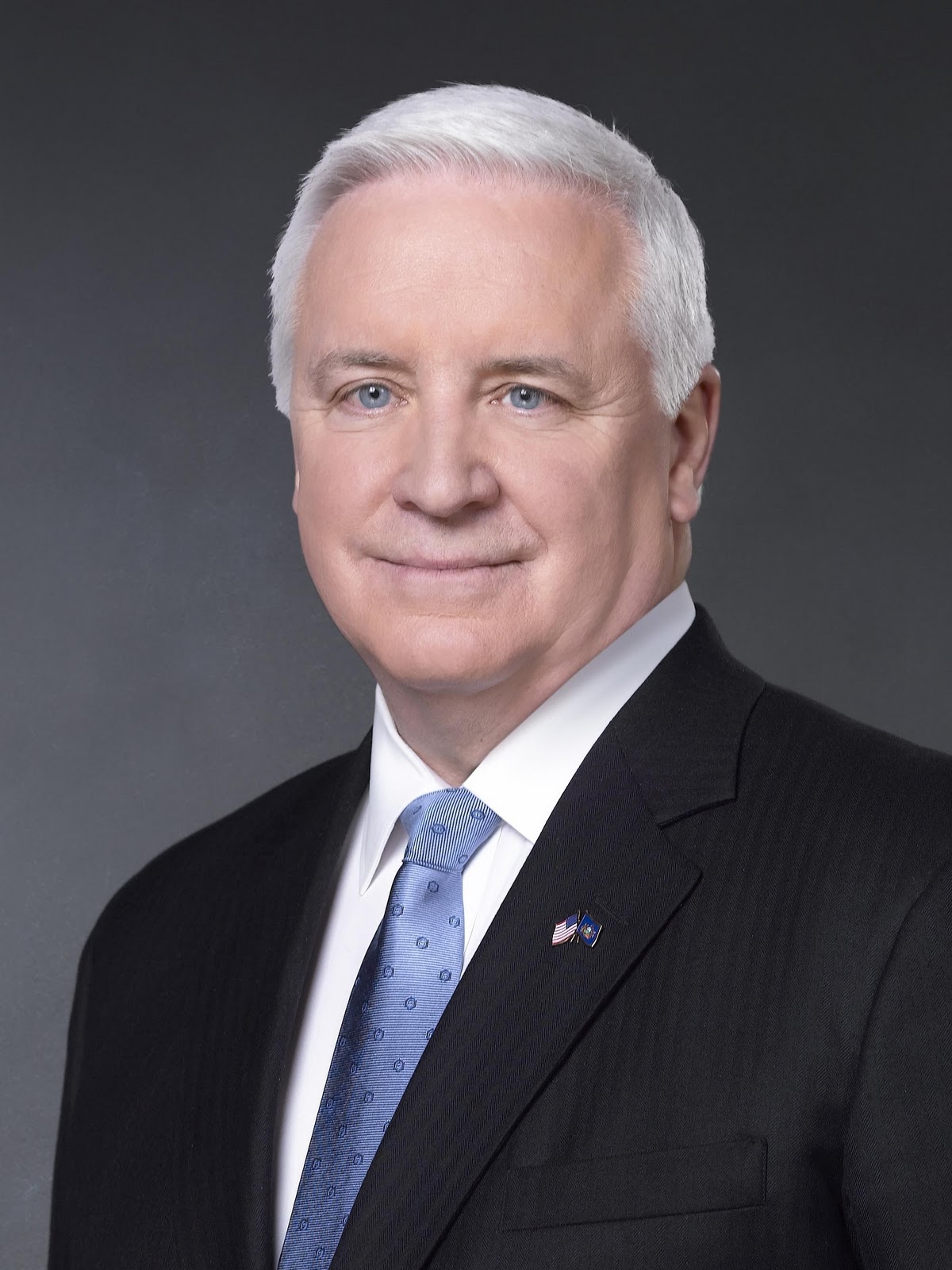
Governor Tom Corbett (on left) provided Exhibit A  for why the Commonwealth of Pennsylvania needs to pass a full and fair funding formula for public education in Pennsylvania. Earlier this week, state legislators from Philadelphia, plus the mayor, the superintendent and members of the School Reform Commission (SRC) petitioned the legislature to give the city the right to assess a cigarette tax, the revenues of which would provide needed finances for the schools. The governor responded by offering them a deal: vote for a revision in pensions for state workers (something even members of his own Republican party did not support) in exchange for the cigarette tax. by  trying to play hard ball politics the governor showed his true hand by pitting pensioners and union members against  school children, so he would not have to assess higher taxes on his corporate cronies in the shale gas industry.

Groups such POWER and PCCY have been urging the passage of full, fair funding formula. In its study of how public education funding is decided across the country, the Education Law Center
found that Pennsylvania is one of only three states in the country that do not have some sort of legally binding formula for determining how public education is funded. Furthermore, they found that Pennsylvania places a greater than average burden on local communities to raise property taxes to fund their schools. The result of this combination means that there are huge disparities between wealthy and poor communities as to the amount of money that is raised to support public schools. Moreover, when it comes for the state to “make  up the difference” decisions are made on the basis of political power and favoritism, rather than which districts have the greatest need. So not only is the amount of funding from the state for education woefully inadequate, what money is disbursed is done so without reference to need, but rather to political favoritism.

In those states that do have a formula for education funding, several factors are considered,  such as poverty rates, special needs children, the number of ESL students, the number of students in foster care, the number of children with disabilities and the like.  Because there is a legally binding formula, decisions are made on the basis of need, not cronyism. However, not only must there be a formula, there must be adequate funding. The state is woefully short in this area too. The governor and the legislature will boast that they have increased education funding, but if one is only paying half the bill, that may keep the bill collectors at bay for a while, but sooner or later the bill becomes due.

The bill for adequate and fair funding for public education is way overdue. The Philadelphia school system is about to collapse with overcrowded understaffed schools with too few auxiliary staff to keep the schools healthy and safe for students and teachers. The cigarette tax will only help Philadelphia reach last year’s level of funding, which itself was woefully inadequate. By trying to play hardball with school funding the governor shows just how closed minded and callous he is. By proposing a budget that does not begin to meet the needs of school districts across the state, the legislature shows just how blind and callous they are to the real needs of the people.  


When injustice and callousness becomes so ingrained that people have no conscience about what they are doing, they display what Hannah Arendt called the “banality of evil.” Many a preacher on stewardship Sunday has reminded parishioners that one’s budget and checkbook offer a statement as to the state of one’s soul and the quality of one’s morality. By that standard the governor and the legislature have gone just about as low on the scale as they can go. It is time for Pennsylvania to enact a fully funded formula for public education and give the children of the Commonwealth the quality of education they are guaranteed by the state constitution. The issue is not simply about politics or money; it is about how we will regard and respond to the needs of the most vulnerable in our midst, in this case school children. In that sense a full, fair funding formula is a deeply moral and spiritual issue for political leaders and the communities they are called to serve.

[This blog entry has been sent to Governor Corbett, as well as Sen. Ted Erickson and Rep. William Adolph, my representatives. Rep. Adolph is also head of the House Appropriations Committee which determines the budget. This blog has also been submitted to the Philadelphia Inquirer for consideration on the editorial page]

Tuesday, July 30, 2013

School Funding Formulas

Below is the text of a letter to the editor I submitted to the Philadelphia Inquirer in response to an article about the challenges facing suburban public school districts that required them to raise property taxes and cut services. The letter seeks to point out that the challenge faced by these districts is part of a much larger issue regarding how Pennsylvania funds (or as the case may be, does not fund) its public schools.

The recent article, “School Tax Vise” (Inquirer, July 29, 2013) reveals that the funding challenges being faced by the School District of Philadelphia are also being faced many suburban districts which have had to raise school taxes and make significant cuts in order to keep their public schools operational. While currently suburban districts have been able to manage these challenges, their plight reveals a fundamental flaw in the way Pennsylvania public schools are currently being funded.

In February 2013 the Education Law Center published Funding, Formulas and Fairness, a study of how Pennsylvania funds its public schools in comparison to other states. Some troubling comparisons were revealed. On average states provide 43.5% of the total amount of money on public education; Pennsylvania spends only 35.8%. By contrast on average states expect local communities to provide approximately 44% of the funding needed through local property taxes; Pennsylvania requires local communities to raise 53% (all percentages are based on 2010 data, the most recent year available).  Furthermore, Pennsylvania is one of only 3 states that does not use a standard funding formula for allocating what state funds it does provide. Such formulas take into account community income levels, specific student needs, the number of ESL students and other factors to make sure that all public schools have the resources to provide adequate education regardless of location, income level and nature of the students. The lack of such a funding formula makes school funding a subject of political wrangling, and in particular leaves disproportionately poor districts such as Philadelphia and Chester, grossly underfunded.

Community groups such as the Education Law Center and POWER (Philadelphians Organized for Witness, Empowerment and Rebuilding) are seeking to work with political leaders, educators and like-minded citizens to establish a funding formula for all public schools, so that the constitutional mandate to provide quality public education for all Pennsylvania’s children can be fulfilled. Public education is an issue that unites both suburban and urban districts and should compel all citizens who care about our children’s futures to bring Pennsylvania in line with other states on this vital public issue.

Monday, June 03, 2013

The "New" Civil Rights Era


In 1954 the Supreme Court issued their decision on the case of Brown vs. the Board of Education of Topeka, KS, which outlawed school desegregation, effectively nullifying the 1896 Plessy vs. Ferguson decision that allowed for “separate but equal” treatment of whites and African-Americans in all aspects of life. In the years that followed the Civil Rights Movement in its many expressions from Martin Luther King, Jr.’s Southern Christian Leadership Conference to the Student Nonviolent Coordinating Committee (SNCC) to the Nation of Islam and Malcolm X in different ways sought to make that decision operative in the American South and North.  However, not until the 1964 Civil Rights Act were there any teeth in that decision.  Even then it took many years for school districts to begin to take seriously the need to provide equal education for all its students.

Despite all the sacrifices of those who gave their lives for the cause of racial justice, it appears we in Philadelphia find ourselves in a situation not unlike those pioneers of the 1950’s. Over the last three years the Philadelphia School District has lost $500 million in revenue from the Pennsylvania State Government. While $90 million has been restored this year, it is only a fraction of what is needed to provide basic service.*  On May 31 the Philadelphia School Reform Commission (SRC) passed a $2.4 billion dollar budget, which seems like a lot of money; but was $320 million short of what was needed. However, in passing the budget the superintendent acknowledged that the budget was inadequate to meet the districts needs and appealed to the city and state to contribute needed revenues while asking teachers to also take a cut in pay. Without extra help, all but principals and classroom teachers could lose their jobs in most public schools; that means schools will not have nurses, counselors, teachers aides, art & music teachers and administrative support services.(See link for details of Philadelphia School district decision.) 

While these numbers seem staggering, another way to look at the issue is to look at what districts spend per student. In 2007 (the most recent figures I could find) Lower Merion, a wealthy suburb just outside the city limits, spent $21, 399 per student. Marple-Newtown, a middle class area spent $14,889 per student. Philadelphia spent $11,078 per student. (numbers from Inquirer School Report Card) This was before the massive cuts mentioned above. Now the reasons for the disparities are many, but the main reason is that public schools are largely funded by property taxes. Districts serving a higher percentage of low income residents, like Philadelphia, are dependent on the state government to fill in the gap. Add to that the proliferation of charter schools in Philadelphia which get money from district thereby draining off even more necessary resources. This is why the governor and state legislators’ callous disregard for the needs of low income students is so heinous.

The bottom line there is a “separate and not equal” policy regarding Pennsylvania public schools in which students are who disproportionately low income and persons of color receive basically half the resources expended on their education as their wealthy counterparts. Philadelphia is not alone, students with a high percentage of low income students both rural and urban face the same challenge across the state. Furthermore, Pennsylvania is not alone; school spending disparities exist in most major metropolitan areas.  Is this any different than the inequities which the Supreme Court outlawed nearly 60 years ago?

I think not.

Those of us who reside in the suburban areas ironically may have the opportunity to make a difference. I believe and hope that there are many people living outside the city (yet who routinely use the city services and enjoy the city’s benefits) who would be horrified to learn that we have returned to the days of the Jim Crow South; only the injustice is no longer relegated to the South but exists in the Philadelphia metro area. We can urge our representatives that we don’t want to live in a state or a country that treats its most economically impoverished citizens as cast-offs. Public education is a social contract that should guarantee that every student regardless of race, class, gender or geographic location is entitled to a safe, well run, academically credible school. Many students in low income communities like Philadelphia have not been able to depend on that contract. The current disparity is systemic racism and class-ism at its worst, and is no better than the Jim Crow South at its worst.


The other day a Philadelphia middle school teacher stood up in the church I attend and expressed his anger at the injustice befalling the students in his school. When I spoke with him afterwards, he said: Half the time I feel like I am in an insane asylum and the other half I feel like I am in a prison. That is what we are preparing these kids for, if we don’t provide a decent education.  People often wonder what it was like to live during the Civil Rights era. We are living in a new Civil Rights era. The challenge we face is whether we will respond with the same kind of determination that was exhibited by those who have gone before us.


* figures regarding school funding were provided by Senator Vincent Hughes of the Pennsylvania State Senate and can be found at http://senatorhughes.com/legislative-services/issues/education
* Pictures from Associated Press

Saturday, January 28, 2012

The Destruction of Public Education and the Conservative Agenda

For some time now, I have suspected that the Conservative agenda involved the systematic dismantling and undermining of public education. Conservatives have repeatedly belittled public school teachers, fought the increase property taxes (which are the primary source of funding for most public school budgets), sought to pass bills calling for vouchers, and promoted the proliferation of charter schools, as their agenda for “reforming public education.” I have seen this is my children’s own suburban school district, in the Philadelphia public schools and in communities around the country. Taken together these actions sound the death knell of many public schools, especially in economically depressed communities. However, I doubt it will stop there; conservatives want to destroy publicly funded education in all its forms.

Recent actions by Pennsylvania Governor Tom Corbett have done nothing to dissuade me from this perspective; in fact he all but publicly proposed that for two communities in Pennsylvania. In my last blog posting, I decried the action of the governor denying funding for the Chester-Upland school district that had run out of money mid-year. The governor refused to provide relief claiming the school had “mismanaged” its funds. Chester-Upland has been under the oversight of the state government for several years, so if there was mismanagement it was in his own government as before he was governor he was the Attorney General.
Fortunately, a federal judge ordered Gov. Corbett to provide the $3.2 million necessary for the Chester-Upland district to complete its school year; this isn’t sufficient but it gives the district some more time However, the governor has already submitted a bill to the PA legislature that will effectively dissolve the school district, disband the teacher’s contracts and turn the remaining schools over to charters. He has proposed a similar plan for the community of Duquesne City in Western PA. Moreover, he proposes lower payments to schools that Chester student would apply to, thus making a lesser incentive for schools to attract or admit Chester students. The bill is so bad that even some of the Governor’s Republican allies are rejecting the bill. Fortunately, others are proposing their own bills, but it is clear that while the Governor continues to protect his corporate friends from any more taxes, he openly and disdainfully ignores the needs of the poorest citizens and their children in place like Chester. Because of the governor’s budget slashing other districts like Philadelphia also face further cutbacks even after slashing $600 million for their budget last summer, which led to larger class sizes, fewer teachers and the elimination of many academic support programs.

In 1962 Michael Harrington published his classic book on American poverty, The Other America, in which he exposed to the world the travesty of desperate poverty in a land of such wealth and opportunity. Harrington’s book so moved President Lyndon Johnson that is was believed to be a major influence in his efforts to create The Great Society programs that addressed poverty at levels never before seen. It is these same Great Society and War on Poverty programs that conservatives have consistently criticized and systematically dismantled over the last 50+ years. That is probably why Harrington’s book continues to be published and re-issued, and why now 50 years later because of hard-hearted conservatives like Corbett, it is still very relevant. This is not to say all conservatives are hard-hearted (there have been so-called compassionate conservatives like George W. Bush who disagreed with liberal policies but did not totally turn their back on the needs of the poor and offered their own solutions), but the brand of conservatism currently being practiced by leaders like Gov. Corbett, and Wisconsin Gov. Scott Walker shows no compassion nor concern for those who still suffer in the Other America.

While many of us don’t need to worry about our kids and their schools because they haven’t gotten to the point of Chester, we should take note what is happening. We need to see the trends, and recognize that while states are required to provide all students a quality public education, conservatives blatantly disregard that mandate in communities in most need and with the least resources. At the same time schools are being de-funded prisons are being built at a record pace in states like Pennsylvania. Research shows that there is a clear correlation between youth violence and low quality education. When it comes to building a school to prison pipeline, conservatives like Tom Corbett are showing us the way it is done with impunity.

Thursday, January 12, 2012

Balancing the Budget on the Backs of the Poor: Chester-Upland School District

While the fiscal conservatives say that we must “tighten our belts” and “everyone must sacrifice,” the recent news that the Chester-Upland(PA) school district has run out of money and can no longer operate their schools is yet another example that the ones who sacrifice are those with the least to give up. (For those not familiar with PA, Chester is one of the poorest cities in the state, and is located 10 miles south of Philadelphia. Its school district depends heavily on state funds because more than 50% of the residents of Chester live below the poverty line.)The state of Pennsylvania is mandated by law to provide quality public education to all children in the state. Yet since becoming governor a year ago, Tom Corbett, has slashed spending on services to the poor, decreased the amount of money the state provides to low income school districts, refused to raise taxes on wealthy individuals and companies, and advocated vouchers so that money would be taken away from public schools. When Chester officials asked the state to intervene, the governor said “no” blaming them for “mismanagement” - yet another example of “blaming the victim”; believe me, no one is getting rich in Chester except Harrah’s Casino and PPL Park the home of the Philadelphia Union soccer team.

When folks want to know what the Occupy Wall Street movement is about when it says the 1% are profiting off the 99%, Chester-Upland School district is exhibit A. While the governor and his Republican colleagues talk about  “balancing the budget”, yet protecting their wealthy and corporate supporters, the poor of Chester and elsewhere suffer.
John Rawls, political philosopher whose work set the framework for the Great Society programs of the 60’s and 70’s, said that a society is judged by how it treats its most vulnerable. The moral vision that moved leaders on both sides of the political spectrum to set up social safety net for the poor and disabled caused them to see that the wealthiest society in the world could not allow any of its citizens to go uncared for. The callous disregard for basic needs such as health care, housing and education that began in the 1980’s under President Reagan and has increased to the present shows not only a social callousness but a loss of moral vision. That a state governor can disregard his legal mandate to provide education to the children of Chester, while refusing to levy taxes on gas companies reaping millions in Pennsylvania, only shows how far we have fallen.

Conservatives often like to bemoan the moral decline in our country, and in certain instances I share their concerns, but as Jesus said they need to take the log out of their own eyes before they seek to remove the speck in another’s eye. The judgment falls hard on those leaders who would forsake and deny their moral and legal mandates to care for the needs of the poor, and then have the gall to defend their view by blaming the victims and calling for a “balanced budget.”
If you are a PA resident I urge you to write your state representatives and call upon them to provide funding so that the children of Chester Upland can receive the quality education they are guaranteed by law to receive.

Friday, September 09, 2011

A Beginning and New Era for a Troubled School


On Tuesday, September 6 I attended the opening ceremonies for the new West Philadelphia High School (WPHS), best known to most folks as the alma materof actor-singer Will Smith. However, the school has had long and, more recently, a troubled history characterized by violence, revolving door leadership, and persistently low test scores. At the same time it has been nationally recognized for its innovative Auto Mechanics academy, and the Urban Leadership academy, which involves students in addressing local community issues such as vacant lots and abandoned buildings. Despite these positives the public image of WPHS has been persistently negative. However, as one who has met students and teachers, I have come to know it as place where committed teachers and students have struggled to provide a quality education amidst of environment of political rancor and declining resources.
For the past four years I have been part of the West Philadelphia Community Partners (WPCP), a collection of parents, community members and other interested persons advocating and working to assure that the students of WPHS get the quality education they need and deserve. While the opening ceremonies featured political luminaries such as Mayor Michael Nutter, Councilwoman Jamie Blackwell  State Senator Vincent Hughes, and acting superintendent Leo Nunnery, the real heroes were the students, alumni, parents and community members of WPCP who had labored for years to get the new state of the art school built.

The Community Partners came together nearly ten years ago when then-superintendent Paul Vallas announced plans to construct of new school buildings throughout the city, including WPHS. Through the organizing efforts of the Philadelphia Student Union and support from the Philadelphia Education Fund, WPCP met monthly to propose plans for a small school model for the new school that would have 3-4 smaller learning communities in the large building. We proposed a particular architectural design to fit this proposal in consultation with Concordia LLC, an architectural firms specializing in innovative school design. Along with several others I attended a meeting with then-Superintendent Arlene Ackerman to advocate for our design and the small schools approach. When Dr. Ackerman announced that WPHS would be part of her Promise Academy program, the WPCP advocated for a partnership with John Hopkins University. While in the end all of the specific suggestions and proposals put forth by the WPCP were rejected, we continued to be a voice of the community advocating on behalf of students and parents for quality urban education.
I joined WPCP about four years ago after reading about several highly publicized incidents of violence between students and teachers. While I do not live in the community, I am a member of West Philadelphia Mennonite Fellowship, which meets just a few blocks from the school. As a representative of our church, I helped organize a breakfast of local faith community leaders in support of the WPCP’s efforts. I offered my expertise and input when necessary, but mostly I simply “showed up” in what some have called a “ministry of presence.” Currently, I am a member of the School Advisory Council, a group of community people who work closely with the new principal, Mary Dean, to keep the lines of communication between the school and the community open.

At the opening ceremonies I sat next to a woman whose 11th grade son was transferring from a private school to West Philadelphia High School She sounded so proud as she told me that he had joined the football team and was excited to be in a new state-of-the-art school building. As the students filed into the gym with their new uniforms and took their places in the bleachers, she beamed with joy. In that gym there was a feeling of hope and sense that a new chapter in the 100 year old school’s history was about to begin. I felt privileged and excited to be part of the process that helped put a glow on that mother’s face. I continue to serve in this way seeking to come alongside those folks so long denied privileges I can too easily take for granted (like a quality public education) by joining with them in seeking the justice they deserve.

Sunday, February 13, 2011

Process and Promise at West Philadelphia High School

We tend to think dictatorships only exist in places like Tunisia and Egypt, and when the masses rise up and force the dictators out, we consider that to be a good thing. Well, there is a dictatorship in Philadelphia that is facing an uprising of its own, and as far as I am concerned, it is about time. I am referring to the Philadelphia School District (PSD) and series of community responses to the Superintendent’s newest round of proposed reforms.

On Monday, February 7 I attended a public meeting at West Philadelphia High School (WPHS), which had just been designated a“Promise Academy”  by PSD Superintendent Arlene Ackerman the week before. Two members from the district gave a brief presentation and then the floor was open for questions and feedback. The Promise Academy program is a series of reforms designed to improve the quality of education in failing schools. The reforms include a longer school day, more enrichment program, uniforms, Saturday school and a summer program. The key to success is the hiring of a new principal with a “proven track record of turning around failing schools”  and the requirement that all teachers re-apply for their positions in the school with only a maximum of 50% being hired back for the next year. The goal is to “change the culture of the school” and to create an atmosphere of achievement and success.

Sounds great – who can challenge such a plan? No one at the meeting denied that WPHS is a school in trouble that fails to adequately educate its students. Nonetheless, many challenges were raised to the proposal not about the desire to improve the school, but over the way PSD has disregarded the input of the West Philadelphia High School community for several years. The objections were not over the promise of a renewed school, but over the way the decision-making process was handled.

A year ago the Superintendent had announced that WPHS would become a Renaissance Academy, one of four versions of PSD’s reforms. The difference is that in the Renaissance Academy the school is paired with an outside provider, whereas the Promise Academy was run directly out of the district office. Both models have the same essential goal: turnaround a failing school. A year ago the school had a popular principal, Saliyah Cruz, who had led the school through a dramatic culture change. Discipline issues had dramatically decreased, a restorative practices model of discipline had been instituted, and 9th grade test scores and attendance had begun to show marked improvement. Students and teachers expressed great hopefulness for the future of the school as it looked move into a new building in 2011. John Hopkins University had consulted with the school and University of Pennsylvania was actively involved in the school. John Hopkins had applied to be the Renaissance partner. So the local community group of which I was a part, the WPHS Community Partners, recommended that WPHS be partnered with Johns Hopkins. This request was ecohed by a School Advisory Council made of up parents and community members. Despite her calls for community input, Superintendent Ackerman went directly against the community desires; the principal and 40% of the teachers were transferred from the school and John Hopkins’ application was rejected. A caretaker principal was installed ( the first of three this year) and the school unraveled, violent incidents increased and morale plummeted.

This year when the idea of the school becoming a Promise Academy was proposed, the School Advisory Council, the local community group for the school again asked to be a Renaissance Academy (that is being paired with an outside provider), and again despite the request for community input, that input was ignored. These were the issues being raised by the group that Monday night. Three-quarters of the comments had to do with process, and the districts continued dictatorial ways. Parents wanted assurance that there would be a commitment to real change. Community members raised questions about PSD’s commitment to working with the community and parents, given their actions in the past. Several folks raised concern about the fact that after a 40% teacher turnover last year, why did there have to be a 50% turnover this year. Others wondered where this miracle-working “turnaround principal” was going to be found and whether the community group would have any input in selecting that person (the answer was “no”).

While the meeting was civil, there was a great deal of frustration. Thus, it was not surprising that at 1 pm the following Friday (Feb 11) approximately 100 students walked out of school in protest of the fact that their concerns were not being addressed or even respected. Moreover, they objected to the fact that there was an atmosphere of repression in the school for teachers and students who spoke out against the process. All the while thousands of people were protesting in Egypt about a repressive dictator and demanding that their voices be heard.

I would have thought that this experience was unique to WPHS given its unique history with the district, until I read that a very similar reaction was being voiced in South Philadelphia, where the Audenried High School was being told they were to become part of a “Promise Neighborhood Partnership” (following the model of the Harlem Children’s Zone developed by Geoffrey Canada and promoted by the Obama administration). From the reports the crowd reaction was much more vitriolic than at WPHS and police had to be brought into restore order. Parent, students and community members were asking for data on why their school was being taken over and saying that there had been no opportunity for their concerns to be heard. So apparently the process was similar as to that in West Philly.

In a time when urban schools are failing to provide an adequate education, there is no question that change must come. However, so often school officials want to find a quick fix. The Promise Academy promises an infusion of resources, but in a time when PSD must trim its budget by $400-500 million, how long will this infusion of resources last? In a time when a Republican governor favors school vouchers over equalizing the playing field between urban and suburban school districts, how long until the money for the Promise Academy is diverted? In an environment where parents and community members are asked to give input, and then that input is categorically ignored and when a principal was initiating genuine cultural reform and then was removed, when committed teachers who have chosen to work in a difficult environment are told they are not measuring up, and when students must contend with a revolving door of principals and teachers, isn’t it just possible that Superintendent Ackerman should listen to their concerns, and truly engage the community in the process?

There is no doubt that Superintendent Ackerman is a reformer facing a difficult job of transforming a troubled school system in a time of acrimony and declining resources. However, as educator Paulo Freire warned in his classic work, The Pedagogy of the Oppressed, that if they do not honestly work in solidarity with the oppressed and marginalized people they are seeking to help, they will become as dictatorial and oppressive as the leaders they sought to replace. Authentic social change comes when reformist leaders work honestly with the oppressed, rather than simply seeking to do things to and for them, and then expecting them to go along. Promises are not enough; following an appropriate process bring meaningful and lasting change.

The mild “uprisings” in West Philadelphia and South Philadelphia are a sign that people in those communities care about education and their kids and they want an authentic seat at the table. They don’t want to be pawns in quick fixes or faddish educational ideas. More than anyone, they know that the future of precious lives are at stake, because those lives are either theirs (students) or the lives of people about whom they deeply care (parents and community members). While the uprisings don’t need to lead to the ouster of a leader as in Egypt, but they are a sign that PSD can’t just make promises of some miracle transformation, they need to involve the people they claim to serve in the process of leading that transformation.

*** Photos used permission of the Notebook (www.notebook.org))

Sunday, August 01, 2010

Is the "Race to the Top" Rigged?


President Obama is to be commended for making the improvement of the nation’s public school system a national priority and for challenging states and school systems to completely re-think the way they deliver education through the program called Race to the Top. States are being invited to submit proposals for funds to engage in a process of major educational reform. State plans must address six priorities that range from early childhood education to providing resources for high risk and special needs students to recruiting and training high quality teachers.
However the recent announcement that Washington, DC superintendent Michelle Rhee fired 241 “low-performing” teachers after instituting her program called IMPACT. Rhee’s action raises the question if the emphasis on teacher performance indicates that the Race to the Top is rigged against the teachers. Whenever educational issues come up, the first target of critics is usually the teachers. So as the Washington Post reported, Rhee’s action is meant to “send a message” that teachers need to raise the quality of their performance. No doubt some teachers need to find another career, but others may be forced outto that career not because of lack of skill or commitment, but a lack of structure, resources and support.
Critics often complain that teachers are overpaid for “only 9 months of work” and aren’t held accountable. Over the past several years no one group of people so valuable to our society have been so maligned and misunderstood as teachers. Now put those teachers in an old building that looks like a prison, has poor ventilation, with 35 kids per class, 5-6 periods a day, not enough textbooks, and no aides. Then include in that class 5-6 kids who come from dysfunctional families, another 5-6 who have childcare responsibilities or are expected to contribute to the family income, don’t give those kids breakfast and then blame those teachers that test scores are not “meeting standards”. You will begin to understand what Michelle Rhee’s “low-performing” teachers are up against.
I offer three points of reference. First, my own children went through a suburban school system that was at best adequate. Every year the local paper published the salaries of all the teachers in the district, and complained about “rising property taxes,” which happened to be lowest in the county. Through their 13 years of schooling, my kids had some outstanding teachers, a few poor ones, and a majority of mediocre teachers. But these teachers had adequate technology, a decent library, and manageable class sizes. Most of the kids came from families that provided enough food and other necessities, so that the kids were not expected to contribute the family income. Most of those families had at least one college graduate, so that these kids grew up expecting to attend college. My kids and the vast majority of kids graduated on time and went to various post high school pursuits including college. Mediocre and even poor teachers get by in that system, because they were operating in a context that surrounded them with adequate resources, necessary support, and a college going culture.

Second I am a college teacher who has taught graduate students, first and second year undergrads, and adults returning to earn a college degree. One year I simultaneously taught students across that spectrum. With the graduate students who were intelligent, motivated and resourceful, I was “outstanding” – my students grew and learned tremendously - by their own evaluation. However at the same time I taught a group of students most of whom were first generation college students, and who often had major economic and family responsibilities outside of class. I also taught some adult students who had difficulty reading and others who could not write coherent paragraphs. I worked doubly hard and pulled out every creative idea out of teaching bag of tricks. I ended up failing half the students in the undergrad class, even though it was one of the most creative, draining and challenging teaching experiences of my career. Even more amazing is that some of the students I failed actually thanked me for the way I had respected them in that class. So which teacher should be evaluated – the teacher of grad students, the teacher of the adult students or the teacher who failed half his undergrad class?
Third, I am part of a community group that provides support to a large urban public high school, I sit on the board of an urban Mennonite high school and I have consulted with a new charter school. All three schools serve the same demographic of students: lower income, urban, mostly students of color. The urban high school sees only about 50% of its 9th graders persist to graduation. The Mennonite high school has a 100% college acceptance rate of students, and the charter school is only one year into operation, so it is too soon to tell. However, what is common to all three schools is that they all have innovative and creative principals and a group of teachers who love kids. However the charter school and Mennonite high school have class sizes around 20, while the public high school averages 30-35. The charter school and Mennonite high school have local autonomy, while the public high school answers to the superintendent. Despite its low test scores, the public high school has seen phenomenal improvement in scores and morale, was on track to substantially improve the graduation rate. Justlooking at the scores the superintendent decided the principal needed to be re-assigned and her efforts halted. My prediction is that any momentum and hope she built with students and teachers will be undercut and the school’s performance will decline.
In these scenarios (my children’s school, my own classes, the three schools I compare) which teachers failed and who succeeded? Blaming teachers for a failed system is an easy explanation, but wholly inadequate. If I was teacher looking for a job, would I want to go into a system where the odds are stacked against me like the Philadelphia or DC school systems? Would I choose to operate in a system, where I am underpaid, and under-resourced, and yet expected to achieve progress on my kids test scores? Are the test scores even the proper measure of success? Or would I choose to go to an adequately resourced suburban district where even if I was mediocre, my kids would do okay? Or would I gravitate to a charter school or a private school, not subject to the whims of a politically vulnerable superintendent?
If we as a nation are truly concerned about public education, we need to stop laying all the blame on the teachers. The system as a whole is broken and creating a culture of fear and distrust distracts everyone’s attention, especially the teachers, from being willing to re-shape and re-form that broken system. What we need is a systemic approach to urban education like Geoffrey Canada’s Harlem Children Zone. Canada recognizes that there many factors outside the school building that affect learning inside the school building. While I don’t fully agree with Canada’s almost totally behavioristic methods, I do think he has recognized that the problem with urban public education is systemic and is seeking to address it that way. This is why cities across the nation are seeking to adopt and adapt his model to their situations.
I recently read the reflections of a 5th year teacher in the Philadelphia public school system. Half of all teachers quit by their fifth year, and this teacher had survived that threshold. Yet, just when she should be hitting her stride, she writes that one of the realities she lives with is that most days she drives home “feeling like a crappy teacher.” Moreover, as she looks out over the career ahead of her she wonders if she can sustain her career over a lifetime. I want that teacher to feel valued, supported, and excited about the work she will do, because those feelings will be conveyed to her students, and will influence her students’ performance. Creating a culture of fear and intimidation (as Michelle Rhee has done in DC) will not help this teacher feel any better about herself, her work or her students. She needs to be surrounded by a system that helps her get better at her craft, not that threatens her to get better or else.
The Race to the Top seems rigged against the teachers, and the ones who will suffer in the end will again be the students.

Friday, July 16, 2010

What Happened at West Philadelphia High School?

I have shared some of my feelings about the terrible string of decisions and actions regarding West Philadelphia High School. However, I came across a blog (A Good Day of Teaching) that puts it well: Did Saliyah Criz Steal Arlene's Thunder?" (For those unaware of the situation Saliyah Criz was the outstanding principal of West Philly High School who was replaced by Philadelphia Schools Superintendent Arlene Ackerman for "low test scores" despite having made tremendous progress in the school.

I can't say it any better, so I refer you her blog here.

Thursday, June 10, 2010

When it comes to Educational Politics, Where are the Adults?


When it comes to educational politics, one wonders where the mature
adults went to?

The Neshaminy (PA) teachers have been in a long and protracted struggle with the local school board over their contracts. The teachers have worked without a contract for two years, and over the last month the teachers have been “working to contract,” which means they are in the classroom but not available after school or any extra curricular functions. Just this week, the local FOX news station reported that now the teachers will not attend the graduation that will be held this week. All I can say is: Teachers that’s a bad move; shame on you.

Let me be clear: I am about as pro-teacher as they come. For starters, I myself am a teacher (though not at the K-12 level), as is my daughter. For years I was involved with our local public school district, and always spoke up on behalf of teachers’ salaries. I would take on anyone who would say they “only work 9 months out of the year,” because I know how many nights and weekends they put in, not to mention those so-called “summers off” preparing to do the best job they can. I think teachers are grossly undervalued and therefore underpaid in our society. If some salesman can make six figures pushing widgets, a teacher should be remunerated at least the same level. The public scrutiny and degradation that public school teachers have to endure makes me wonder why anyone would go into that profession. Yet, they do and we entrust our children’s learning to their care. To be sure some teachers are incompetent, but they are the vast minority; the bad ones weed themselves out quickly. Most teachers are more than competent, and some are outstanding. Yet all, regardless of competence level, are generally undervalued, under-appreciated and under-paid.

But the teachers in Neshaminy made a big mistake when they decided to boycott graduation. Teaching is not about politics, subjects or even school budgets. Teaching is about students and their learning. Teaching is about relationships. Teaching is about love of student and love of learning. The really good teachers have a way of lighting something inside a kid that gives them a hunger for learning. A fifth grade teacher took one of my children who had been designated as “behind,” and got her excited about books; that daughter is now a teacher. Another child at one time had trouble reading, but a high school English teacher ignited her love of ancient literature; now that child says “Dad, you have to read Beowulf!” Still another child found a love of life embedded in a course on Shakespeare. My wife and I had a part in our children’s education, but so did their teachers.

As a teacher I look forward to graduation because it was a way of seeing the fruit of my labors and to know that in some small way, I had a part in the growth of that student. Teaching isn’t just about imparting information; in fact that is a very small part of teaching, as most information we impart will soon be forgotten or replaced. Teaching is ultimately about is shaping lives and inspiring dreams. Teaching is about helping kids discovering a future, and gaining the confidence to go after that future. So for a teacher, graduation is the capstone, the coup de grace, the finish line of a job well done – for the students, yes; but also the teachers.

Reportedly students were upset that their teachers were not coming to graduation because they wanted to be honored by their presence, but also to thank them. You see, the kids know what the last 12 years of school were about. Regardless of budgets and contracts, it’s about love, and gratitude.

I can only hope that some of the teachers break their own boycott, and show up out of uniform, but show up nonetheless. The kids have earned it, and so have the teachers. After the mortar boards have been thrown up in the air and the diplomas dispensed, then the teachers, parents, and school board can get back to figuring out how to make it possible for kids and teachers to again join forces in this adventure we call learning.


On another note: Philadelphia Schools Superintendent Arlene Ackerman (in the picture above) has really screwed up West Philadelphia High School. After ignoring pleas by students, teachers and community members not to make WPHS one of her Renaissance schools; and then ignoring the school community council’s request to become a Talent High School in conjunction with John Hopkins University; after creating conditions of uncertainty that forced many teachers to seek employment in other schools; now Dr. Ackerman says its too late for West to have John Hopkins as a partner. Four years ago WPHS was one of the most violent and dangerous schools in the city; today students talk about their love the school, the teachers and the principal , Saliyah Cruz. As a member of the Community Partners of WPHS, I can testify to the vast improvement that has occurred in the school. There is no doubt there is much more that needs to be done before WPHS is a fully functioning school, but there has been momentum, hope and a workable plan. Despite her impressive resume, and her contention that she is all about community involvement, Dr. Ackerman has discouraged the students, teachers and community members by her irresponsible leadership. There is no excuse.

Maybe we ought to let the students take over not only the school, but the system. I'm not sure they could screw it up anymore than it is.

Sunday, May 23, 2010

Educational Justice


Educational justice has been at the heart of my work over the last 13 years.

In 1997 I left pastoral ministry and turned my interests and talents to education. While I was working in higher education, I did not teach the typical 18-22 year old college student; instead my students were adults who had decided later in life to return to college to get their bachelor’s degree. In many cases they had started out on the traditional track years before, only to be derailed by a lack of finances, family crises, or personal issues; they dropped out, and entered the working world.

The more I got to know these adult students the more I realized three things. First, very often the earlier problems these students faced were related to issues of poor K-12 education, family history, and poverty. Second, I realized that getting a college degree was one of the few legitimate roads available to adults seeking to rise out of poverty. Third, I came to see that adult academic success had generational implications, as often their academic pursuits set an example for their children and grandchildren, who in turn pursued their college degree. I realized we were not just educating individuals, we were changing families and perhaps communities.

Convinced of these insights, I returned to school and earned a doctorate in adult education with a view toward helping craft programs that could serve whole communities beset by poverty and create quality education programs that could transform those communities. I joined the Community Partners of West Philadelphia high school, one of the schools with the lowest test scores in the city. I helped in the formation of the Eastern University Academic Charter School, and I served as a tutor for adults learning to read. Just this month I joined the board of the Philadelphia Mennonite High School.

The most exciting opportunity along these lines was my work with a program called Eastern in the City (EIC). This innovative program was developed by my university to provide a pathway for under-prepared urban high school graduates into college success; unfortunately after only three years the program was discontinued. Nonetheless, two weeks ago, I had the joy of seeing 10 of my former EIC students earn their bachelor’s degree. They ranged in age from early 20’s to mid 60’s (Two of them, Shelita Jackson and Rayna Norris are pictured above), and all of them credit EIC with getting them started on their road to a college degree. A few are even continuing on toward graduate work.

All the demographic data on high school students today, indicate that the college students of tomorrow will look and think a lot differently than the college students of the past. Not only will they be more racially and ethnically diverse, but they will be economically poorer, and academically less prepared. Many of them will not speak English as their first language, and they will have cultural perspectives far different than the Western mindset of our current educational system. Thus, colleges like mine can not continue to do business as usual if they are to effectively educate the next generation.

One response that colleges are making is to work harder to recruit the diminishing numbers those upper middle class kids from private and elite public schools. The other response is to work for educational justice. Everyone from President Obama to the teacher in the classroom to the kid on the street knows that our educational system is broken. Education is one of the strongest antidotes against violence, drug abuse and crime, yet we pour money in to prisons and let the schools fester. Vast inequities exist in per pupil funding between poor rural and urban districts on the one hand, and wealthy suburbs on the other. Exciting experiments like Geoffrey Canada’s Harlem Children Zone (one of Obama’s favorites) and Big Picture schools provide hope, but the fact is addressing this problem must occur on all levels. Schools must be safe place, parents must support and encourage their students, teachers must be adequately trained, and students need to apply themselves. Colleges need to provide bridges that help under-prepared students succeed at the college level, and must offer their expertise to their communities. Government must abandon the archaic property tax system for funding public education, and make education as much a state and national priority as fighting wars overseas and terrorism at home.

John Dewey, the seminal American educational thinker, contended that education should be the vehicle for shaping the character of students so that they could become responsible and productive citizens. If that is so, then we as a nation, and particular we who as educators, have failed to live up to our calling. Pointing fingers at others for not doing their part is a waste of time; there is enough work and sufficient blame to go around for everyone. The challenge is that we as educators, institutions, community leaders and citizens must step up and create opportunities for all students, young and old, rich and poor, white, black, brown, red and yellow, to gain the skills and the knowledge necessary to live fruitful and productive lives. Until we have done so, there will be no educational justice and our work is not done.