Showing posts with label Tom Corbett. Show all posts

Saturday, November 01, 2014

The Commonwealth of NRA (or Marcellus, Comcast, etc.)


This past week Pennsylvania Gov. Tom Corbett signed into law House Bill #80 (The Firearms Preemption Legislation bill) which was back by the National Rifle Association (NRA), who called it the “strongest firearms preemption statute in the country.” Essentially the law allows pro-gun organizations like the NRA to sue local municipalities that pass laws which the NRA deems obstructing the gun ownership and use rights of local citizens. In reality the law was more symbol than substance, as local municipalities like Philadelphia, which have passed laws limiting the number of handguns and individual could purchase at any one time, have been blocked by the State government from enacting those laws, since the state maintains jurisdiction over all firearms legislation in the Commonwealth. However, the symbolism of this law should not be overlooked, for in signing this bill, the State Legislature and Governor Corbett have given the pro-gun lobby the right to punish and harass whoever they want with the state’s blessing. As one of the most powerful and wealthy lobbying groups in the country, it essentially communicates that these lobby groups run the state, not the citizens who live there and vote.

In this blog I have long and often bemoaned the undue influence corporate and special interest lobbying groups hold over the democratic process in this country, be it guns, insurance companies, weapons manufacturers, or just wealthy donors. However, HB 80 takes this practice to a new level in that it puts it out there publicly, essentially saying no matter what citizens want in their local community or their state in regards to gun legislation, the NRA gets its way. This week the NRA is the culprit, next week it might be the gas companies who get huge tax breaks mining the Marcellus Shale region or Comcast that wants to control the airwaves and the Internet, or some other special interest group with undue influence. With regard to HB 80 what is sad is that while polls consistently show overwhelming support for tighter restrictions on the purchase and use of firearms, the House members voted over 2-1 in favor of the bill. So one can legitimately wonder who is being represented. Parenthetically, I want to commend my own representative, Rep. William Adolph, a Republican leader in the House, for voting “Nay”; there are some people with courage, but not enough.

As this bill was working its way through the Pennsylvania legislature, I was also taking note of the huge protests taking place on the other side of the world in Hong Kong. Thousands of young people in the city have taken to the streets to protest the process by which candidates for elective office are chosen in that supposedly democratic protectorate. A local election commission receives petitions for those wanting to run, and then decides on the candidates who will be put on the ballot; but here’s the catch: because of Hong Kong’s inclusion in China, those candidates must be approved by the national government in Beijing (which by the way is very non-democratic). That is why the students have taken to the streets; they want a real vote, not a slate of candidates predetermined and vetted by the powers that be. When pressed as to why he objected to the protestors’ demand, the mayor of Hong Kong said that open democracy would mean that people “who earn less the $1800/month” (about 50% of the population) might vote for candidates and policies that would cut into the power and influence of the wealthiest and powerful people in Hong Kong. (Hmmm – sound familiar?)


While our political leaders tout the values of democracy, even to the point of wanting to export that system to developing countries, they cave in or even worse, actively promote a system where the vast majority of people are ignored in favor of those with deep pockets. On Tuesday, I will go to the polls and vote, but I must say as time goes on I feel my vote matters less and less, unless and until we elect representatives who have the courage and conviction to actually believe in democracy, and listen to the people they are supposed to represent.

Tuesday, July 01, 2014

A Fully Funded Formula for Public Education: A Moral and Spiritual Issue

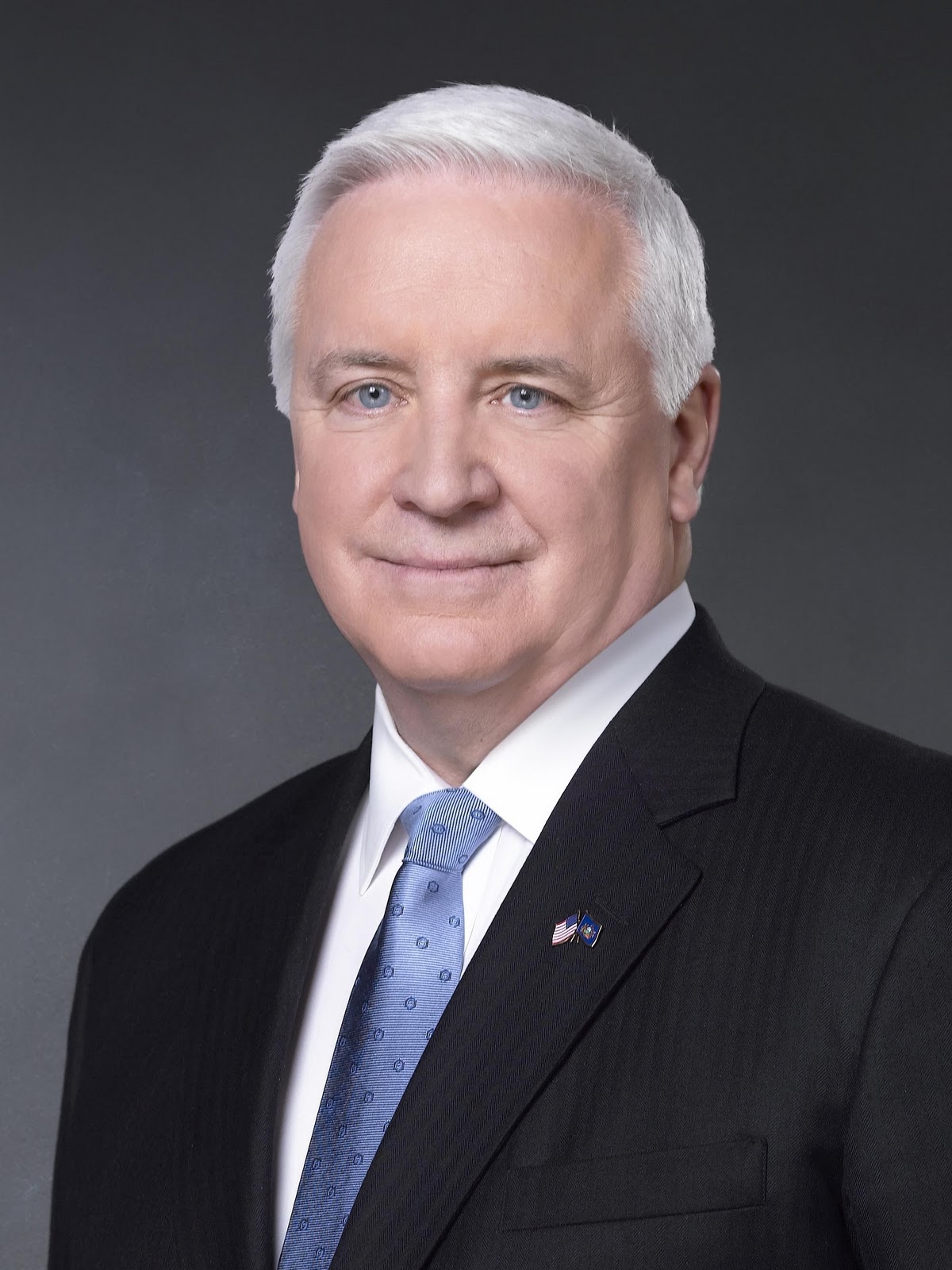
Governor Tom Corbett (on left) provided Exhibit A  for why the Commonwealth of Pennsylvania needs to pass a full and fair funding formula for public education in Pennsylvania. Earlier this week, state legislators from Philadelphia, plus the mayor, the superintendent and members of the School Reform Commission (SRC) petitioned the legislature to give the city the right to assess a cigarette tax, the revenues of which would provide needed finances for the schools. The governor responded by offering them a deal: vote for a revision in pensions for state workers (something even members of his own Republican party did not support) in exchange for the cigarette tax. by  trying to play hard ball politics the governor showed his true hand by pitting pensioners and union members against  school children, so he would not have to assess higher taxes on his corporate cronies in the shale gas industry.

Groups such POWER and PCCY have been urging the passage of full, fair funding formula. In its study of how public education funding is decided across the country, the Education Law Center
found that Pennsylvania is one of only three states in the country that do not have some sort of legally binding formula for determining how public education is funded. Furthermore, they found that Pennsylvania places a greater than average burden on local communities to raise property taxes to fund their schools. The result of this combination means that there are huge disparities between wealthy and poor communities as to the amount of money that is raised to support public schools. Moreover, when it comes for the state to “make  up the difference” decisions are made on the basis of political power and favoritism, rather than which districts have the greatest need. So not only is the amount of funding from the state for education woefully inadequate, what money is disbursed is done so without reference to need, but rather to political favoritism.

In those states that do have a formula for education funding, several factors are considered,  such as poverty rates, special needs children, the number of ESL students, the number of students in foster care, the number of children with disabilities and the like.  Because there is a legally binding formula, decisions are made on the basis of need, not cronyism. However, not only must there be a formula, there must be adequate funding. The state is woefully short in this area too. The governor and the legislature will boast that they have increased education funding, but if one is only paying half the bill, that may keep the bill collectors at bay for a while, but sooner or later the bill becomes due.

The bill for adequate and fair funding for public education is way overdue. The Philadelphia school system is about to collapse with overcrowded understaffed schools with too few auxiliary staff to keep the schools healthy and safe for students and teachers. The cigarette tax will only help Philadelphia reach last year’s level of funding, which itself was woefully inadequate. By trying to play hardball with school funding the governor shows just how closed minded and callous he is. By proposing a budget that does not begin to meet the needs of school districts across the state, the legislature shows just how blind and callous they are to the real needs of the people.  


When injustice and callousness becomes so ingrained that people have no conscience about what they are doing, they display what Hannah Arendt called the “banality of evil.” Many a preacher on stewardship Sunday has reminded parishioners that one’s budget and checkbook offer a statement as to the state of one’s soul and the quality of one’s morality. By that standard the governor and the legislature have gone just about as low on the scale as they can go. It is time for Pennsylvania to enact a fully funded formula for public education and give the children of the Commonwealth the quality of education they are guaranteed by the state constitution. The issue is not simply about politics or money; it is about how we will regard and respond to the needs of the most vulnerable in our midst, in this case school children. In that sense a full, fair funding formula is a deeply moral and spiritual issue for political leaders and the communities they are called to serve.

[This blog entry has been sent to Governor Corbett, as well as Sen. Ted Erickson and Rep. William Adolph, my representatives. Rep. Adolph is also head of the House Appropriations Committee which determines the budget. This blog has also been submitted to the Philadelphia Inquirer for consideration on the editorial page]

Thursday, August 22, 2013

The March on Washington, Racism and Education in Philadelphia

The following is an address I gave on Thursday, August 22 at the POWER Forum on "Philadelphia in Crisis: Race,Education and Economics. POWER is a network of 41 congregations in Philadelphia that have come together working on issue of economic justice, immigration and public education.


March on Washington
We gather tonight at the nexus of conflicting realities. Our public school system is in crisis, teetering on the edge of bankruptcy. Students, parents and teachers are caught up in a chaos of uncertainty.  Residents of our city struggle with poverty and joblessness. While the police commissioner says that homicides are down, there is still way too much violence on our streets. These are the grim realities that many of us face and all of us live with.

Yet this Saturday, my wife and I, along with what is expected to be 100,000 other people, are going to gather on the Mall in front of the Lincoln Memorial in Washington D.C. to commemorate the 50th Anniversary of the March on Washington for Jobs and Freedom that took place on April 28, 1963. The March was the brainchild of A. Philip Randolph, head of the Pullman Porters Union, and was first proposed in 1941. On that day an estimated 200,000 people gathered from communities across the country on that sweltering August day that is most often remembered for Martin Luther King’s “I Have a Dream” speech in which he proclaimed that they had come there to cash in a promissory note at the bank of justice.

I was only ten years old when that march occurred and was living in an all-white Midwestern suburb where the Civil Rights movement seemed something far removed from my family’s life. However, today I realize that what Randolph, John Lewis, Dr. King and the others who were speaking about was essential to the well-being of all Americans. And so I am going to pay tribute to that original vision, and reaffirm my commitment to work to help realize the Beloved Community that Dr. King so often spoke about. That’s what POWER is about, and why are so concerned about the struggles of people in our own city.

Goals of the Original March
For a few moments I want to look back at the original March on Washington and the goals that brought folks there. They were as follows:

-            - a comprehensive civil rights bill,
-            - legislation to protect the right to vote,
-           -  a $2-an-hour minimum wage nationwide,
-            - desegregation of all public schools,


What came of their efforts?
-        They got a Civil Rights Act  of 1964; but through legislation like the Patriot Act we have seen those rights eroded.

-        They got the Voting Rights Act of 1965; but just a few months ago the Supreme Court gutted the provisions that required the states to get federal government approval for changes that might disadvantage certain groups of their citizens; and so even here in PA we are fighting Voter ID laws specifically designed to disenfranchise poor and senor voters and voters of color.

-        When they marched, the minimum wage was $1.15/hr. and it was raised $1.25. Which doesn’t seem like much but that would translate to $9.54/hr. today. $2 would have equaled $15.27 today. Today our minimum wage is $7.25/hr.

To further put things in perspective, unemployment among African Americans is higher today than it was in 1963. In 1963 it was 10.9%, today it is 12.6%, and we know that roughly 25% our citizens in Philadelphia, working or not, live below the poverty line.

So, while much has changed for the better since 1963, it must be put in perspective.  Many of the gains that were made then have been eroded or lost. This is why organizations like POWER are so important; the struggle for justice is never done. As Frederick Douglass reminded us 175 years ago, those in positions of authority never relinquish their power without a fight and a struggle; that is what we in POWER are engaged in.

Education
However, I want to speak specifically about education.

The March  also called for the desegregation of schools because even though the 1954 Brown vs. Board of Education decision outlawed segregation it have given states the freedom to decide when and how they would desegregate; Most states did nothing. For instance, I went to Boston in 1971 and they were just beginning to desegregate schools then.

Not much has changed on that score. Just because a law is in place, does not mean it will get enforced. For instance, the PA constitution requires the state government to “provide for the maintenance and support of a thorough and efficient system of public education to serve the needs of the Commonwealth.” What we have been experiencing is anything but thorough and efficient, and if they were offering maintenance and support, would we be in this position?” Sometimes OUR JOB is simply to get the political establishment to do ITS JOB.

The rationale for fighting so hard for desegregation in the 1940’s, 50’s and 60’s was not just so black and white kids would go to school together. No, those in the NAACP and others who fought for desegregation realized the only way that black kids would get access to same resources  as white kids  was by being in the same schools with them.  Then and now desegregation was about ACCESS and RESOURCES.

When we look at what is happening to our schools here in Philadelphia we see that our system  discriminates against students of color and poor kids of all colors;  that it denies them the access and resources they are entitled to by LAW. What we are looking at the effects of a system that is racist and economically unjust.

Institutional Racism
Let me pause here and say a couple things about racism.

First of all, when people think about racism they think about overtly racist acts or statements like George Zimmerman’s profiling of Trayvon Martin or Riley Cooper’s statements that have gotten so much press. But when you are talking about something like the Philadelphia school system, we are talking about what Stokely Carmichael (now Kwame Ture) called “institutional racism.” People see a black school superintendent, a black mayor, a black City Council president, and Asian and Hispanic leaders in both the educational and political roles; so how can it be racist? Well maybe it’s because Governor Corbett is white – and he won’t authorize funds – is that why it’s racist? Not exactly.

In the courses I teach on racism I tell my students that when talking about institutional or systemic racism we need to distinguish between intent and impact. It does not matter what a person or a government or school system intends to do, it’s the impact of what it does that really matters.

So for instance, in the issue of school closings we look at impact. These decisions were made by a black superintendent – how could it be a racist decision? Look at the impact. According to one report I saw, black students make up 58% of the students in the school system, but make up 81% of the students affected by the school closings. White students make up 14% of the students in the system, but only 4% of students affected by closings are white.  We don’t need to know what Dr. Hite and the SRC intended in the decisions they made, we just look at the impact.

So first when talking about racism we need to look at impact not intent.

The second thing about racism is that we can’t talk about in isolation from other forms of discrimination.  When we look at the way public education is funded we need to take this into account. Racial segregation is important to note but it become much more critical when we see it linked to  what I call economic segregation. This dual form of segregation is evident in the way we have established communities in our wider metro area and the way schools are funded.

Example of Institutional Racism
One of the examples I often think of in this regard is a comparison of Overbrook High School and Lower Merion High School. The schools are less than 4 miles and 10 minutes apart on the map, but they exist in different worlds when it comes to education.

According to the Philadelphia Inquirer in 2012 the average funding per student in Lower Merion was $21, 399. In Philadelphia (of which Overbrook is a part) the average funding per student was $11,078. That’s a difference of $10,000 per student. In practical terms that means students in Lower Merion have smaller class sizes, more technology in the classroom, more highly trained teachers, overall newer facilities, larger and more contemporary collections in their libraries and an overall higher quality educational experience.
PA Dept. of Ed  reports that in 2012, Lower Merion HS had 98% of the students entered 9th grade graduate; By contrast, only 56% of the ninth grade students of Overbrook graduated.

Racism, mixed with economic discrimination spells segregation of another kind.

This why on the POWER Education Team we have been researching fair funding formulas for the State of PA. Pennsylvania is one of only 3 states in the US that doesn’t use some fair funding formula. As compared to other states PA depends most heavily on local property taxes to fund their schools. This is why Lower Merion ends up so much more per student – they have higher property values and even though their tax rate is lower than Philadelphia, the amount of money they take in is much higher.

And while money is not the only issue, it does translate (as we can see) to higher rates of success.

The Importance of Education and Despair
Why this is important is because we know that there is a correlation between getting a high school diploma and success and other areas of life.

There is a correlation between...
-                                   Dropping out of high school and joblessness
-                                  Dropping out and amount of income one can make in their lifetime
-                                  Dropping out and violence
-                                  Dropping out and incarceration

The reason we must address this issue of education is because so much else hinges on the kids in our school system getting a fair shot at making it in life.

Now one of things we need to remind ourselves is that correlation does not necessarily mean causation. In other words just because two things happen at the same time, that does not mean they necessarily caused the other. For instance,  dropping out of school does not necessarily cause joblessness, or poverty or violence. Often when you see correlations like this there is a third factor causing both. And I think the cause for both dropping out and the other social problems is despair.

At its root in POWER we are battling despair, people just giving up and throwing in the towel.
-        Its why it’s so important we partner with groups like PSU and YUC who motivate students to advocate for their own education

-        Why it’s important that we organize parents, so they realize they are not alone, when they stand up to principals, administrators and politicians and demand a quality education for their kids

-        Why this fight for education is going to be long and hard, and We MUST WIN.

New Vision
Once we get the funding solved, and WE WILL, our job is not finished.  The racism we are facing is multi-faceted and multi-layered and requires a long, committed struggle. Down the road we will need to to look at what’s happening with charters, the privatization of the public schools,  curriculum, teacher training and innovative ways of doing education for specialized learners. More than that we need a vision of what the Philadelphia School System can and must be.


Dr. King inspired the people 50 years with his vision of a dream. We need to help the students, parents, teachers and administrators of PSD develop a vision beyond just surviving and keeping schools open. We need a  dream of quality education that can pull us forward. Then and only then will we live out the legacy Dr. King left us 50 years ago, a dream toward which we are still reaching.

Sunday, March 31, 2013

In the Presence of My Enemies


This past week as I remembered the sacrifice of Jesus, I was meditating on the familiar words from Psalm 23.5 which read: “You [speaking of God] prepare a table before me in the presence of my enemies.” I memorized the entire 23rd psalm way back in Sunday School at Colonial Church growing up, but this week I got wondering: what does that verse 5 actually mean?

The author of Psalm 23 is supposedly King David, who before he came to power was something of a renegade, if you will, a freedom fighter or a terrorist (depending on your political persuasion), and the words just before verse 5 say, “Even though I walk through the valley of the shadow of death, You are with me. Your rod and your staff they comfort me.” So David is remembering God’s protection, which for him was not metaphorical but intensely real because people were out to kill him. King Saul had sent out an elite team of soldiers to find and kill the renegade David.

Then there are those words of verse 5 which say that God prepares a table, that is a meal, for David “in the presence of his enemies” – the very people out to get him. In Ancient Near Eastern culture sharing a meal with someone was an intensely personal, even intimate act. To share a meal with someone was in a sense to invite someone into your life, your home, even your family. For David to have table fellowship with the people out to get him ---well that just isn’t a good strategy for survival, much less make sense rationally or politically. Yet that is what David says God has done – he has placed him in the vulnerable position of opening his life to the very people who despise him and even want to kill him.


As far as I know, I don’t have enemies like that. I am not aware of anyone who wants to kill me, much less even harm me. However, I am aware of people I despise; however when I think of them, they are not people I know personally, but people whose actions, decisions and perspectives on life are directly opposed to my own. I am thinking people like Wayne LaPierre, the CEO of the NRA who keeps spouting his pro-gun rhetoric; and Governor Tom Corbett who has gutted money for social services and education in PA; or members of the Tea Party, or the KKK or the pro-gun zealots who keep showing up at gun violence prevention rallies. I am thinking of the banks and payday loan sharks who cheat poor people out of the little money they have. I am thinking of impersonal corporations who get richer by the minute and squeeze the rest of us out all in the name of profit. These are people I consider my enemies…but they probably don’t know I exist or if they do, it is no more personal than I know them.

I guess that’s the point of this verse - that God does not want us to love or hate in the abstract, but rather to interact with people in real space and time. Curtiss Paul DeYoung, professor of Reconciliation Studies at Bethel University (St. Paul, MN) and an author of several books on racial reconciliation, has said that reconciliation has to start with relationships. I know from personal experience that true change starts with relationships too. What David is saying in Psalm 23 is that God is about the business of bringing folks together who despise one another and saying in essence: Before you keep hating on one another, why don’t you get to know one another.

These words remind me of something Abraham Lincoln was supposed to have said – that the way we get rid of our enemies is to make them our friends. Now Lincoln did not succeed in that endeavor and was even killed by an enemy, but the sentiment is a worthy one. When I see Democrats and Republicans bickering in Congress, when Syrians are killing each other, when North Koreans are threatening South Koreans, I wonder: do these folks even know one another? Have they even tried Psalm 23.5?

I doubt that Wayne LaPierre or Tom Corbett would ever become my best friends or that the CEO of Exxon or Smith & Wesson and I would ever agree on much, but perhaps if we had forums to really get to know one another, we might not be so divided; we might be able to find compromises we could live with. I don’t know. Perhaps it is just a pipe dream; but those words keep rolling around in my mind: God prepares a table before me in the presence of my enemies and my cup overflows – with love, joy and understanding.


That’s what I have been thinking about this past Holy Week. It’s my prayer, my hope, and the thing that keeps me working for justice, reconciliation and a better world – so help me God.

Saturday, January 28, 2012

The Destruction of Public Education and the Conservative Agenda

For some time now, I have suspected that the Conservative agenda involved the systematic dismantling and undermining of public education. Conservatives have repeatedly belittled public school teachers, fought the increase property taxes (which are the primary source of funding for most public school budgets), sought to pass bills calling for vouchers, and promoted the proliferation of charter schools, as their agenda for “reforming public education.” I have seen this is my children’s own suburban school district, in the Philadelphia public schools and in communities around the country. Taken together these actions sound the death knell of many public schools, especially in economically depressed communities. However, I doubt it will stop there; conservatives want to destroy publicly funded education in all its forms.

Recent actions by Pennsylvania Governor Tom Corbett have done nothing to dissuade me from this perspective; in fact he all but publicly proposed that for two communities in Pennsylvania. In my last blog posting, I decried the action of the governor denying funding for the Chester-Upland school district that had run out of money mid-year. The governor refused to provide relief claiming the school had “mismanaged” its funds. Chester-Upland has been under the oversight of the state government for several years, so if there was mismanagement it was in his own government as before he was governor he was the Attorney General.
Fortunately, a federal judge ordered Gov. Corbett to provide the $3.2 million necessary for the Chester-Upland district to complete its school year; this isn’t sufficient but it gives the district some more time However, the governor has already submitted a bill to the PA legislature that will effectively dissolve the school district, disband the teacher’s contracts and turn the remaining schools over to charters. He has proposed a similar plan for the community of Duquesne City in Western PA. Moreover, he proposes lower payments to schools that Chester student would apply to, thus making a lesser incentive for schools to attract or admit Chester students. The bill is so bad that even some of the Governor’s Republican allies are rejecting the bill. Fortunately, others are proposing their own bills, but it is clear that while the Governor continues to protect his corporate friends from any more taxes, he openly and disdainfully ignores the needs of the poorest citizens and their children in place like Chester. Because of the governor’s budget slashing other districts like Philadelphia also face further cutbacks even after slashing $600 million for their budget last summer, which led to larger class sizes, fewer teachers and the elimination of many academic support programs.

In 1962 Michael Harrington published his classic book on American poverty, The Other America, in which he exposed to the world the travesty of desperate poverty in a land of such wealth and opportunity. Harrington’s book so moved President Lyndon Johnson that is was believed to be a major influence in his efforts to create The Great Society programs that addressed poverty at levels never before seen. It is these same Great Society and War on Poverty programs that conservatives have consistently criticized and systematically dismantled over the last 50+ years. That is probably why Harrington’s book continues to be published and re-issued, and why now 50 years later because of hard-hearted conservatives like Corbett, it is still very relevant. This is not to say all conservatives are hard-hearted (there have been so-called compassionate conservatives like George W. Bush who disagreed with liberal policies but did not totally turn their back on the needs of the poor and offered their own solutions), but the brand of conservatism currently being practiced by leaders like Gov. Corbett, and Wisconsin Gov. Scott Walker shows no compassion nor concern for those who still suffer in the Other America.

While many of us don’t need to worry about our kids and their schools because they haven’t gotten to the point of Chester, we should take note what is happening. We need to see the trends, and recognize that while states are required to provide all students a quality public education, conservatives blatantly disregard that mandate in communities in most need and with the least resources. At the same time schools are being de-funded prisons are being built at a record pace in states like Pennsylvania. Research shows that there is a clear correlation between youth violence and low quality education. When it comes to building a school to prison pipeline, conservatives like Tom Corbett are showing us the way it is done with impunity.

Thursday, January 12, 2012

Balancing the Budget on the Backs of the Poor: Chester-Upland School District

While the fiscal conservatives say that we must “tighten our belts” and “everyone must sacrifice,” the recent news that the Chester-Upland(PA) school district has run out of money and can no longer operate their schools is yet another example that the ones who sacrifice are those with the least to give up. (For those not familiar with PA, Chester is one of the poorest cities in the state, and is located 10 miles south of Philadelphia. Its school district depends heavily on state funds because more than 50% of the residents of Chester live below the poverty line.)The state of Pennsylvania is mandated by law to provide quality public education to all children in the state. Yet since becoming governor a year ago, Tom Corbett, has slashed spending on services to the poor, decreased the amount of money the state provides to low income school districts, refused to raise taxes on wealthy individuals and companies, and advocated vouchers so that money would be taken away from public schools. When Chester officials asked the state to intervene, the governor said “no” blaming them for “mismanagement” - yet another example of “blaming the victim”; believe me, no one is getting rich in Chester except Harrah’s Casino and PPL Park the home of the Philadelphia Union soccer team.

When folks want to know what the Occupy Wall Street movement is about when it says the 1% are profiting off the 99%, Chester-Upland School district is exhibit A. While the governor and his Republican colleagues talk about  “balancing the budget”, yet protecting their wealthy and corporate supporters, the poor of Chester and elsewhere suffer.
John Rawls, political philosopher whose work set the framework for the Great Society programs of the 60’s and 70’s, said that a society is judged by how it treats its most vulnerable. The moral vision that moved leaders on both sides of the political spectrum to set up social safety net for the poor and disabled caused them to see that the wealthiest society in the world could not allow any of its citizens to go uncared for. The callous disregard for basic needs such as health care, housing and education that began in the 1980’s under President Reagan and has increased to the present shows not only a social callousness but a loss of moral vision. That a state governor can disregard his legal mandate to provide education to the children of Chester, while refusing to levy taxes on gas companies reaping millions in Pennsylvania, only shows how far we have fallen.

Conservatives often like to bemoan the moral decline in our country, and in certain instances I share their concerns, but as Jesus said they need to take the log out of their own eyes before they seek to remove the speck in another’s eye. The judgment falls hard on those leaders who would forsake and deny their moral and legal mandates to care for the needs of the poor, and then have the gall to defend their view by blaming the victims and calling for a “balanced budget.”
If you are a PA resident I urge you to write your state representatives and call upon them to provide funding so that the children of Chester Upland can receive the quality education they are guaranteed by law to receive.

Sunday, March 28, 2010

Shame on you Tom Corbett!


One of the serendipities of the courses I teach is that often the news is filled with real life examples of the theories and concepts we discuss in class. Such has been the case this spring in my Leadership Development course. We have been studying the process of individual, organizational and social change for the last two weeks as the Health Care Reform bill went through the final stages to completion. Last week we discussed John Kotter's Eight Stage Process of Change. Like any theory or model, Kotter's model is far neater on paper than in real life. Yet as we have seen the health care reform become reality, we have seen the wisdom of Kotter's analysis.

Step 7 in Kotter's model is "Consolidate Gains." In essence what the model suggests is that just because a change has been made, that does not mean that the forces of resistance won't continue to push and fight to turn back the change that has just been enacted. So for those who have worked for change (or for that matter, worked against change), it should be no surprise that the anti-health care folks are still fighting. Even now Republicans are vowing to make health care repeal an issue in the fall. I am with President Obama when he says "Bring it on!" I want to see the candidate who can justify being against providing health care to students, unemployed workers, and young children. Oh they will find a way to make it sound like Obama has instituted communism, but go ahead make your case.

What is more disconcerting is the 12 Attorneys General, including Pennsylvania Attorney General Tom Corbett, who are suing the Federal government for infringing on their state's rights not to provide health care. In Pennsylvania, Corbett is running for governor, so this is his platform. Outgoing Democratic governor, Ed Rendell is cooperating with the Justice department against his own attorney general. These indeed are strange times we live in! As a Pennsylvanian, I am embarrassed and outraged at Corbett's moves. However, it reminds me that the change enacted last week is not consolidated. So the work must continue, and indeed we all should contact our legislators to ensure that this landmark legislation is not undermined by some Republican lackeys for the health care industry.