Showing posts with label Urban Education. Show all posts

Monday, July 14, 2014

Consider the Children

Down the street from me live three children I would guess who are all under the age of 10. Often they ride up and down the sidewalk on their bikes and scooters. Whenever I walk by their house with my dog and they are out playing, they run over to pet the dog. They brighten my day because they remind me of what childhood should be, and yet isn’t for so many young people.

I have been thinking a lot lately about children and their struggle to survive. I am thinking of …
  • The thousands of Central American children who have traveled across Mexico to reunite with their families only to find an un-welcome at the Mexico-Texas border.
  • The three Israeli seminarians who were kidnapped and murdered and the Palestinians youth who were attacked by an mob of angry Israeli youth, all whose deaths have ignited yet another barrage of violence in Israel-Palestine which has killed more Israelis and over 100 Palestinians many of them children.
  • The thousands of Philadelphia students whose upcoming school year hangs in the balance because politicians are unwilling to fulfill their constitutional duties  to provide a “thorough and efficient” public school system for Pennsylvania students for fear of taxing their cronies in the gas and oil industries.
  • The four little children and their families who were killed, and others displaced, by a fire on Juye 5 that burned eight dilapidated homes in Southwest Philadelphia
  • Sherita Hamilton, whose name sits over my desk, a 19 year old girl shot to death in Philadelphia in October 2012 and who reminds of the daily carnage of youth maimed and murdered every day in this country.

Our American culture is often characterized as worshiping youth, but as I think about these young people and others like them, it occurs to me that we may worship youth in the abstract, but when it comes to real kids whose lives are threatened, we who have the means and the power to make a difference often treat them as expendable, whether its sending them off to war, or cutting back on funding for their schools, or refusing to take measures to reduce the prevalence of guns in their communities or sending them back at the border to a certain life of violence and poverty. The young suffer because of the intransigence, the arrogance and the greed of the old, and that concerns and saddens me.

In all these cases mentioned above the children are caught up in larger social, political and economic forces over which they have no control and in some cases are not even aware of. The children swarming across the Mexican border are in many cases fleeing gang violence and poverty in their home countries. The children in Israel-Palestine are caught in a land-based conflict that goes back decades if not centuries. The Philadelphia school children's education is being held hostage by politicians more interested in filling their campaign coffers than serving the people they supposedly represent. The children killed in gun violence and in horrible fires like the one in Southwest suffer because those with the power to make their neighborhoods safer fail to do so.

Youth is meant to be a time of freedom and exploration. The other day a colleague sent me a link to “30 Magical Photos of Children Playing Around the World." It reminded me of what youth should be. As you look at these photos, notice that children don’t require much: a space to play in, a box to kick like a soccer ball, and companions to share it with. Why is it so hard for us to help all children to experience this kind of joy-filled freedom?

Jesus said two things about children that are particularly poignant.

In Luke 18 he says: “Let the little children come to me, and do not hinder them, for the kingdom of God belongs to such as these.” I have long believed (though the thought is not original or unique to me) that a society is best judged by how it treats its most vulnerable. In this case, we are to be judged by how we treat our children. By that measure we are failing miserably.

Then, in Matthew 11 he says: “I praise you, Father, Lord of heaven and earth, because you have hidden these things from the wise and learned, and revealed them to little children. There is something we need to learn from children – about trust, curiosity, openness to others, and the joy of living. If we were less concerned about pursuing our own agendas, and protecting ourselves from the “other” (be it gender, race, culture, nationality, class, etc), we might bonds to build trust with those "others." We need to learn from children, honor them and provide safe haven for them.

I know in my apathy I can be complicit by my indifference and passivity on these issues. I can get so busy with the urgent demands of my life that I can forget what is most important. My world, our world, is not safe for many of the world’s children, and it should be. Obviously, the concern starts with the children in our families, and then to those like the three children on my street with whom we have contact. But it has to go beyond those two circles to the children who suffer, and for whom existence is a life and death struggle. There are obviously no easy answers, but that does not exempt us from working to provider a safer, more hospitable space for children.
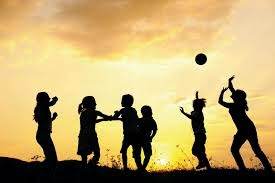
I remember years ago seeing a poster that basically said children learn by what they see rather than by what they hear from the adults in their lives. What are the children in our lives seeing as to how they and their peers are regarded in this society? We need to consider the children. The responses to these and other crises are complex and come at great cost. However, if these children were our children would we respond differently. According to Jesus, they are our children. How will we respond.

Sunday, May 27, 2012

Tenative Support for the School District Re-Structuring Plan


I have long been an advocate for high quality urban public schools and an opponent of PA Republican Tom Corbett’s wholesale slashing of financial support for poor urban school districts like the Chester-Upland and Philadelphia School Districts. The former is facing dissolution and the prospect that its students will have to attend neighboring school districts, while the latter has put forth a bold plan for reducing central school administration roles and decentralizing the school district. I see both moves as responses to calculated efforts by wealthy elites to destroy urban public education and to ignore the needs of thousands of families and children who deserve as good an educational system as any wealthy suburban community.

With all that said, I find myself in the tentative position of supporting the Philadelphia School Reform Commission’s (SRC) plan to restructure the school district; but I do so with some strong caveats. As I understand it, the plan contains the following components.

-        First, the SRC proposes that the district be broken up into “achievement networks” that would include approximately 25 schools. Principals within those schools would be given greater autonomy to decide what programs to include and which teachers to work in their schools. The better performing a school, the more autonomy they would receive.  

-        Second, as many as 40 low performing schools would be closed with the idea of moving those students into “high performing” schools, which could be either public or charter schools. This aspect of the proposal is projected to increase the percentage of students attending charter school to grow from its current 25% to 40% in the next 5 years. The proposal calls for new charter schools, but to only allow nonprofit partners to operate rather than for-profit companies such as Edison schools. 

-         Third, the district is charged with providing “high quality…individually tailored training for principals and teachers” (Lerum, 2012).  

-        Finally the district seeks to outsource many supportive functions such as maintenance, transportation and cleaning.

Now these bold proposals being put forth by the SRC are not primarily driven by a progressive educational agenda; rather they are a response to the massive budget cuts required because of the loss of state funding for the Philadelphia School District. In this blog I have contended that the conservative agenda being put forth by Governor Corbett and others of his ilk is nothing less than the destruction of public education for poor people in favor of vouchers and private schools. Moreover, I have made clear my concern that charter schools drain money from the public school system and undercut the possibility for community input and control of those schools. Charter schools also are allowed to hire non-certified teachers and to expel students who do not fit in their system, thus sending them back to overcrowded, underfunded public schools.

So how is it that I can support this plan?

First, I support it because it is the best response to a bad funding situation. The SRC is to be commended for trying to do something innovative with the money they have to work with. Second, I support it because it gives principals and teachers more autonomy to respond to the needs of their students and families in ways that are appropriate. Under former superintendent Ackerman I saw many innovative local initiatives undercut by directives from the central administration that did not take into account the unique challenges faced by teachers and administrators in local schools.

However, I offer my support with the following conditions and caveats. First of all, with the development of the achievement networks there needs to be the offer of sufficient resources for training and accountability. I asked one middle school teacher in a “low performing school” what he thought of the plan, and he said candidly, if the right person is in the principal’s office the plan would be a great improvement, but if unqualified or incompetent principals are allowed to stay in their jobs such a plan is  a recipe for further chaos. Thus, the SRC, the Philadelphia City Council and the state and Congressional legislators must continue to seek adequate funding to provide this support. Giving people freedom to be creative without the resources to do so is setting people up for failure. Giving people freedom without proper accountability, is to sweep the problem under the rug.

Second, if the plan does in fact significantly increase the role of charter schools, restrictions must be placed on those schools regarding the expulsion of low performing and problem students. If charter schools want to become a significant player, they cannot simply push their problems back onto the local public schools. Charter schools need to employ special education teachers who can address some of the unique emotional and behavioral challenges that face our students, and not simply send them out as “failures” in their system. Charter schools must not be allowed to be selective in their pursuit of excellence, they must demonstrate their excellence by serving all students.

Finally, school district officials (the SRC and administrators) need to stop looking for “quick fixes” and commit themselves to a long term strategy for change. People who have been observing the school district far longer than me, have seen too many innovations come and go. Measures of success cannot simply be limited to test scores, but must include school attendance, school climate and the relationships develop among teachers, principals, students and families. While these other things are much harder to measure, they are vital to the overall success of a school. Furthermore, such changes require not just a quick fix but a wholesale culture change which can take several years. One of the most tragic decisions I have witnessed was the firing of WestPhiladelphia HS principal Saliyah Cruz whose efforts to create a safe and enjoyable school were widely recognized to be successful; however in her three years as principal there had not been a significant change in test scores. Any reasonable person could have recognized that before test scores could improve the school climate needed to be addressed, yet a desire for a quick rise in test scores led her to be transferred out of that position. The kind of short-sightedness indicated by the Cruz decision is deadly to any effort at sustainable, lasting change.

While many teachers and other school workers oppose the plan, the fact is that the current system has not served most students well; the primary focus needs to be on what will serve all of the district's students well. Given the hard choices forced on them by declining resources, the SRC is to be commended for its bold plan. Change will be painful, and there will be many stops and starts. My hope and plea is to give the plan time to work, and realize that given the anti-public school climate in Harrisburg and elsewhere, this plan for reform faces tough sledding, but it’s worth giving it a try.


Sources:
Graham, K (2012). Phila School District plan includes restructuring and school closings. Philadelphia Inquirer, April 24, 2012).
Kerkstra, P. (2012). A window to school reform. Philadelphia Inquirer, May 4, 2012.
Lerum, E. (2012). A bold plan to fix city’s schools. Philadelphia Inquirer (May 17, 2012)
Whitehorne, R (2012). Commentary: Is there a ‘silent majority for the District’s transformation plan. The Notebook, May 24, 2012.

Thursday, January 12, 2012

Balancing the Budget on the Backs of the Poor: Chester-Upland School District

While the fiscal conservatives say that we must “tighten our belts” and “everyone must sacrifice,” the recent news that the Chester-Upland(PA) school district has run out of money and can no longer operate their schools is yet another example that the ones who sacrifice are those with the least to give up. (For those not familiar with PA, Chester is one of the poorest cities in the state, and is located 10 miles south of Philadelphia. Its school district depends heavily on state funds because more than 50% of the residents of Chester live below the poverty line.)The state of Pennsylvania is mandated by law to provide quality public education to all children in the state. Yet since becoming governor a year ago, Tom Corbett, has slashed spending on services to the poor, decreased the amount of money the state provides to low income school districts, refused to raise taxes on wealthy individuals and companies, and advocated vouchers so that money would be taken away from public schools. When Chester officials asked the state to intervene, the governor said “no” blaming them for “mismanagement” - yet another example of “blaming the victim”; believe me, no one is getting rich in Chester except Harrah’s Casino and PPL Park the home of the Philadelphia Union soccer team.

When folks want to know what the Occupy Wall Street movement is about when it says the 1% are profiting off the 99%, Chester-Upland School district is exhibit A. While the governor and his Republican colleagues talk about  “balancing the budget”, yet protecting their wealthy and corporate supporters, the poor of Chester and elsewhere suffer.
John Rawls, political philosopher whose work set the framework for the Great Society programs of the 60’s and 70’s, said that a society is judged by how it treats its most vulnerable. The moral vision that moved leaders on both sides of the political spectrum to set up social safety net for the poor and disabled caused them to see that the wealthiest society in the world could not allow any of its citizens to go uncared for. The callous disregard for basic needs such as health care, housing and education that began in the 1980’s under President Reagan and has increased to the present shows not only a social callousness but a loss of moral vision. That a state governor can disregard his legal mandate to provide education to the children of Chester, while refusing to levy taxes on gas companies reaping millions in Pennsylvania, only shows how far we have fallen.

Conservatives often like to bemoan the moral decline in our country, and in certain instances I share their concerns, but as Jesus said they need to take the log out of their own eyes before they seek to remove the speck in another’s eye. The judgment falls hard on those leaders who would forsake and deny their moral and legal mandates to care for the needs of the poor, and then have the gall to defend their view by blaming the victims and calling for a “balanced budget.”
If you are a PA resident I urge you to write your state representatives and call upon them to provide funding so that the children of Chester Upland can receive the quality education they are guaranteed by law to receive.

Sunday, August 01, 2010

Is the "Race to the Top" Rigged?


President Obama is to be commended for making the improvement of the nation’s public school system a national priority and for challenging states and school systems to completely re-think the way they deliver education through the program called Race to the Top. States are being invited to submit proposals for funds to engage in a process of major educational reform. State plans must address six priorities that range from early childhood education to providing resources for high risk and special needs students to recruiting and training high quality teachers.
However the recent announcement that Washington, DC superintendent Michelle Rhee fired 241 “low-performing” teachers after instituting her program called IMPACT. Rhee’s action raises the question if the emphasis on teacher performance indicates that the Race to the Top is rigged against the teachers. Whenever educational issues come up, the first target of critics is usually the teachers. So as the Washington Post reported, Rhee’s action is meant to “send a message” that teachers need to raise the quality of their performance. No doubt some teachers need to find another career, but others may be forced outto that career not because of lack of skill or commitment, but a lack of structure, resources and support.
Critics often complain that teachers are overpaid for “only 9 months of work” and aren’t held accountable. Over the past several years no one group of people so valuable to our society have been so maligned and misunderstood as teachers. Now put those teachers in an old building that looks like a prison, has poor ventilation, with 35 kids per class, 5-6 periods a day, not enough textbooks, and no aides. Then include in that class 5-6 kids who come from dysfunctional families, another 5-6 who have childcare responsibilities or are expected to contribute to the family income, don’t give those kids breakfast and then blame those teachers that test scores are not “meeting standards”. You will begin to understand what Michelle Rhee’s “low-performing” teachers are up against.
I offer three points of reference. First, my own children went through a suburban school system that was at best adequate. Every year the local paper published the salaries of all the teachers in the district, and complained about “rising property taxes,” which happened to be lowest in the county. Through their 13 years of schooling, my kids had some outstanding teachers, a few poor ones, and a majority of mediocre teachers. But these teachers had adequate technology, a decent library, and manageable class sizes. Most of the kids came from families that provided enough food and other necessities, so that the kids were not expected to contribute the family income. Most of those families had at least one college graduate, so that these kids grew up expecting to attend college. My kids and the vast majority of kids graduated on time and went to various post high school pursuits including college. Mediocre and even poor teachers get by in that system, because they were operating in a context that surrounded them with adequate resources, necessary support, and a college going culture.

Second I am a college teacher who has taught graduate students, first and second year undergrads, and adults returning to earn a college degree. One year I simultaneously taught students across that spectrum. With the graduate students who were intelligent, motivated and resourceful, I was “outstanding” – my students grew and learned tremendously - by their own evaluation. However at the same time I taught a group of students most of whom were first generation college students, and who often had major economic and family responsibilities outside of class. I also taught some adult students who had difficulty reading and others who could not write coherent paragraphs. I worked doubly hard and pulled out every creative idea out of teaching bag of tricks. I ended up failing half the students in the undergrad class, even though it was one of the most creative, draining and challenging teaching experiences of my career. Even more amazing is that some of the students I failed actually thanked me for the way I had respected them in that class. So which teacher should be evaluated – the teacher of grad students, the teacher of the adult students or the teacher who failed half his undergrad class?
Third, I am part of a community group that provides support to a large urban public high school, I sit on the board of an urban Mennonite high school and I have consulted with a new charter school. All three schools serve the same demographic of students: lower income, urban, mostly students of color. The urban high school sees only about 50% of its 9th graders persist to graduation. The Mennonite high school has a 100% college acceptance rate of students, and the charter school is only one year into operation, so it is too soon to tell. However, what is common to all three schools is that they all have innovative and creative principals and a group of teachers who love kids. However the charter school and Mennonite high school have class sizes around 20, while the public high school averages 30-35. The charter school and Mennonite high school have local autonomy, while the public high school answers to the superintendent. Despite its low test scores, the public high school has seen phenomenal improvement in scores and morale, was on track to substantially improve the graduation rate. Justlooking at the scores the superintendent decided the principal needed to be re-assigned and her efforts halted. My prediction is that any momentum and hope she built with students and teachers will be undercut and the school’s performance will decline.
In these scenarios (my children’s school, my own classes, the three schools I compare) which teachers failed and who succeeded? Blaming teachers for a failed system is an easy explanation, but wholly inadequate. If I was teacher looking for a job, would I want to go into a system where the odds are stacked against me like the Philadelphia or DC school systems? Would I choose to operate in a system, where I am underpaid, and under-resourced, and yet expected to achieve progress on my kids test scores? Are the test scores even the proper measure of success? Or would I choose to go to an adequately resourced suburban district where even if I was mediocre, my kids would do okay? Or would I gravitate to a charter school or a private school, not subject to the whims of a politically vulnerable superintendent?
If we as a nation are truly concerned about public education, we need to stop laying all the blame on the teachers. The system as a whole is broken and creating a culture of fear and distrust distracts everyone’s attention, especially the teachers, from being willing to re-shape and re-form that broken system. What we need is a systemic approach to urban education like Geoffrey Canada’s Harlem Children Zone. Canada recognizes that there many factors outside the school building that affect learning inside the school building. While I don’t fully agree with Canada’s almost totally behavioristic methods, I do think he has recognized that the problem with urban public education is systemic and is seeking to address it that way. This is why cities across the nation are seeking to adopt and adapt his model to their situations.
I recently read the reflections of a 5th year teacher in the Philadelphia public school system. Half of all teachers quit by their fifth year, and this teacher had survived that threshold. Yet, just when she should be hitting her stride, she writes that one of the realities she lives with is that most days she drives home “feeling like a crappy teacher.” Moreover, as she looks out over the career ahead of her she wonders if she can sustain her career over a lifetime. I want that teacher to feel valued, supported, and excited about the work she will do, because those feelings will be conveyed to her students, and will influence her students’ performance. Creating a culture of fear and intimidation (as Michelle Rhee has done in DC) will not help this teacher feel any better about herself, her work or her students. She needs to be surrounded by a system that helps her get better at her craft, not that threatens her to get better or else.
The Race to the Top seems rigged against the teachers, and the ones who will suffer in the end will again be the students.